The Story of Deborah
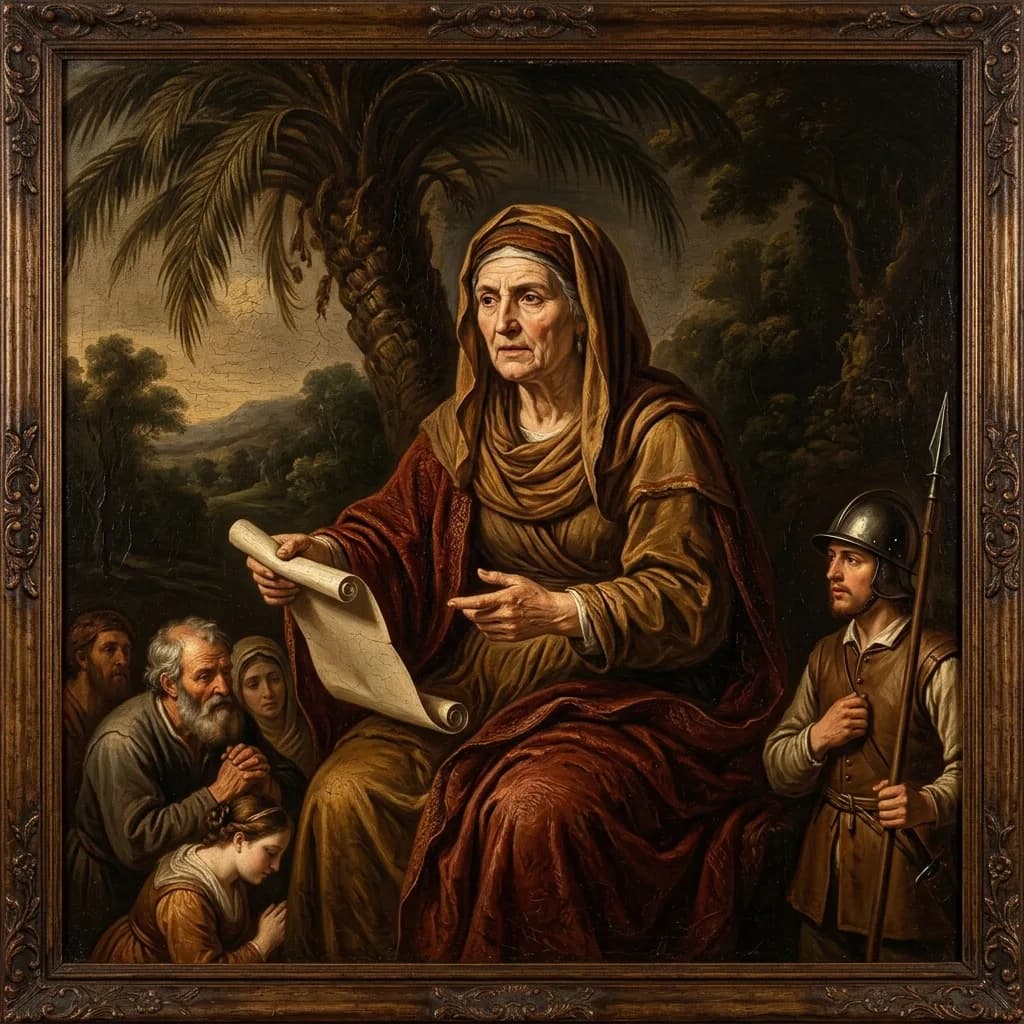
Deborah emerges as a unique figure in the Old Testament, during the tumultuous period of the Judges around 1200 BC. Judges 4:4-5 introduces her as a prophetess and a judge, holding court under the Palm of Deborah in the hill country of Ephraim. Israelites from various tribes come to her for guidance and judgment, highlighting her wisdom and spiritual authority. This era is characterized by cycles of apostasy and deliverance, with tribes often oppressed by neighboring forces. Deborah's narrative begins with the oppression of Israel by Jabin, a Canaanite king, whose formidable commander Sisera boasts a fleet of iron chariots.
Deborah summons Barak, a military leader, and commands him to gather an army to confront Sisera’s forces. Judges 4:6-7 records her assurance to Barak of God's promise of victory. However, Barak's hesitance is evident; he insists that he will only go to battle if Deborah accompanies him, highlighting his reliance on her prophetic authority. Deborah agrees but warns him that the honor of victory will go to a woman, a prophecy that challenges the male-dominated norms of warfare in ancient Israelite society (Judges 4:9). This sets the stage for a narrative of unexpected heroes and divine intervention.
The battle unfolds with dramatic intensity. At Deborah's command, Barak leads his troops to Mount Tabor. Judges 4:14-16 describes how the Lord throws Sisera’s army into disarray, leading to a crushing defeat. Sisera abandons his chariot and flees on foot, seeking refuge in the tent of Jael, the wife of Heber the Kenite. The narrative takes a sharp turn when Jael, defying expectations of hospitality and neutrality, drives a tent peg through Sisera's temple while he sleeps, fulfilling Deborah's earlier prophecy (Judges 4:21). This act of decisive violence by a seemingly inconsequential woman highlights the theme of deliverance through unlikely means.
The story concludes with the Song of Deborah in Judges 5, a victory hymn that celebrates the deliverance of Israel and the roles of those who participated in the battle. The song vividly recounts the victory, praising Jael as “most blessed of women” and recalling the tribes that heeded the call to fight. Deborah's leadership and the unexpected triumph echo throughout Israel, securing peace for forty years. Deborah does not appear in genealogies or the New Testament, yet her legacy in the Hebrew Bible remains as a rare instance of female leadership and divine intervention in the narrative of Israel's judges. The Hebrew term נְבִיאָה (nevi'ah), meaning "prophetess," is a fitting descriptor for Deborah, a prominent figure in the Book of Judges. This title appears in Judges 4:4, offering a glimpse into her role as a leader in ancient Israel. Unlike others who simply bore the title, Deborah's actions substantiated her identity as a prophetess. She judged Israel, settled disputes beneath her palm tree (Judges 4:5), and provided spiritual and strategic guidance. Her presence as a military leader in a patriarchal society is noteworthy. As Israel groaned under the oppression of Jabin, king of Canaan, Deborah's leadership was not just symbolic but tangible. Her decisiveness and courage set her apart, as she summoned the military commander Barak and instructed him to gather an army to confront Sisera, Jabin's formidable general.