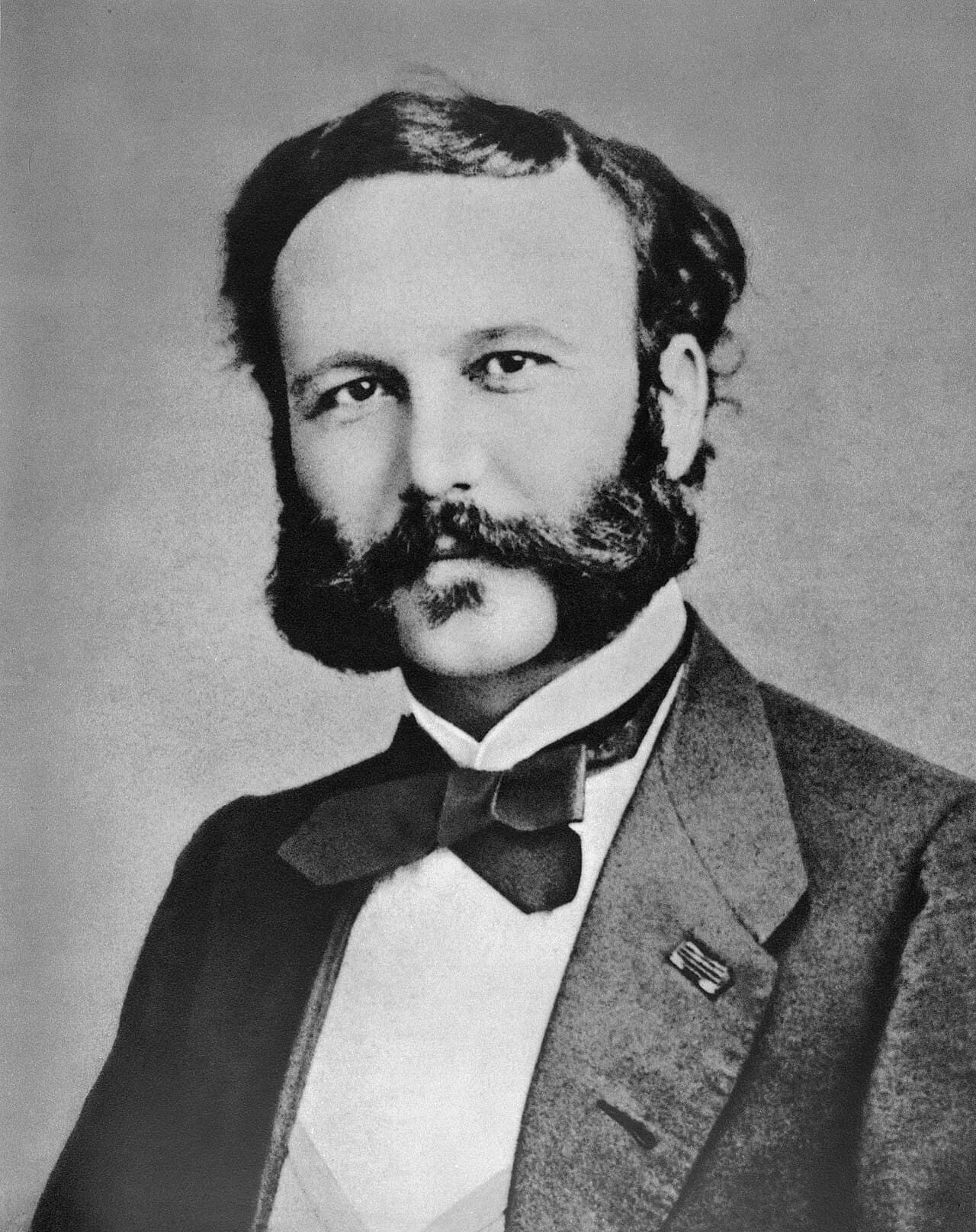
Henri Dunant and the Red Cross
Christian Charity · Updated August 15, 2026
Overview
Henri Dunant, founder of the Red Cross, was driven by deep Calvinist faith and considered his humanitarian work a direct response to Christ's command to love one's neighbor, yet he died nearly forgotten and impoverished despite winning the first Nobel Peace Prize. A Swiss businessman born in 1828, Dunant came of age in a Geneva still steeped in the legacy of John Calvin. He helped found the Young Men's Christian Association in Geneva in 1852, an early sign of his conviction that organized Christian action could meet human need. That conviction would collide with the brutal reality of war seven years later and produce one of the most consequential humanitarian movements in history.
On June 24, 1859, Dunant traveled to northern Italy on business and stumbled into the aftermath of the Battle of Solferino, a bloodbath fought between French and Austrian forces. Nearly 40,000 wounded soldiers lay abandoned on the field, untended and dying. Dunant organized local civilians to carry them into churches and homes, pressing whoever he could find into service regardless of which army they belonged to. He published an account of the carnage, A Memory of Solferino, in 1862, and used it to propose something that had never existed: permanent volunteer relief societies bound by an international agreement to protect wounded soldiers. The book landed in the hands of influential readers across Europe. On February 17, 1863, the International Committee for Relief to the Wounded was founded in Geneva with Dunant, Gustave Moynier, and surgeon Louis Appia among its members. The committee adopted a red cross on a white field as its emblem, a simple inversion of the Swiss flag. When the Ottoman Empire adopted the movement in 1876, it substituted a red crescent, a Muslim alternative that still operates alongside the cross today.
Dunant's vision succeeded beyond anything he imagined. The Red Cross became a global force, and the Geneva Conventions that grew from his proposal form the backbone of modern international humanitarian law. Dunant himself never shared in the success. His Algerian business ventures collapsed in 1867, and bankruptcy proceedings destroyed his reputation. Gustave Moynier, who had co-founded the committee alongside him, engineered his expulsion from the organization that same year. Dunant spent the next three decades drifting through Europe, broke and largely unknown, until a journalist named Georg Baumberger tracked him down in a Swiss nursing home in Heiden in 1895. The rediscovery led to the first Nobel Peace Prize, shared with Frdric Passy in 1901. The prize money never restored his fortune. He died in 1910 in the same nursing home, outliving Moynier by just two months.
Henri Dunant, founder of the Red Cross, was driven by deep Calvinist faith and considered his humanitarian work a direct response to Christ's command to love one's neighbor, yet he died nearly forgotten and impoverished despite winning the first Nobel Peace Prize.