The Deaconess Movement
Christian Charity · Updated August 15, 2026
Overview
The deaconess office survived continuously in Constantinople and Jerusalem through the middle Byzantine period but vanished from Western Europe by the 13th century, only to be unsuccessfully revived by English separatists in Amsterdam before a Protestant revival 230 years later. The word deaconess comes from the Greek term diakonos, meaning servant or helper, and appears throughout the New Testament. The Apostle Paul named Phoebe, a first-century Christian woman from Cenchreae, as a deaconess of the church, establishing the biblical precedent for the office. In the early and middle Byzantine periods, the female diaconate held a recognized place as a major non-ordained clerical order in the East. Western European churches maintained the office from the early Christian period until ecclesiastical restructuring during the high medieval period drove it to extinction in Latin Christendom.
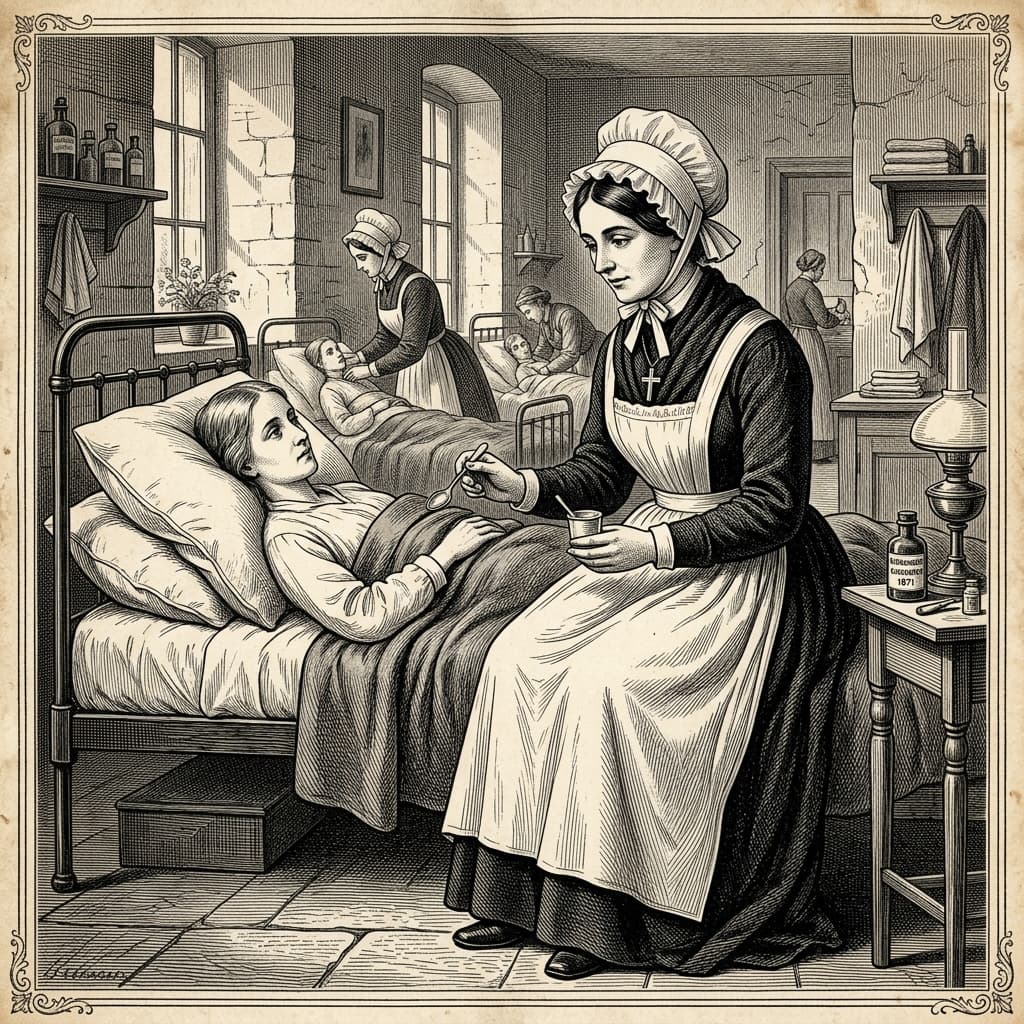
English separatist leader John Smyth attempted to revive the office of deaconesses in Amsterdam in the 1610s. His congregation, living in exile from England, sought to restore what they viewed as the proper New Testament church order. The effort failed to take hold. The modern Protestant revival of deaconesses began in Germany in the 1840s, driven by Lutheran pastor Theodor Fliedner. In 1836, Fliedner founded the first deaconess motherhouse at Kaiserswerth, Germany. Lutherans proved particularly active in establishing the office, and the movement spread from Germany to Nordic states, the Netherlands, the United Kingdom, and the United States. This expansion resulted in numerous Lutheran hospitals staffed by deaconesses who provided pastoral care to women and carried liturgical roles in worship.
The modern deaconess movement reached its peak around 1910. Secularization in Europe and the professionalization of nursing and social work eroded the distinct religious vocation of deaconess work. As secular nursing and social work became established career paths for women, the unique appeal and institutional support for the religious vocation faded. The deaconess motherhouse model left a lasting legacy in healthcare institutions worldwide, and the hospitals founded by these women continue to operate in cities across the globe today.
The deaconess office survived continuously in Constantinople and Jerusalem through the middle Byzantine period but vanished from Western Europe by the 13th century, only to be unsuccessfully revived by English separatists in Amsterdam before a Protestant revival 230 years later.