Pentecost
Holidays & seasons · Updated August 15, 2026
Overview
Pentecost began as a Jewish harvest festival before becoming a key day for Christians when the Holy Spirit descended upon the apostles. Known as Shavuot in Hebrew, this festival originally celebrated the wheat harvest and later commemorated the giving of the Torah at Mount Sinai. Occurring fifty days after Passover, it marks a moment in the Jewish religious calendar. For early Christians, this timing coincided with an event described in the New Testament, when the Holy Spirit empowered the apostles to spread the teachings of Jesus, shifting from its agrarian roots to a cornerstone of Christian tradition.
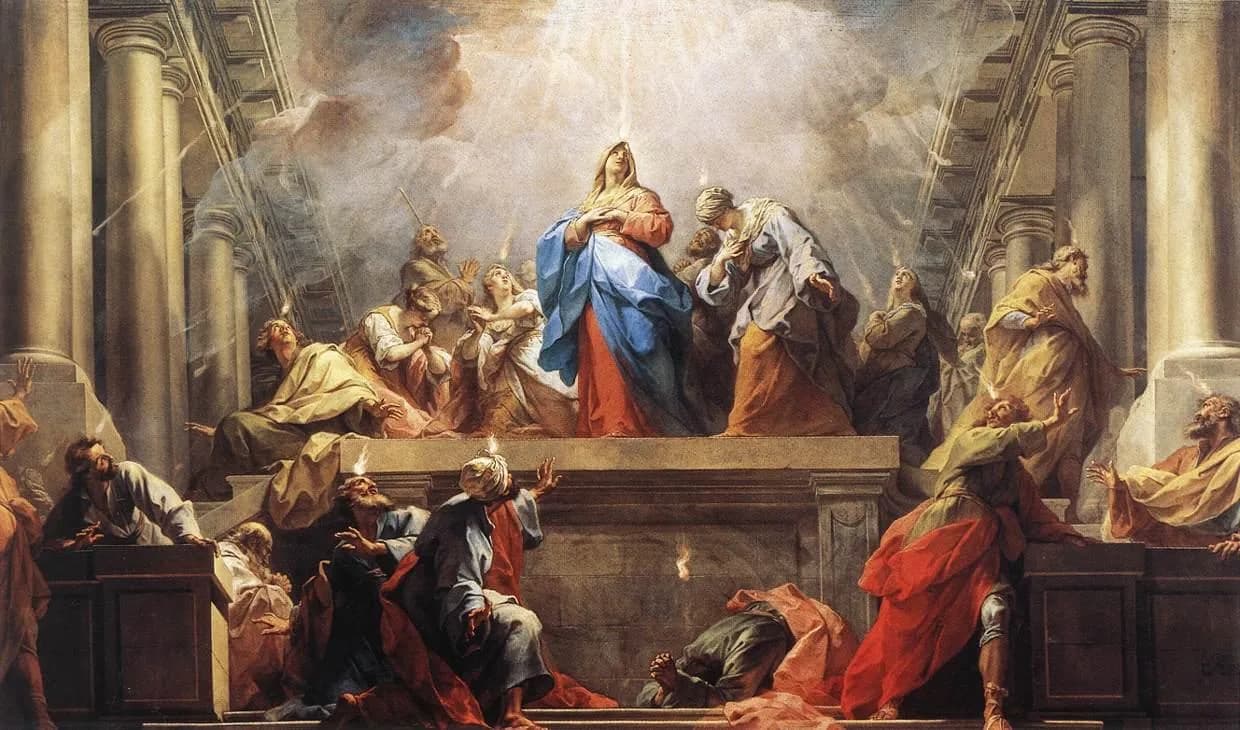
According to the Book of Acts in the New Testament, the Pentecost event unfolded in Jerusalem, where the apostles had gathered. Around 30 AD, Jews from various regions were in the city for the festival. As the apostles were together, a sudden, powerful sound filled the house where they were sitting, and what appeared to be tongues of fire rested on each of them. This occurrence enabled them to speak in different languages, allowing direct communication with the diverse crowd outside. Peter, one of the apostles, addressed the gathering and explained what was happening. Many view this event as the birth of the Christian Church, marking the beginning of the apostles' mission to spread Jesus' teachings.
Today, Christians around the world celebrate Pentecost fifty days after Easter Sunday, aligning with its Jewish timing after Passover. Many Christian denominations recognize it as one of the principal feast days, with services often emphasizing themes of unity and empowerment by the Holy Spirit. Some traditions mark it with vibrant processions, special sermons, and the wearing of red, symbolizing the fiery tongues that descended upon the apostles. This dual heritage of Pentecost as both a Jewish and Christian celebration highlights its enduring role in religious history.
Pentecost was originally a Jewish harvest festival before it became significant for Christians as the day the Holy Spirit descended on the apostles.
Why Fighting Over Pentecost Was a Big Deal
The debates over Pentecost went far beyond discussions of tradition versus innovation. The contention concerned who held the power to interpret the Holy Spirit's role within the church and the lives of individual believers. This was a battle over ecclesiastical authority and the purity of doctrine. Those who controlled this narrative would shape the church's future, deciding whether it adhered strictly to established traditions or embraced new spiritual experiences. This struggle would determine how Christianity would evolve and who would wield influence within its institutions.
The Azusa Street Revival in April 1906 became the flashpoint in this ongoing conflict. Led by William J. Seymour in Los Angeles, these revival meetings marked the birth of the modern Pentecostal movement. They drew in various factions, each with their own visions for the church's future. Traditionalists, with figures like Pope Leo XIII, emphasized continuity in doctrine and authority, viewing Pentecost as a singular historical event. Meanwhile, Charismatics, led by Charles Parham, championed a renewed experience of Pentecost, advocating for the democratization of spiritual authority through personal encounters with the divine. Moderates, like Billy Graham, sought a compromise, recognizing both historical traditions and contemporary spiritual experiences. Each side stood to gain either the preservation of the church's traditional authority or the opening of new pathways for personal religious expression. The outcome would determine the power dynamics within the global Christian community.
The conflict over Pentecost remains unresolved. This tension concerns authority, religious experience, and interpretation, all of which are central to Christian identity. These questions have been re-examined in different cultural and historical contexts, indicating that the issue is a fundamental aspect of the faith that continues to evolve. As Christianity adapts to new challenges, the question of who defines the Holy Spirit's role in the church remains open, ensuring that the debate over Pentecost will persist into the future.
Continue reading with a Scholar plan
Upgrade to ScholarCommon questions
- What is Pentecost and why is it important in Christianity?
- Pentecost is a Christian feast day that commemorates the descent of the Holy Spirit upon the apostles, empowering them to spread Jesus' teachings. It marks the beginning of the Christian Church's mission and is celebrated fifty days after Easter Sunday.
- How is Pentecost celebrated in different Christian denominations?
- Pentecost is celebrated with special church services that often include vibrant processions, sermons focusing on the Holy Spirit, and the wearing of red to symbolize the fiery tongues that descended on the apostles. Different denominations may emphasize themes of unity and empowerment by the Holy Spirit.
- What is the significance of the Holy Spirit during Pentecost?
- The Holy Spirit's descent during Pentecost empowered the apostles to speak in various languages, enabling them to communicate Jesus' teachings to a diverse audience. This event symbolizes the Holy Spirit's role in guiding and empowering the Church.
- Why is Pentecost sometimes called the 'birthday of the Church'?
- Pentecost is called the 'birthday of the Church' because it marks the beginning of the apostles' public ministry and the spread of Christianity. The event is seen as the moment when the Church was empowered to fulfill its mission.
- How did the early church observe Pentecost?
- The early church observed Pentecost by gathering to celebrate the descent of the Holy Spirit, as described in the Book of Acts. This event was marked by communal worship and the sharing of the apostles' teachings.
- What are the traditional symbols associated with Pentecost?
- Traditional symbols of Pentecost include flames, wind, and a dove, representing the Holy Spirit's presence and power. The color red is also commonly used to symbolize the fiery tongues that appeared on the apostles.
- Why does Pentecost occur 50 days after Easter?
- Pentecost occurs 50 days after Easter to align with its Jewish roots, as it originally coincided with the Jewish festival of Shavuot, which is celebrated 50 days after Passover. This timing marks the period between Jesus' resurrection and the descent of the Holy Spirit.
- How does Pentecost relate to the Jewish festival of Shavuot?
- Pentecost coincides with the Jewish festival of Shavuot, which originally celebrated the wheat harvest and later commemorated the giving of the Torah at Mount Sinai. For Christians, Pentecost marks the descent of the Holy Spirit, transforming its significance from a harvest festival to a foundational event in the Church.
- What are the biblical origins of Pentecost?
- The biblical origins of Pentecost are found in the Book of Acts, where it describes the Holy Spirit descending on the apostles in Jerusalem, enabling them to speak in different languages. This event is seen as the fulfillment of Jesus' promise to send the Holy Spirit to guide his followers.
- How did the apostles change after the events of Pentecost?
- After Pentecost, the apostles were empowered by the Holy Spirit to boldly preach and spread the teachings of Jesus. They gained the ability to speak in different languages, allowing them to communicate with people from various regions and effectively begin their mission.
- What role does Pentecost play in the liturgical calendar?
- Pentecost is one of the principal feast days in the Christian liturgical calendar, celebrated fifty days after Easter. It marks the end of the Easter season and emphasizes the themes of the Holy Spirit's empowerment and the Church's mission.
- What are some common hymns or songs sung during Pentecost services?
- Common hymns sung during Pentecost services include 'Come, Holy Ghost, Our Souls Inspire' and 'Spirit of God, Descend Upon My Heart.' These hymns focus on invoking the Holy Spirit and celebrating its presence and power.
- Why do some churches use red as the liturgical color for Pentecost?
- Red is used as the liturgical color for Pentecost to symbolize the fiery tongues that appeared on the apostles, representing the Holy Spirit's presence. It signifies the passion, energy, and transformative power of the Holy Spirit.
- How did the Council of Nicaea influence the celebration of Pentecost?
- The Council of Nicaea, held in 325 AD, helped standardize the Christian liturgical calendar, including the timing of Easter and Pentecost. It reinforced Pentecost as a significant feast day in the Church, celebrated fifty days after Easter.
- What are some modern-day traditions associated with Pentecost?
- Modern-day traditions for Pentecost include special church services, processions, and the wearing of red. Some communities also engage in activities that emphasize unity and the empowerment of the Holy Spirit, reflecting the themes of the original Pentecost event.