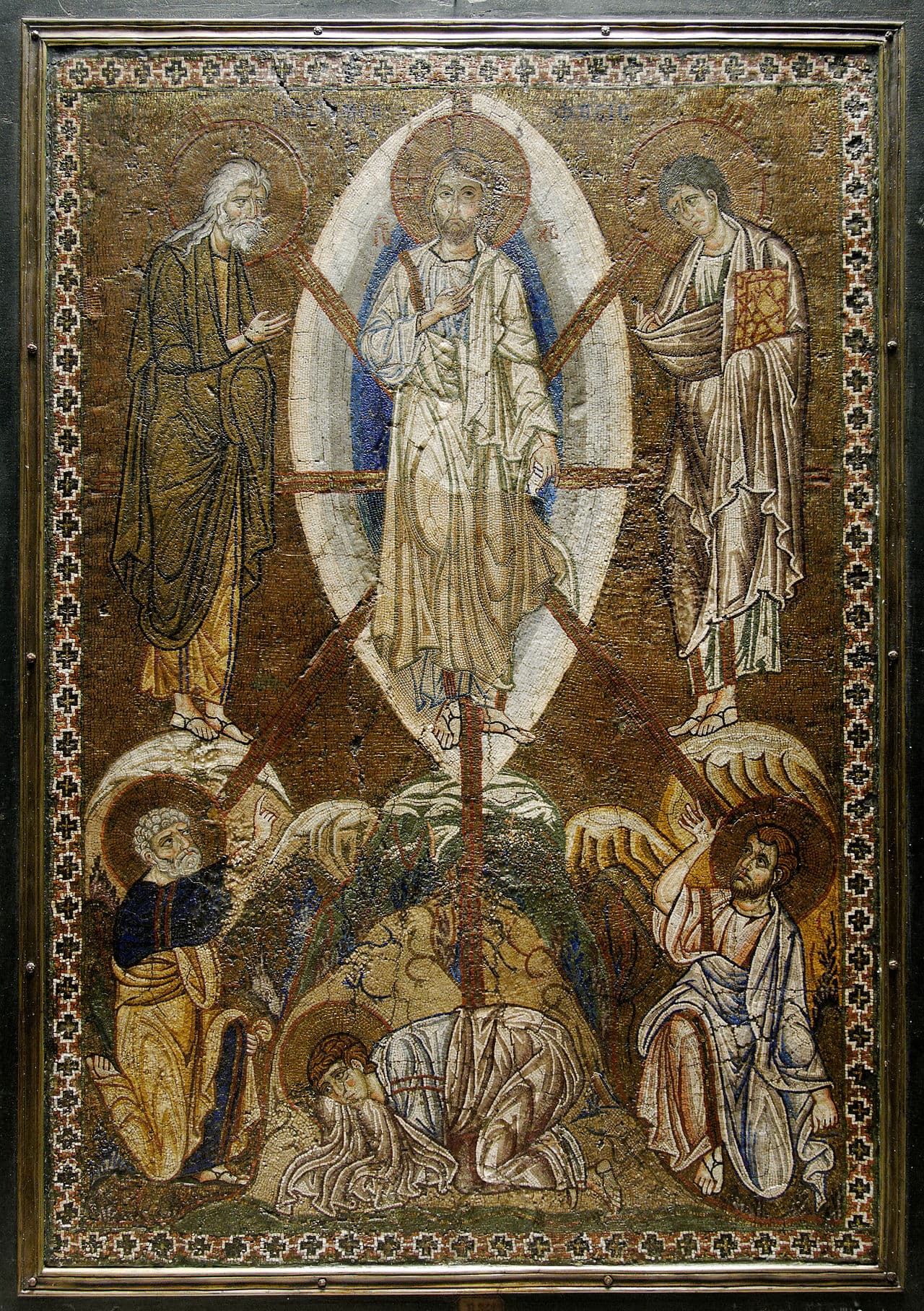
Transfiguration
Holidays & seasons · Updated August 15, 2026
Overview
Feast of the Transfiguration celebrations in the Western Church began in the 15th century, despite its biblical importance. Jesus is described as becoming radiant on a mountaintop in the Gospels of Matthew, Mark, and Luke, which holds theological importance. This moment reveals Jesus as the Son of God to his closest apostles — Peter, James, and John. The Eastern Church recognized this event early on, adopting it as a major feast in the 4th century, while the Western Church did not follow suit until much later.
Universal recognition of the Feast of the Transfiguration in the Western Church evolved gradually, influenced by cultural and historical contexts. Initially celebrated in the Eastern Church, the feast slowly gained attention in the West, but in 1456, Pope Callixtus III declared it a universal feast day for the Western Church. He made this decision in the wake of the Siege of Belgrade, a military victory for Christian Europe against the Ottoman Empire, which the Pope attributed to the intercession of the Transfiguration. This declaration helped solidify the feast's importance across Western Christendom, aligning with its established place in Eastern liturgical traditions.
Today, both Eastern and Western Christian traditions celebrate the Feast of the Transfiguration on August 6, although its liturgical prominence varies. In the Eastern Orthodox Church, it remains one of the Twelve Great Feasts, underscoring its role in their religious calendar. In the Western Church, while perhaps not as prominently observed, it is nonetheless a recognized feast day that reflects a unified acknowledgment of the event's importance across Christian denominations.
The Feast of the Transfiguration was not universally celebrated in the Western Church until the 15th century, despite its biblical significance.
Why Fighting Over Transfiguration Was a Big Deal
Fierce debates over the Transfiguration were not as much about the event itself as they were about the deeper, more contentious issue of Christ's divine nature. Theological arguments about whether Jesus was purely divine, purely human, or both fueled these discussions. More than an academic exercise, it was a matter of ecclesiastical authority and maintaining orthodoxy within the church. Interpretations of Christ's divinity had far-reaching implications for the church's teachings and its hold over spiritual matters. The debate was not just about doctrine; it concerned the very nature of the Christian faith and who held the power to define it.
In 451 AD, the Council of Chalcedon marked a crucial moment in this theological struggle. Key figures like St. Athanasius argued for the Orthodox view that celebrated Christ's dual nature — both fully divine and fully human. This interpretation supported the Nicene Creed and aimed to uphold theological consistency. In contrast, Arius and his followers saw the Transfiguration as evidence of a hierarchy within the Trinity, with Christ subordinate to God. Meanwhile, Eutyches and the Monophysites insisted on the singular divine nature of Christ, emphasizing his divinity over humanity. Each faction had much at stake. Orthodox Christians sought to solidify their doctrinal stance in line with the broader church, while Arian Christians and the Monophysites aimed to redefine the understanding of Christ's nature. Bishops from the Roman and Byzantine Empires sided with the Orthodox view, establishing the doctrine of two natures in one person. However, this decision did not bring unity; it only deepened existing divisions.
Despite the Council's decision, the debate over Christ's nature was never truly settled. Deep-seated theological differences persisted, compounded by the political complexities of the time. The council's outcome led to schisms, most notably with the Oriental Orthodox Churches, who rejected the Chalcedonian Definition. These enduring disagreements resulted in divergent traditions within Christianity that still exist today. The question of how to interpret the Transfiguration and Christ's nature remained a complex issue that defied any simple resolution, highlighting the intricate interplay between theology and politics in early church history.
Continue reading with a Scholar plan
Upgrade to ScholarCommon questions
- What is the Transfiguration in the Bible?
- The Transfiguration is a biblical event where Jesus becomes radiant in glory on a mountaintop, as described in the Gospels of Matthew, Mark, and Luke. It is a moment where Jesus reveals his divine nature to his closest apostles.
- Why is the Transfiguration important to Christians?
- The Transfiguration is important because it reveals Jesus as the Son of God and affirms his divine nature. It also serves as a pivotal moment in the Gospels, highlighting the connection between Jesus and the Old Testament figures of Moses and Elijah.
- What did Jesus' Transfiguration signify?
- Jesus' Transfiguration signified his divine nature and his fulfillment of the Law and the Prophets, represented by Moses and Elijah. It confirmed his identity as the Son of God to his apostles.
- Who was present at the Transfiguration event?
- The apostles Peter, James, and John were present at the Transfiguration, along with Jesus. Moses and Elijah also appeared during the event.
- How is the Transfiguration depicted in Christian art?
- In Christian art, the Transfiguration is often depicted with Jesus in radiant glory, flanked by Moses and Elijah, with the apostles Peter, James, and John witnessing the event. The scene typically emphasizes the divine light and the awe of the apostles.
- What is the connection between the Transfiguration and the Feast of Tabernacles?
- The connection lies in Peter's suggestion to build three shelters for Jesus, Moses, and Elijah, which is reminiscent of the Jewish Feast of Tabernacles, a time of dwelling in temporary shelters. This reflects the theme of divine presence and revelation.
- How is the Transfiguration celebrated in the Orthodox Church?
- In the Orthodox Church, the Transfiguration is celebrated as one of the Twelve Great Feasts on August 6. It is marked with special liturgical services, hymns, and often the blessing of grapes or other fruits.
- What lessons can Christians learn from the Transfiguration?
- Christians can learn about the divine nature of Jesus and the importance of listening to him, as God commands during the event. It also teaches about the fulfillment of the Law and the Prophets and the promise of transformation in Christ.
- Why did Moses and Elijah appear at the Transfiguration?
- Moses and Elijah appeared to represent the Law and the Prophets, respectively, affirming Jesus as the fulfillment of both. Their presence underscores the continuity of God's plan from the Old Testament to the New Testament.
- How does the Transfiguration relate to Jesus' mission?
- The Transfiguration relates to Jesus' mission by revealing his divine nature and authority, preparing the apostles for his upcoming passion and resurrection. It serves as a foretaste of the glory that will be fully revealed in his resurrection.
- How is the Transfiguration explained in the Gospels?
- In the Gospels, the Transfiguration is described as a moment when Jesus' appearance changes and he becomes radiant, with Moses and Elijah appearing beside him. A voice from a cloud declares Jesus as the beloved Son, urging the apostles to listen to him.
- What is the significance of the mountain in the Transfiguration story?
- The mountain is significant as it symbolizes a place of divine revelation and encounter with God, echoing biblical events like Moses receiving the Law on Mount Sinai. It serves as a setting for the revelation of Jesus' divine glory.
- How do Catholic and Orthodox interpretations of the Transfiguration differ?
- While both traditions recognize the Transfiguration's significance, the Orthodox Church places greater emphasis on its mystical and transformative aspects, celebrating it as one of the Twelve Great Feasts. The Catholic Church also honors it as a feast day but may not emphasize it as prominently in the liturgical calendar.
- What is the historical context of the Transfiguration event?
- The Transfiguration is rooted in the biblical narrative and is believed to have occurred during Jesus' ministry before his crucifixion. Historically, its recognition as a feast developed over centuries, with the Eastern Church adopting it early and the Western Church following in the 15th century.
- How does the Transfiguration influence Christian theology?
- The Transfiguration influences Christian theology by affirming the dual nature of Christ as both divine and human, a key doctrine upheld by the Council of Chalcedon. It also emphasizes the continuity of God's revelation through Jesus, fulfilling the Law and the Prophets.