Revelation 7:1-8 · Revelation · Updated April 25, 2026
144,000 Sealed
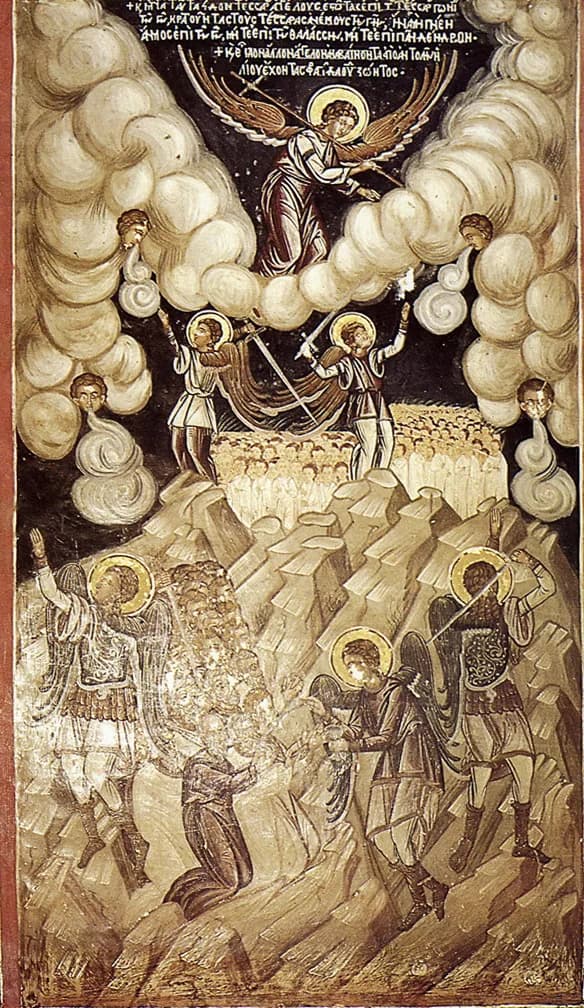
In Revelation 7:1-8, four angels stand at the corners of the earth, holding back the winds. Another angel ascends from the east with the seal of God, instructing the angels not to harm the earth until the servants of God are sealed. A total of 144,000 individuals from the tribes of Israel are sealed.
Summary
This passage from the Book of Revelation describes a visionary scene where four angels are positioned at the four corners of the earth. Their task is to hold back the four winds, preventing them from blowing on the earth, sea, or any tree (7:1). This moment occurs within a larger apocalyptic vision given to John, traditionally understood to have been written around 95 AD. As the scene opens, a fifth angel appears, ascending from the east, carrying the seal of the living God. This angel instructs the four angels not to harm the earth, sea, or trees until the servants of God have been sealed on their foreheads (7:2-3).
The main event in this passage is the sealing of 144,000 individuals. The fifth angel declares that these servants of God must be sealed before any harm comes to the earth and the sea. The text specifies that the 144,000 are from all the tribes of the children of Israel (7:4). Each tribe is mentioned by name, with 12,000 sealed from each: Judah, Reuben, Gad, Asher, Naphtali, Manasseh, Simeon, Levi, Issachar, Zebulun, Joseph, and Benjamin (7:5-8). This sealing process is a protective measure, marking those who are to be preserved.
The passage concludes with the complete enumeration of the tribes and the sealing of the 144,000 individuals. The final state is one where these chosen servants of God are marked and set apart, ready for what is to come. The passage establishes the sealing as a significant preparatory act before any further events unfold, indicating the importance of these individuals in the unfolding vision of Revelation.
Chiastic structure
ⓘRevelation 7:1-3
“holding the four winds of the earth, that the wind should not blow on the earth, nor on the sea, nor on any tree.”
Revelation 7:3
“till we have sealed the servants of our God in their foreheads.”
Revelation 7:4-8
“sealed an hundred forty four thousand of all the tribes of the children of Israel.”
The restraint of harm (A) mirrors the completion of sealing (A') as both emphasize protection and preparation.
Interpretation and theological stakes
Continue reading with a Scholar plan
Upgrade to Scholar