Acts 5:1-11 · Acts · Updated April 25, 2026
Ananias & Sapphira
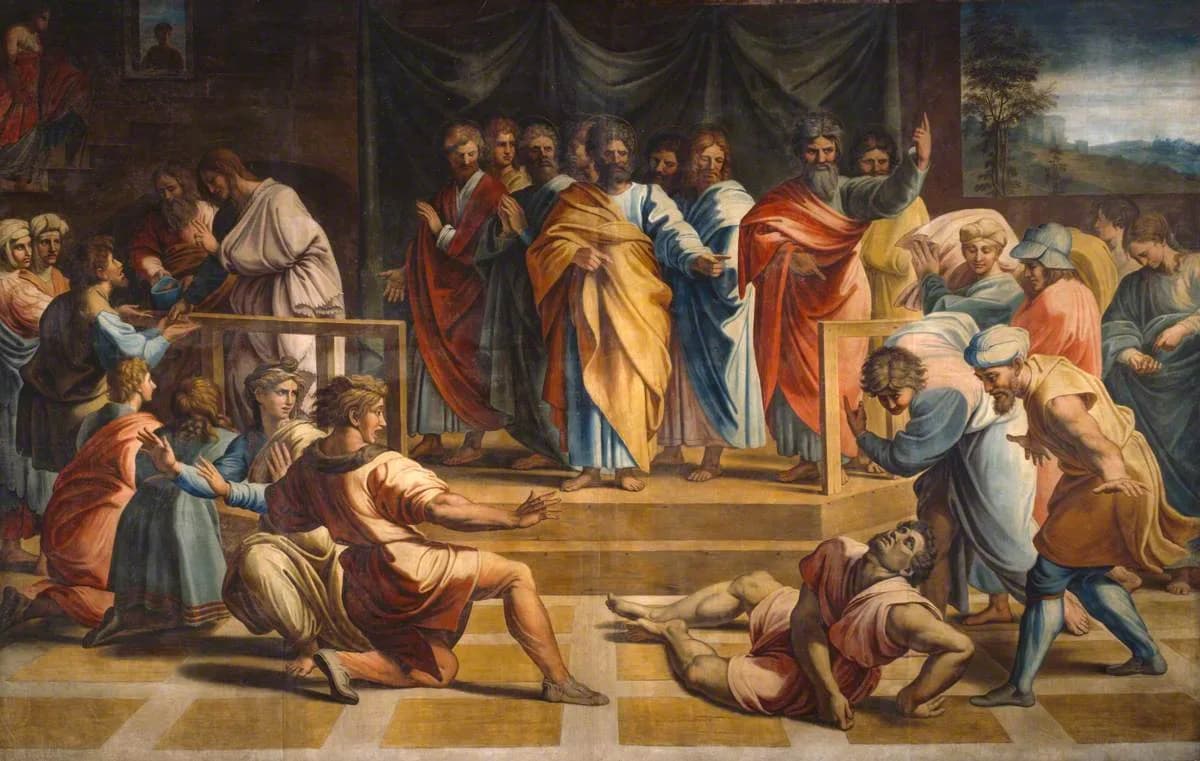
Ananias and his wife Sapphira sell a possession and deceitfully withhold part of the proceeds while claiming to donate the full amount to the apostles. Peter confronts them about their deception, leading to their sudden deaths, which instills great fear in the early church.
Summary
This passage from Acts 5:1-11 tells the story of Ananias and Sapphira, a couple in the early Christian church in Jerusalem. The narrative is significant because it addresses the consequences of deceit within the community of believers. Ananias and Sapphira sell a piece of property, intending to donate the proceeds to the apostles, but they secretly keep a portion of the money for themselves. This act sets the stage for a dramatic series of events that unfold within the church.
Ananias presents the partial donation to the apostles, but Peter confronts him, asking why he allowed Satan to fill his heart and lie to the Holy Ghost by withholding part of the sale price (Acts 5:3). Peter emphasizes that the property and its proceeds were under Ananias's control, and the lie was not to men, but to God (Acts 5:4). Upon hearing these words, Ananias falls down and dies, instilling great fear among those who hear of it (Acts 5:5). Later, Sapphira enters, unaware of her husband's fate. Peter questions her about the sale price, and she confirms the false amount. Peter accuses her of conspiring to test the Spirit of the Lord, and she too falls dead (Acts 5:9-10). The young men who buried Ananias return to bury Sapphira beside him.
The passage concludes with the entire church and all who hear about these events experiencing great fear (Acts 5:11). The final state of affairs is one of sobering awe and a heightened awareness of the seriousness of honesty and integrity within the community. The text presents the conclusion that deceit against God bears severe consequences and affects the entire faith community.
Chiastic structure
ⓘActs 5:1-5
“Ananias, with Sapphira his wife, sold a possession... and kept back part of the price... Ananias hearing these words fell down, and gave up the ghost.”
Acts 5:3-4
“Peter said, Ananias, why hath Satan filled thine heart to lie to the Holy Ghost... thou hast not lied unto men, but unto God.”
Acts 5:7-10
“Peter answered unto her, Tell me whether ye sold the land for so much?... Then fell she down straightway at his feet, and yielded up the ghost.”
Both A and A' involve the act of deception and the immediate consequence of death, emphasizing the seriousness of lying to God.
Interpretation and theological stakes
Continue reading with a Scholar plan
Upgrade to Scholar