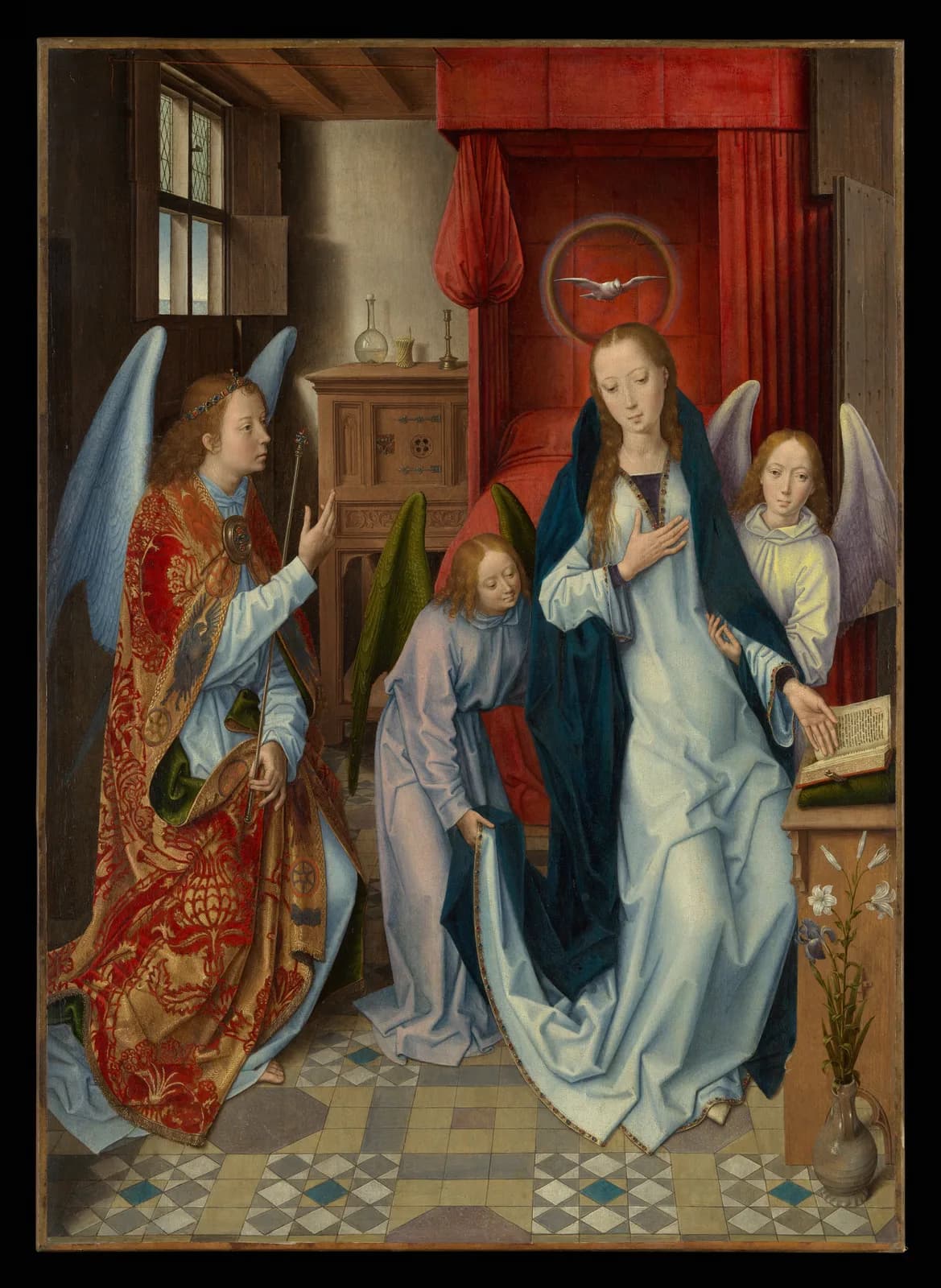
Luke 1:26-38 · Luke · Updated April 25, 2026
Annunciation to Mary
The angel Gabriel visits Mary in Nazareth to announce that she will conceive a son named Jesus, who will be called the Son of God. Mary, a virgin betrothed to Joseph, questions how this will happen, and Gabriel explains that the Holy Spirit will come upon her. Mary accepts the message, and the angel departs.
Summary
The Annunciation to Mary is a key biblical event where the angel Gabriel announces to Mary that she will conceive Jesus, marking the beginning of the New Testament narrative about Jesus' birth. Set in Nazareth during the sixth month of Elisabeth's pregnancy, Mary, a virgin engaged to Joseph, a descendant of David, is visited by Gabriel. Gabriel greets Mary, calling her highly favored and blessed among women, which initially troubles her (Luke 1:26-29).
Gabriel reassures Mary, telling her not to fear because she has found favor with God. He announces that she will conceive a son named Jesus, who will be great and called the Son of the Highest, destined to inherit the throne of David and reign forever (Luke 1:30-33). Mary questions how this will happen since she is a virgin. Gabriel explains that the Holy Ghost will come upon her, and the child will be called the Son of God. He also mentions that her cousin Elisabeth is miraculously pregnant in her old age, emphasizing that nothing is impossible with God (Luke 1:34-37).
The passage concludes with Mary accepting Gabriel's message, declaring herself the Lord's servant and expressing her willingness for the prophecy to be fulfilled as stated. Gabriel then departs from her (Luke 1:38). This passage establishes the divine announcement of Jesus' birth and Mary's role in God's plan, emphasizing her obedience and faith. The primary conclusion of the Annunciation passage is that a divine plan begins with the announcement to Mary, marking a significant moment in the biblical narrative. Gabriel's message establishes Jesus' conception as an act of God, focusing on Mary's unique role in this divine intervention. The passage indicates that Jesus will be great, called the Son of the Highest, and destined to reign eternally (Luke 1:32-33). Mary's acceptance and faith in God's plan are integral, as her willingness allows the prophecy to unfold (Luke 1:38). This divine interaction sets the stage for the birth of Jesus, emphasizing the intersection of divine will and human participation.
Chiastic structure
ⓘLuke 1:28-29
“And the angel came in unto her, and said, Hail, thou that art highly favoured... And when she saw him, she was troubled at his saying...”
Luke 1:35-37
“The Holy Ghost shall come upon thee... For with God nothing shall be impossible.”
Luke 1:38
“And Mary said, Behold the handmaid of the Lord; be it unto me according to thy word.”
Both A and A' involve the angel's message and Mary's response, highlighting her initial confusion and eventual acceptance.
Interpretation and theological stakes
Continue reading with a Scholar plan
Upgrade to Scholar