Matthew 8:1-4 · Matthew · Updated April 25, 2026
Cleansing the Leper
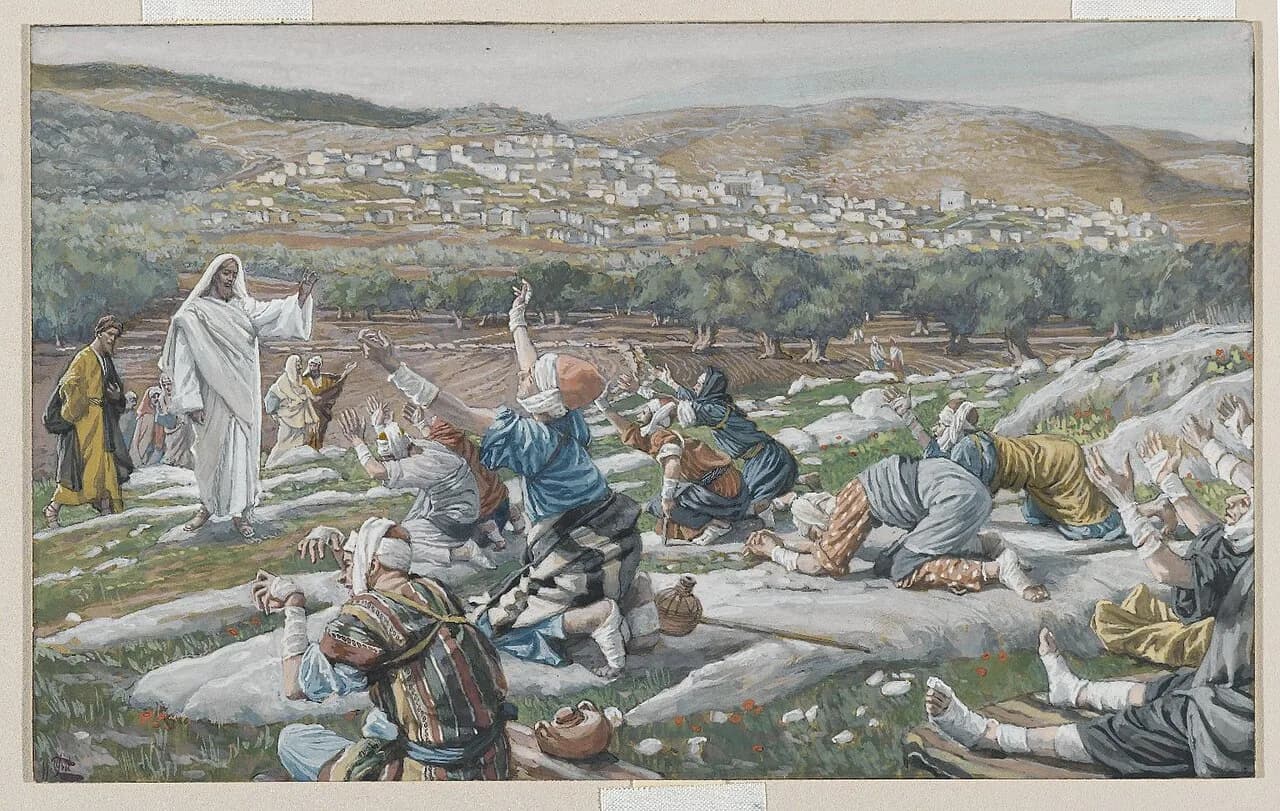
After descending from the mountain, Jesus is approached by a leper who asks to be made clean. Jesus touches the leper, heals him, and instructs him to show himself to the priest and offer the gift commanded by Moses.
Summary
Matthew 8:1-4 describes a healing performed by Jesus shortly after he descends from a mountain where he had been teaching, followed by large crowds (8:1). Jesus and a man afflicted with leprosy are the main characters. Leprosy was a serious skin disease that often led to social isolation. As Jesus comes down, the leper approaches him, setting the stage for the events that follow.
Kneeling before Jesus, the leper acknowledges his power by saying, "Lord, if thou wilt, thou canst make me clean" (8:2). This indicates his faith in Jesus' ability to heal him. Jesus responds by reaching out and touching the man, saying, "I will; be thou clean" (8:3). The man's leprosy is healed immediately, demonstrating a miraculous change in his physical condition. The touch and the words of Jesus result in the immediate cleansing of the leper.
Jesus instructs the healed man not to tell anyone about the healing. Instead, he tells him to go to the priest and offer the gift prescribed by the Law of Moses as a testimony (8:4). This final instruction establishes the importance of following religious laws and serves as a witness to the priests of the man's healing. Matthew 8:1-4 primarily establishes the power of faith and the authority of Jesus' word in healing. The leper, aware of his social and physical condition, approaches Jesus with faith, believing in His power to heal. Jesus' response is immediate and compassionate, emphasizing His willingness to restore the man to health and community. This act of cleansing is not just a physical healing but a reintegration of the leper into society, which his disease had previously barred him from. The healing signifies the breaking of barriers between the divine and the marginalized, showing the inclusivity of Jesus' ministry.
Chiastic structure
ⓘMatthew 8:2
“there came a leper and worshipped him, saying, Lord, if thou wilt, thou canst make me clean.”
Matthew 8:3
“And Jesus put forth his hand, and touched him, saying, I will; be thou clean.”
Matthew 8:4
“go thy way, shew thyself to the priest, and offer the gift that Moses commanded, for a testimony unto them.”
Both A and A' involve the leper's condition and the actions related to cleansing.
Interpretation and theological stakes
Continue reading with a Scholar plan
Upgrade to Scholar