Exodus 14:10-31 · Exodus · Updated April 25, 2026
Crossing the Red Sea
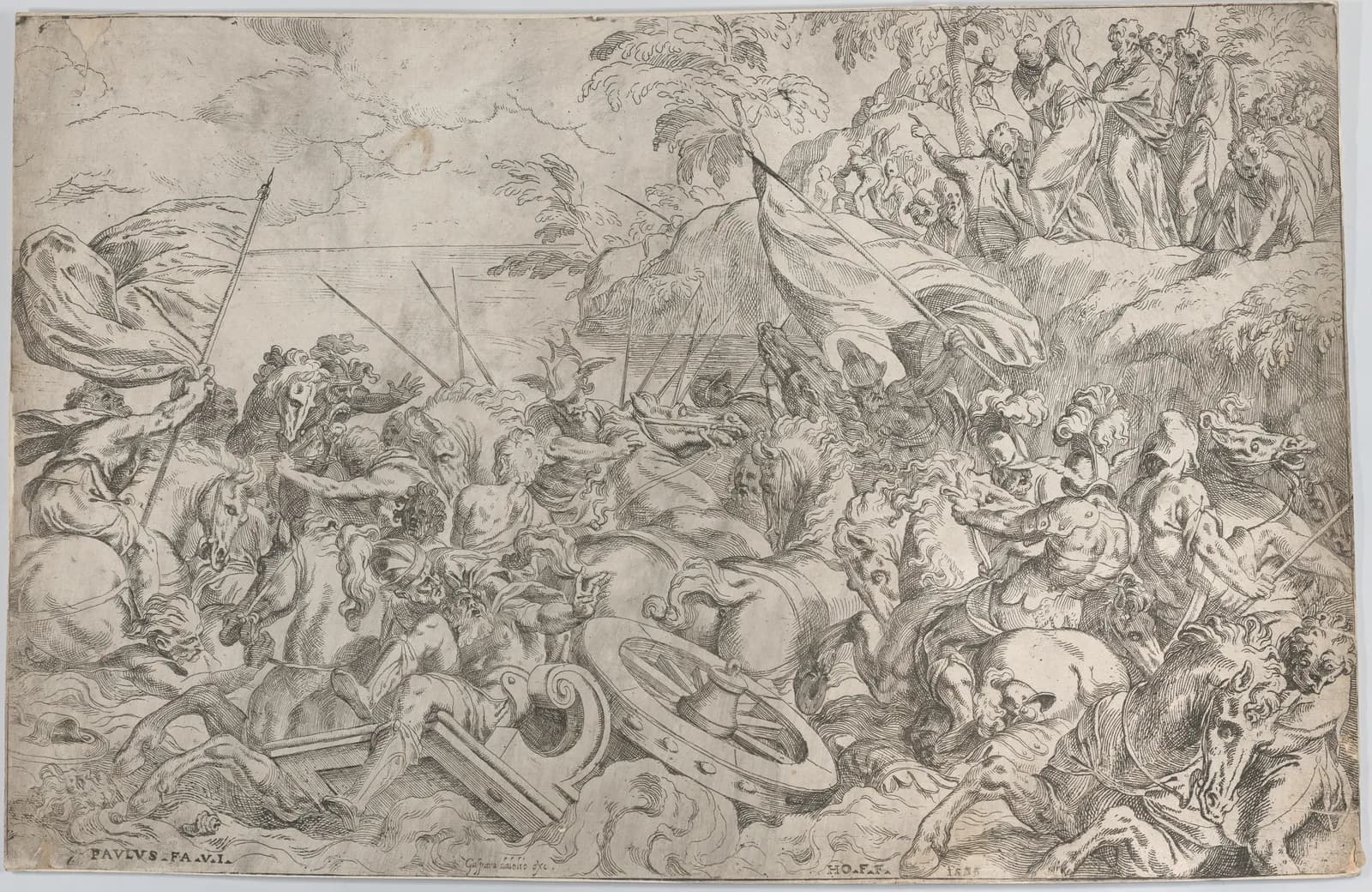
The Israelites, pursued by the Egyptians, cry out to God in fear. Moses, following God's command, parts the Red Sea, allowing the Israelites to cross on dry ground. The Egyptians follow, but the sea returns, drowning them, and Israel is saved.
Summary
The passage from Exodus describes a moment in the Israelites' escape from Egypt, known as the Crossing of the Red Sea. Led by Moses, the Israelites have recently fled Egypt, where they were enslaved. Pharaoh, the ruler of Egypt, changes his mind about letting them go and pursues them with his army. As the Egyptians draw near, the Israelites find themselves trapped between Pharaoh's forces and the Red Sea, leading to fear and despair among the people (Exodus 14:10-12). Moses reassures them that God will deliver them and instructs them to stand firm (Exodus 14:13-14).
God instructs Moses to stretch out his hand over the sea to divide it, allowing the Israelites to cross on dry ground (Exodus 14:16). An angel of God and a pillar of cloud move to the rear of the Israelite camp, creating a barrier between them and the Egyptians (Exodus 14:19-20). Moses stretches out his hand, and God parts the sea with a strong east wind, creating walls of water on either side (Exodus 14:21-22). The Israelites walk through the sea on dry ground, while the Egyptians pursue them into the sea. During the morning watch, God troubles the Egyptian army by causing their chariot wheels to swerve, leading them to recognize that God is fighting for Israel (Exodus 14:24-25). God then instructs Moses to stretch out his hand again, causing the waters to return and drown the entire Egyptian army (Exodus 14:26-28).
The passage concludes with the Israelites safely on the other side of the sea, witnessing the destruction of the Egyptian forces. The text states that God saved Israel from the Egyptians that day, and the people see the Egyptians' bodies washed up on the shore (Exodus 14:30). This event leads the Israelites to fear the Lord and believe in Him and His servant Moses (Exodus 14:31). The primary conclusion of the Crossing of the Red Sea passage is that it marks a decisive demonstration of divine intervention on behalf of the Israelites. This event signifies God's direct action in delivering His people from an oppressive force, emphasizing His power and faithfulness. The dramatic parting of the sea, described in Exodus 14:21-22, allows the Israelites to escape what seemed like certain doom. This moment is critical because it not only saves the Israelites but also establishes their identity as a people under God's protection, reinforcing their trust and belief in Him and Moses (Exodus 14:31). The event emphasizes that God is willing and able to fight for His people, as noted in Exodus 14:14, which assures the Israelites of divine support.
Chiastic structure
ⓘExodus 14:10
“the children of Israel lifted up their eyes, and, behold, the Egyptians marched after them; and they were sore afraid”
Exodus 14:13-14
“Fear ye not, stand still, and see the salvation of the LORD, which he will shew to you to day”
Exodus 14:30-31
“Thus the LORD saved Israel that day out of the hand of the Egyptians; and Israel saw the Egyptians dead upon the sea shore”
Both A and A' involve the Israelites' fear and the LORD's deliverance from the Egyptians.
Interpretation and theological stakes
Continue reading with a Scholar plan
Upgrade to Scholar