Matthew 27:32-56 · Matthew · Updated April 25, 2026
Crucifixion
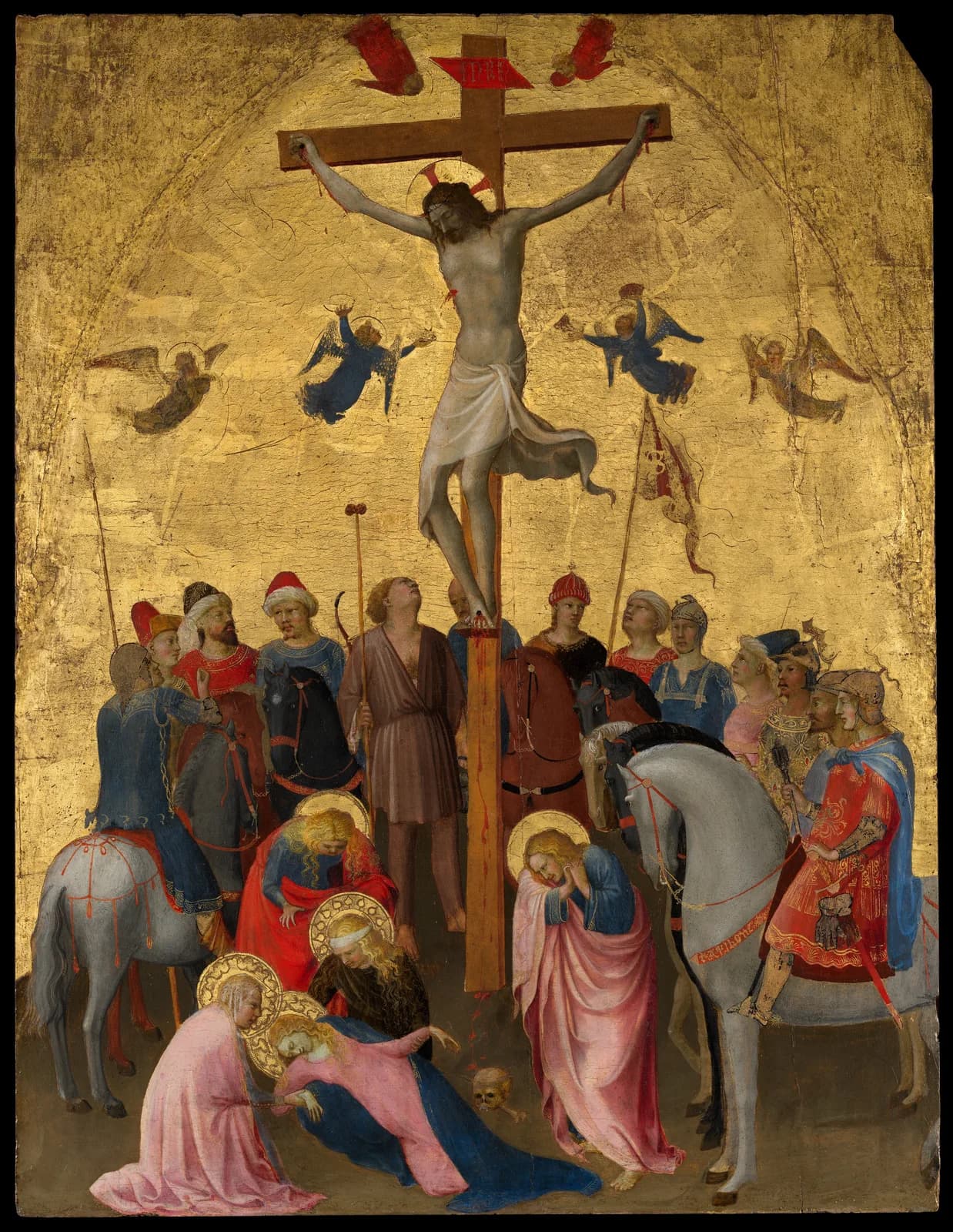
Jesus is led to Golgotha where he is crucified alongside two thieves. Simon of Cyrene is compelled to carry Jesus' cross, and Jesus is mocked by onlookers and religious leaders. Darkness covers the land, and Jesus cries out before yielding his spirit, leading to an earthquake and the resurrection of saints.
Summary
The passage from Matthew 27:32-56 recounts the crucifixion of Jesus, an event in the New Testament. Jesus is led out to be crucified. Soldiers compel Simon of Cyrene to carry Jesus' cross to Golgotha, the place of execution (27:32-33). Upon arrival, Jesus is offered vinegar mixed with gall, which he refuses after tasting it (27:34). He is crucified alongside two thieves, with a sign placed above his head stating, "THIS IS JESUS THE KING OF THE JEWS" (27:37-38).
As Jesus hangs on the cross, passersby, chief priests, scribes, and elders mock him, challenging him to save himself if he truly is the Son of God (27:39-43). Even the thieves crucified with him join in the mockery (27:44). From noon until three in the afternoon, darkness covers the land (27:45). At about three o'clock, Jesus cries out, "My God, my God, why hast thou forsaken me?" (27:46). Some bystanders mistakenly think he is calling for Elijah (27:47). One person offers Jesus vinegar on a sponge, while others wait to see if Elijah will come (27:48-49). Jesus then cries out again and dies (27:50).
Following Jesus' death, events occur: the temple veil tears in two, an earthquake happens, rocks split, and tombs open, with many saints rising and appearing in Jerusalem (27:51-53). These phenomena lead the centurion and those with him to fear greatly and declare, "Truly this was the Son of God" (27:54). Many women who had followed Jesus from Galilee, including Mary Magdalene and Mary the mother of James and Joses, witness these events from a distance (27:55-56). The passage concludes with dramatic signs and the centurion's declaration. The passage in Matthew 27:32-56 highlights Jesus' crucifixion as an event, not just for those who witnessed it, but for humanity as a whole. It presents the crucifixion as a moment of spiritual and cosmic disruption, marked by darkness and natural phenomena. These dramatic events culminate in the centurion's declaration, "Truly this was the Son of God" (27:54), which affirms Jesus' divine identity and mission. The tearing of the temple veil and the resurrection of saints symbolize the breaking of old religious barriers and the inauguration of a new covenant between God and humanity. This passage emphasizes the fulfillment of divine prophecy, showcasing Jesus as the central figure in God's redemptive plan.
Chiastic structure
ⓘMatthew 27:39-44
“And they that passed by reviled him... He trusted in God; let him deliver him now...”
Matthew 27:46, 50
“Eli, Eli, lama sabachthani?... yielded up the ghost.”
Matthew 27:54
“Truly this was the Son of God.”
Both A and A' involve the mocking and recognition of Jesus' identity, with A focusing on mockery and A' on recognition.
Interpretation and theological stakes
Continue reading with a Scholar plan
Upgrade to Scholar