Matthew 8:28-34 · Matthew

Gadarene Demoniacs

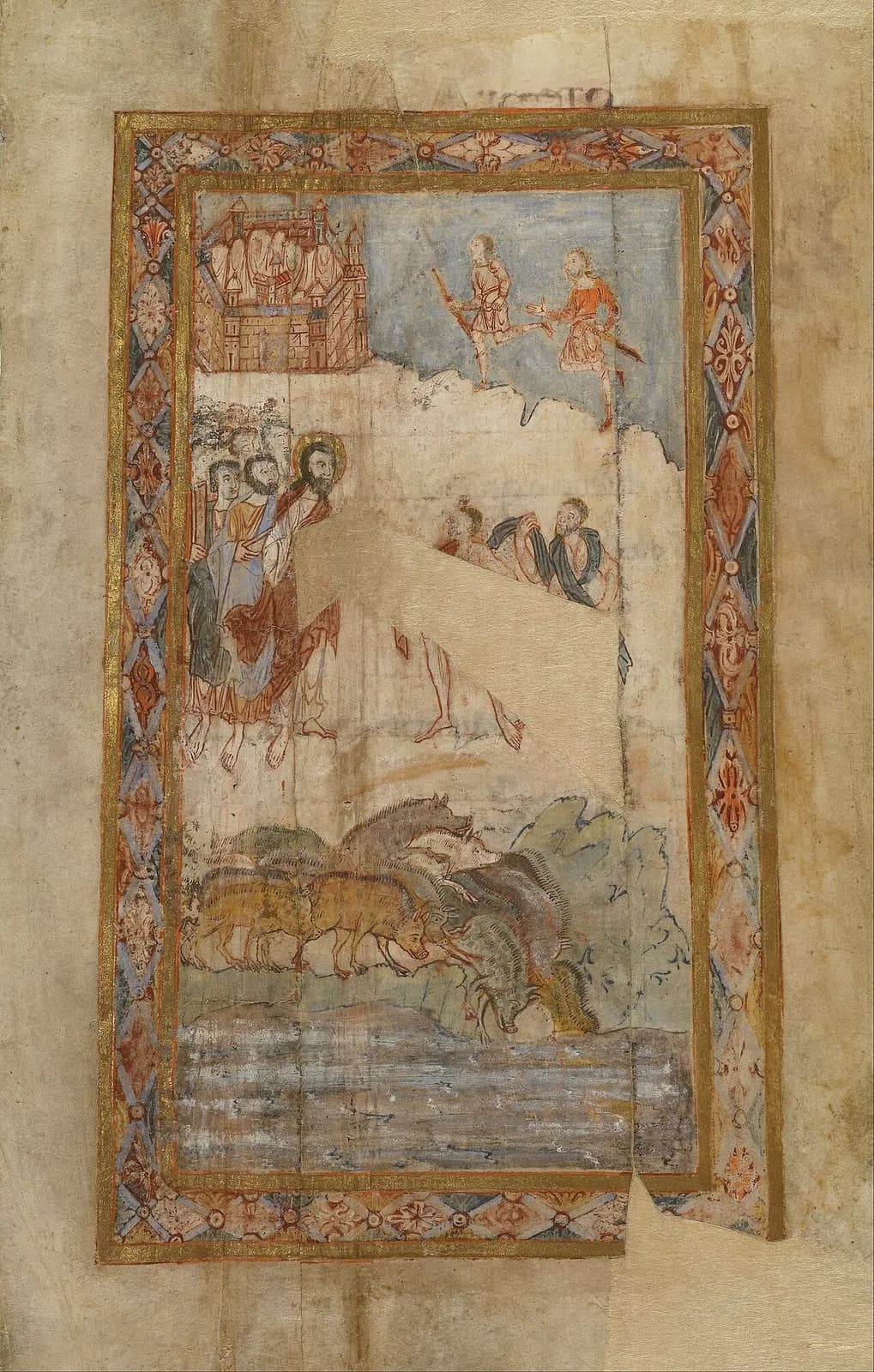
Jesus arrives in the country of the Gergesenes and encounters two men possessed by demons. The demons plead with Jesus to be cast into a herd of swine, which then rush into the sea and drown. The herdsmen report the event to the city, and the townspeople ask Jesus to leave their region.

Summary

The passage in Matthew 8:28-34 is a narrative about Jesus' encounter with two demon-possessed men in the country of the Gergesenes. This story matters because it highlights the authority of Jesus over evil spirits. As the passage begins, Jesus arrives on the other side of the Sea of Galilee, in the region of the Gergesenes. There, two men possessed by demons come out from the tombs. These men are described as extremely fierce, making the area dangerous and impassable for others (8:28).

As the encounter unfolds, the demons within the men recognize Jesus, addressing him as the Son of God and questioning if he has come to torment them before their time (8:29). Nearby, a large herd of pigs is feeding (8:30). The demons plead with Jesus to allow them to enter the pigs if he casts them out (8:31). Jesus consents, and the demons leave the men and enter the pigs. Immediately, the entire herd rushes down a steep bank into the sea and drowns (8:32).

The passage concludes with the reaction of the local people. The herdsmen, who witnessed the event, flee to the city and report everything that happened, especially concerning the demon-possessed men (8:33). The whole city comes out to meet Jesus, but upon seeing him, they ask him to leave their region (8:34). The narrative ends with the townspeople's request for Jesus to depart, establishing their reaction as the conclusion of the event.

Chiastic structure

A

Matthew 8:31

So the devils besought him, saying, If thou cast us out, suffer us to go away into the herd of swine.

B

Matthew 8:32

And he said unto them, Go.

A'

Matthew 8:34

And, behold, the whole city came out to meet Jesus: and when they saw him, they besought him that he would depart out of their coasts.

Both A and A' involve a request made to Jesus and his response, highlighting his authority and the reaction of others.

Interpretation and theological stakes

The passage in Matthew 8:28-34 primarily establishes Jesus’ authority over spiritual forces. The narrative demonstrates that even demons recognize his divine power, as seen when they address him as the "Son of God" and express fear of premature torment (8:29). By permitting the demons to enter the herd of pigs, Jesus not only liberates the possessed men but also visibly asserts his control over evil. The subsequent drowning of the pigs underscores the destructive nature of these spirits and the completeness of Jesus' victory over them. This event is pivotal because it showcases the impact of Jesus' authority on both the spiritual realm and the physical world.

One mainstream interpretation, particularly within the Catholic tradition, focuses on the identity of the demons as fallen angels. This view emphasizes that the demons' recognition of Jesus as the Son of God (8:29) highlights their awareness of his divine status and the power he holds over them. The plea to be sent into the pigs (8:31) suggests a desperate attempt by these fallen beings to avoid immediate judgment. This reading underscores the theological point that Jesus' authority extends over all spiritual beings, reinforcing his divine mission and identity.

A different perspective, common in Eastern Orthodox tradition, examines the townspeople's reaction to Jesus. Their request for him to leave (8:34) is seen as a response to fear and economic loss rather than spiritual insight. The abrupt loss of the pigs represents a significant economic blow to the community, possibly overshadowing the miraculous deliverance of the possessed men. This interpretation highlights the human tendency to prioritize material concerns over spiritual realities, suggesting that the townspeople's fear of Jesus' power stems from a disruption to their livelihood rather than a recognition of his divine authority.

Considering both interpretations, the passage suggests a tension between spiritual recognition and material concerns. While the demons acknowledge Jesus’ supremacy, the townspeople's reaction reflects a missed opportunity to understand the significance of his actions. The narrative challenges readers to consider how spiritual truths might be overshadowed by worldly priorities. This dual focus on spiritual authority and human response invites reflection on how individuals might respond to the divine presence in their own lives, weighing the cost of material loss against the value of spiritual liberation.

Continue reading with a Scholar plan

Upgrade to Scholar