Luke 10:25-37 · Luke · Updated April 25, 2026
Good Samaritan
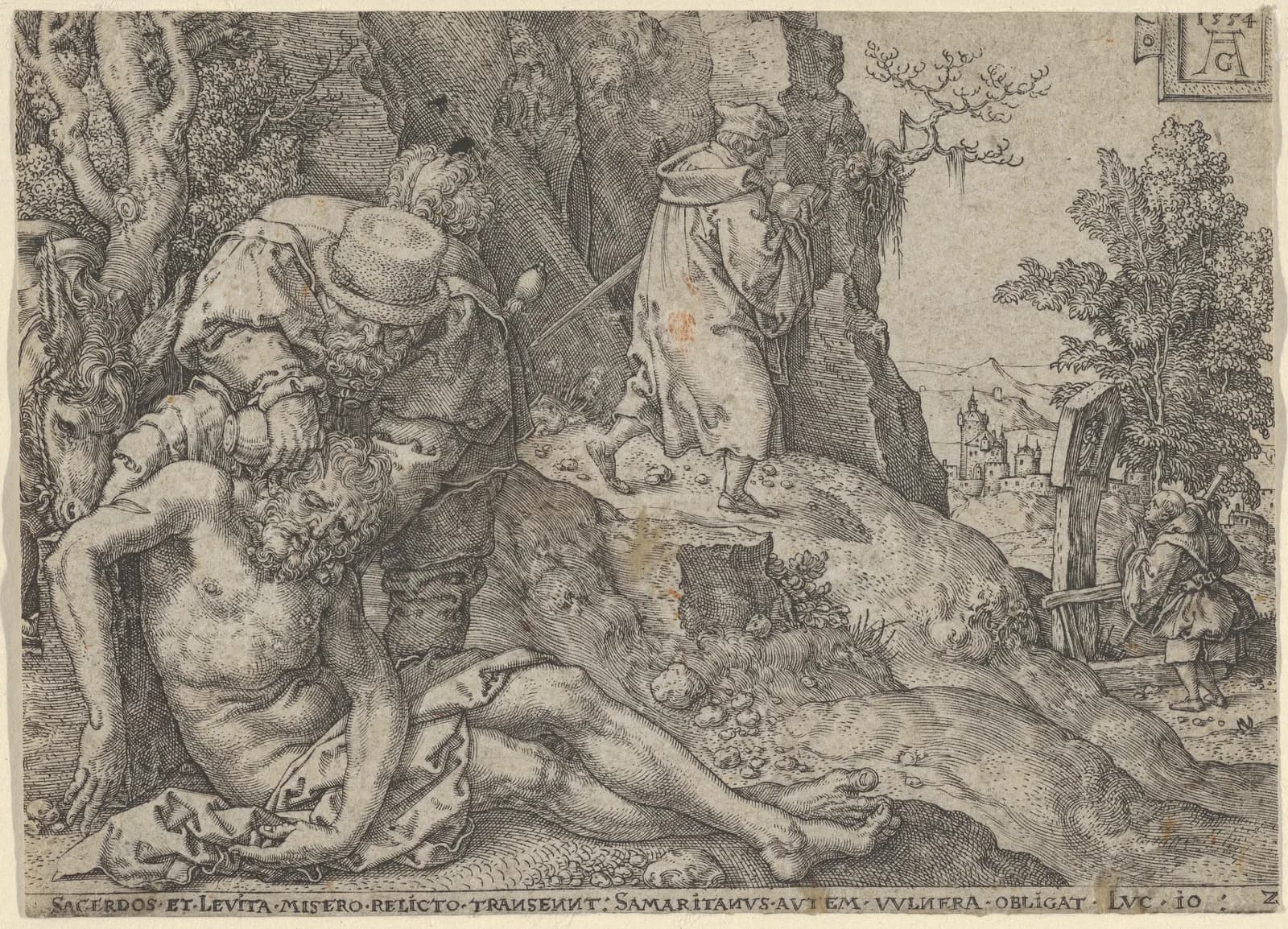
A lawyer asks Jesus how to inherit eternal life, and Jesus responds with the parable of the Good Samaritan. In the story, a man is attacked by thieves and ignored by a priest and a Levite, but a Samaritan helps him, showing mercy and compassion.
Summary
This passage from Luke 10:25-37 is a well-known parable told by Jesus to illustrate the concept of neighborly love. It starts with a lawyer, an expert in Jewish law, questioning Jesus about what he must do to inherit eternal life (10:25). Jesus responds by asking him what the law says. The lawyer answers correctly, stating the law requires loving God fully and loving one's neighbor as oneself (10:27). Jesus affirms his answer but the lawyer, seeking to justify himself, asks Jesus, "And who is my neighbour?" (10:29).
In response, Jesus tells a story about a man traveling from Jerusalem to Jericho who is attacked by robbers, stripped, beaten, and left half-dead (10:30). A priest comes by but avoids the injured man by passing on the other side of the road (10:31). A Levite, another religious figure, also sees the man and passes by without helping (10:32). However, a Samaritan, who would have been considered an outsider by Jewish listeners, stops and has compassion for the injured man (10:33). The Samaritan tends to the man's wounds, takes him to an inn, and pays for his care, promising to cover any additional costs when he returns (10:34-35).
The passage concludes with Jesus asking the lawyer which of the three men acted as a neighbor to the injured man. The lawyer answers, "He that shewed mercy on him" (10:37). Jesus then instructs him to "Go, and do thou likewise," establishing the significance of the parable as an example of how to act with compassion and mercy towards others, regardless of their identity or background (10:37).
Chiastic structure
ⓘLuke 10:25-28
“Master, what shall I do to inherit eternal life?... Thou shalt love the Lord thy God... and thy neighbour as thyself.”
Luke 10:33-34
“But a certain Samaritan... had compassion on him, and went to him, and bound up his wounds...”
Luke 10:36-37
“Which now of these three, thinkest thou, was neighbour unto him that fell among the thieves?... He that shewed mercy on him.”
Both A and A' involve questions about the law and its fulfillment, with A focusing on the lawyer's question about inheriting eternal life and A' focusing on the demonstration of mercy as the fulfillment of being a neighbor.
Interpretation and theological stakes
Continue reading with a Scholar plan
Upgrade to Scholar