Hosea 1-3 · Hosea · Updated April 25, 2026
Hosea's Marriage
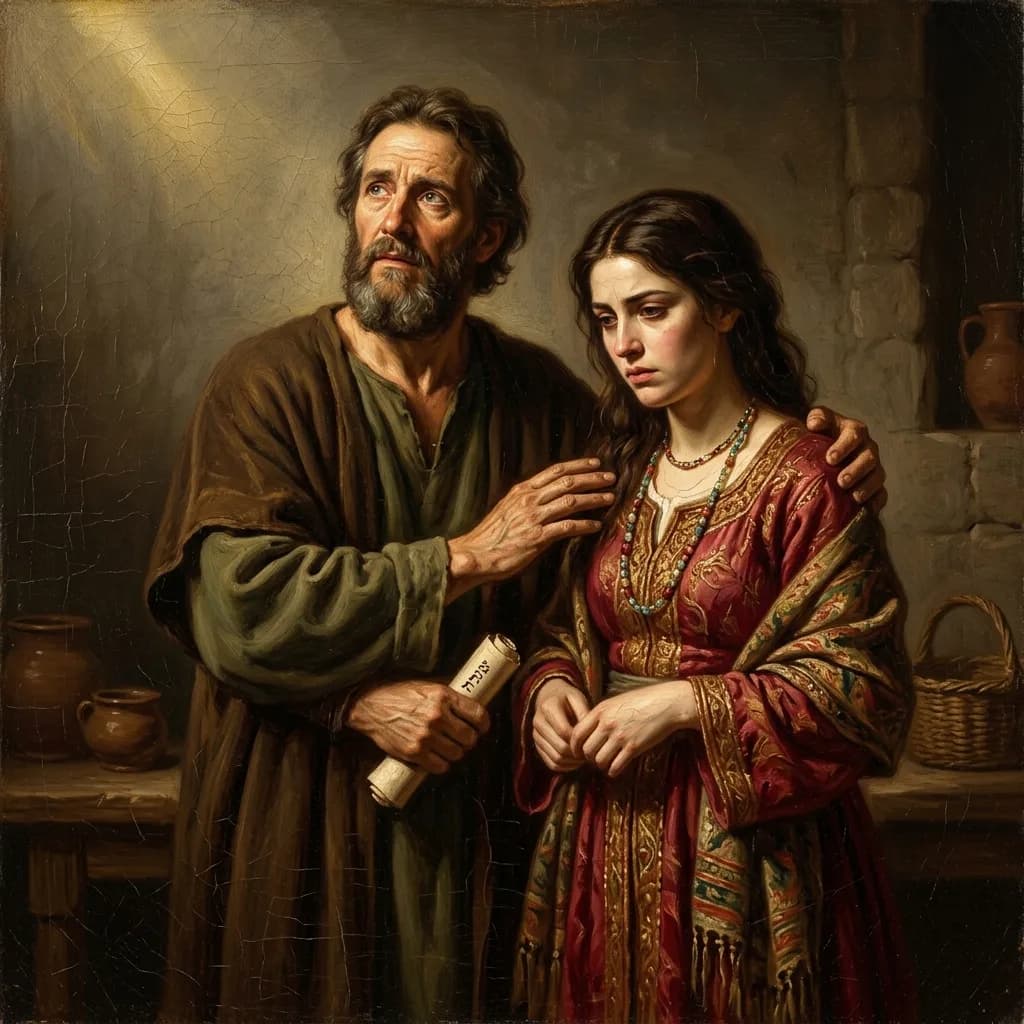
God commands Hosea to marry Gomer, a woman known for infidelity, symbolizing Israel's unfaithfulness to God. Hosea and Gomer have three children with symbolic names reflecting God's judgment and eventual restoration of Israel. God instructs Hosea to love Gomer again, representing His enduring love for Israel despite their idolatry.
Summary
The passage in Hosea 1-3 is significant as it recounts the story of the prophet Hosea's marriage, which serves as a living metaphor for God's relationship with Israel. Hosea, a prophet during the reigns of several Judean and Israelite kings, is instructed by God to marry Gomer, a woman described as a "wife of whoredoms" (1:2). This marriage symbolizes Israel's unfaithfulness to God. Hosea and Gomer have three children, each with names given by God to convey messages to Israel. The first child, a son, is named Jezreel, indicating impending judgment on the house of Jehu (1:4). Their daughter is named Loruhamah, meaning "not pitied," signaling that God will no longer show mercy to Israel (1:6). The third child, a son, is named Loammi, meaning "not my people," reflecting a severed relationship between God and Israel (1:9).
The narrative continues with God expressing His disappointment over Israel's infidelity, likened to Gomer's unfaithfulness. God describes Israel's pursuit of other gods and the consequences of such actions (2:5-13). Despite this, God promises eventual restoration. He speaks of a future where He will allure Israel back, leading to a renewed covenant characterized by righteousness and faithfulness (2:14-20). God declares that He will have mercy on those who had not received mercy and will restore the relationship, saying to those called "not my people," "Thou art my people" (2:23).
In Chapter 3, God instructs Hosea to love Gomer again, despite her adultery, paralleling God's enduring love for Israel despite their idolatry (3:1). Hosea redeems Gomer by purchasing her for fifteen pieces of silver and barley, instructing her to remain faithful to him (3:2-3). This act signifies the period during which Israel will be without a king or temple rituals, but eventually, they will return to seek the Lord and David their king (3:4-5). The passage concludes with the promise of Israel's future return and reverence for the Lord in the latter days.
Chiastic structure
ⓘHosea 1:2-9
“Go, take unto thee a wife of whoredoms... for ye are not my people, and I will not be your God.”
Hosea 2:19-20
“I will betroth thee unto me for ever... and thou shalt know the LORD.”
Hosea 3:1-5
“Go yet, love a woman... Afterward shall the children of Israel return, and seek the LORD their God.”
A and A' both depict the theme of Israel's unfaithfulness and God's response, with A focusing on judgment and A' on restoration.
Interpretation and theological stakes
Continue reading with a Scholar plan
Upgrade to Scholar