Mark 5:21-43 · Mark · Updated April 25, 2026
Jairus' Daughter
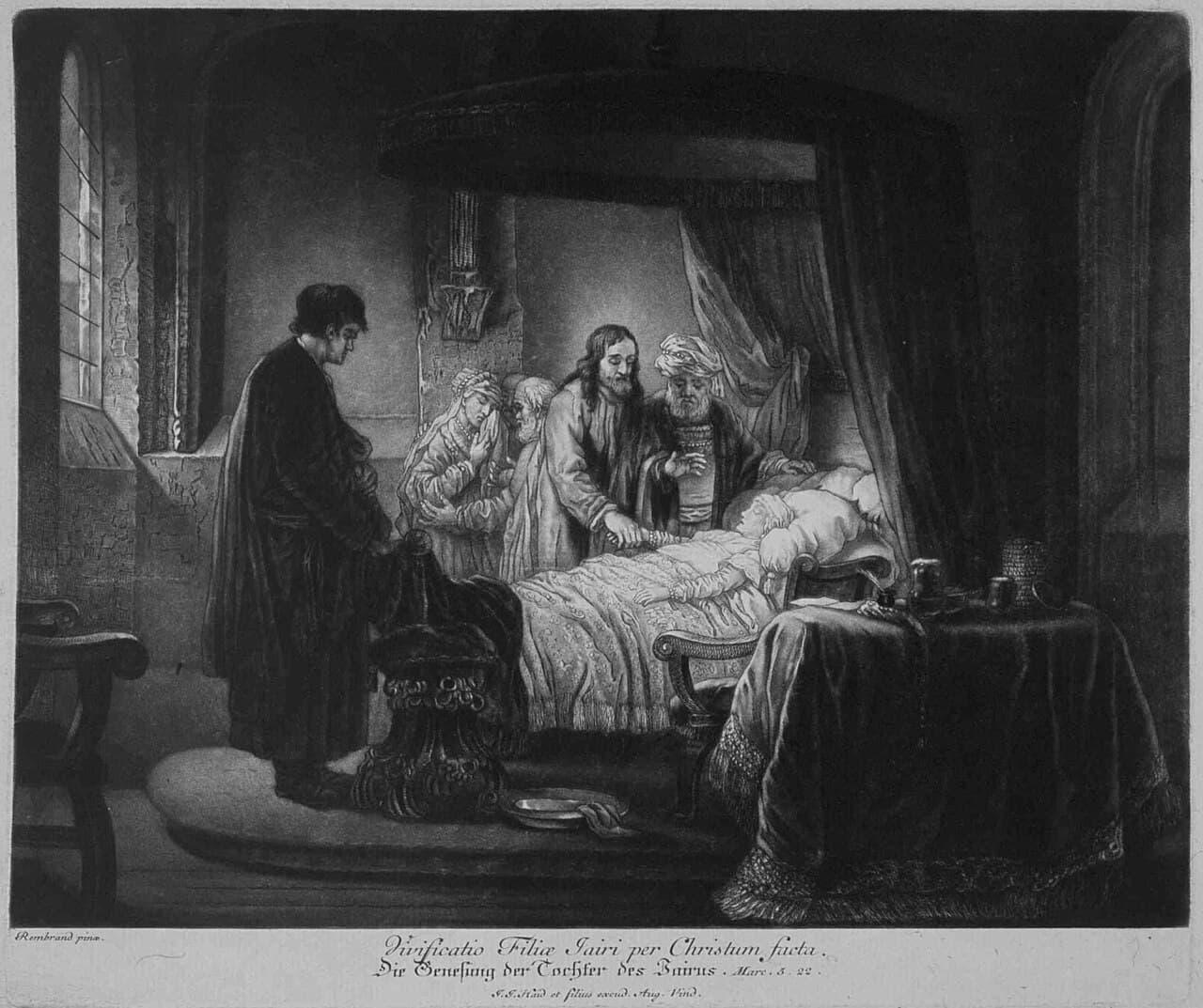
Jairus, a synagogue ruler, asks Jesus to heal his dying daughter. On the way, Jesus heals a woman with a bleeding issue. Upon arrival, Jesus raises Jairus' daughter from the dead.
Summary
The passage from the Gospel of Mark describes a miracle performed by Jesus, demonstrating His power over life and death. Jesus returns to the other side of the Sea of Galilee, where a large crowd gathers around Him (Mark 5:21). Jairus, a ruler of the synagogue, approaches Jesus and falls at His feet, pleading for help. Jairus's daughter is critically ill, and he begs Jesus to come and heal her by laying His hands on her (Mark 5:22-23). Jesus agrees to go with Jairus, and a throng of people follows them.
As they travel, a woman suffering from a twelve-year-long bleeding condition touches Jesus' garment, believing it will heal her. Her faith results in immediate healing, and Jesus notices power leaving Him (Mark 5:29-30). Jesus stops to ask who touched Him, and the woman, fearful yet honest, confesses. Jesus reassures her that her faith has healed her (Mark 5:34). Meanwhile, messengers arrive from Jairus's house, reporting that his daughter has died, suggesting there is no need to trouble Jesus further (Mark 5:35). Jesus, however, tells Jairus to keep believing and continues to the house with Peter, James, and John (Mark 5:36-37).
Upon arrival, they find mourners weeping loudly. Jesus tells them the girl is not dead but asleep, prompting laughter from the crowd (Mark 5:39-40). Clearing the room, He takes only the girl's parents and His three disciples with Him. Jesus takes the girl by the hand and commands her to rise, saying, "Talitha cumi" (Mark 5:41). Immediately, the twelve-year-old girl stands up and walks around, astonishing everyone present (Mark 5:42). Jesus instructs them to keep the miracle private and asks them to give her something to eat (Mark 5:43). The passage concludes with the girl's revival and the awe of those who witnessed it. The passage about Jairus' Daughter in Mark 5:21-43 primarily establishes Jesus' authority over life and death. By raising Jairus' Daughter, Jesus affirms the power of faith and His unique ability to conquer even the most final of human experiences — death. The narrative emphasizes both the desperation of Jairus and the persistence of faith in the face of insurmountable odds. Jesus’ command, "Talitha cumi," and the subsequent revival of the girl (Mark 5:41-42) underscore His divine authority and presence, which is life-giving.
Chiastic structure
ⓘMark 5:22-23
“Jairus by name; and when he saw him, he fell at his feet, and besought him greatly, saying, My little daughter lieth at the point of death.”
Mark 5:34-36
“Daughter, thy faith hath made thee whole; go in peace, and be whole of thy plague... Be not afraid, only believe.”
Mark 5:41-42
“He took the damsel by the hand, and said unto her, Talitha cumi... And straightway the damsel arose, and walked.”
Both A and A' involve a plea for healing and restoration to life, highlighting faith in Jesus' ability to heal.
Interpretation and theological stakes
Continue reading with a Scholar plan
Upgrade to Scholar