Acts 3:1-10 · Acts · Updated April 25, 2026
Lame Man Healed
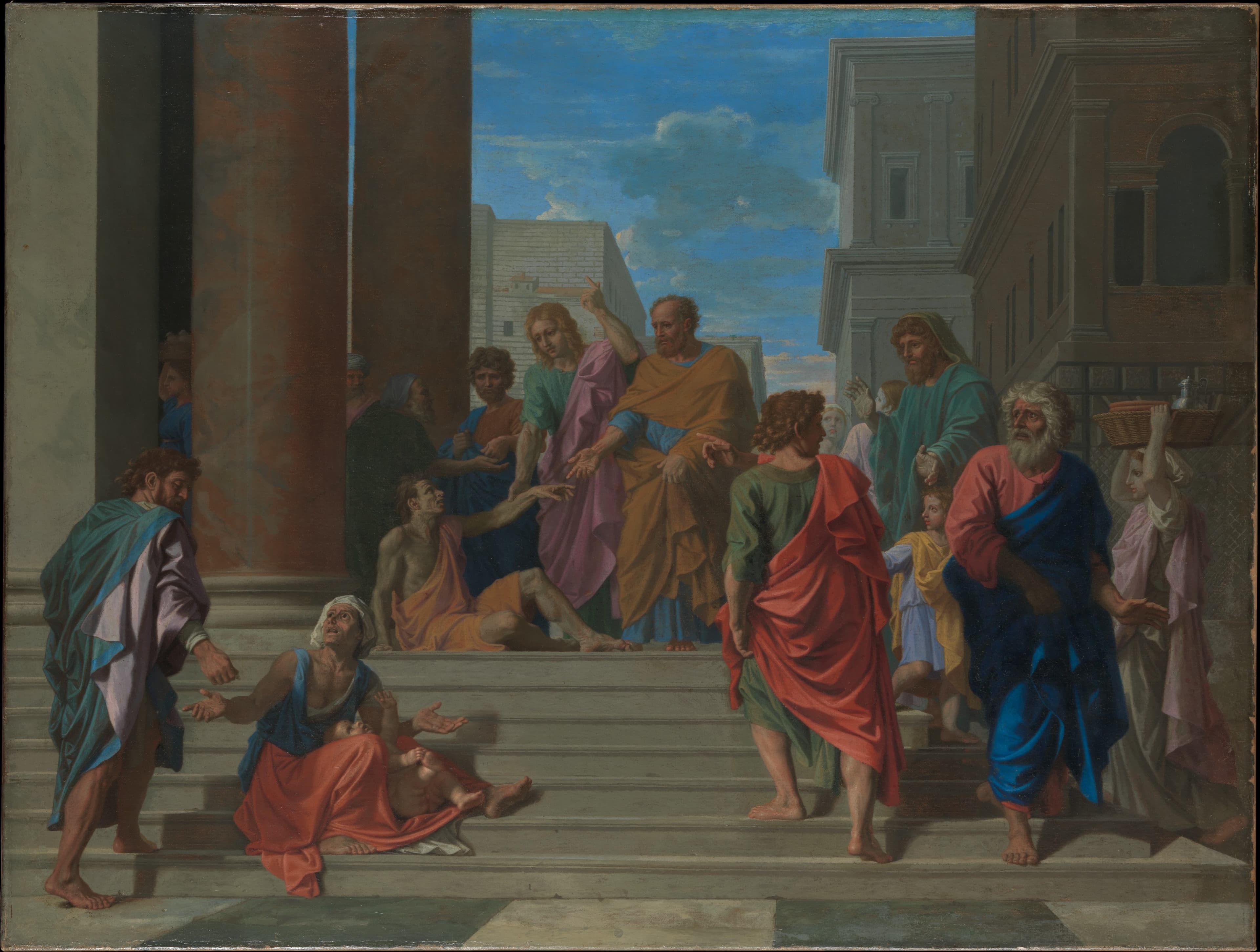
Peter and John encounter a man lame from birth at the temple gate called Beautiful. Peter heals him in the name of Jesus Christ, and the man walks, leaps, and praises God, astonishing the onlookers.
Summary
Acts 3:1-10 presents an event in the early Christian church, showcasing the apostles' power to heal in the name of Jesus. At the temple in Jerusalem during the ninth hour of prayer, Peter and John, two of Jesus' apostles, head to the temple. At the temple gate called Beautiful, a man lame since birth is placed daily to beg for alms from those entering the temple (3:2). He sees Peter and John and asks them for money.
As the lame man asks for alms, Peter and John stop and look at him. Peter tells the man to look at them, and he does so, expecting to receive something (3:4-5). However, Peter tells him that they do not have silver or gold, but instead offers what they have: healing in the name of Jesus Christ of Nazareth. Peter commands the man to rise and walk (3:6). Peter then takes the man by the right hand and helps him up. Immediately, the man's feet and ankles are strengthened, and he stands up, walks, and even leaps (3:7-8).
The healed man enters the temple with Peter and John, walking and praising God. Those who see him recognize him as the man who used to beg at the Beautiful gate and are filled with wonder and amazement at what has happened to him (3:9-10). The passage establishes that the healing is done in the name of Jesus, leaving the crowd in awe of the miraculous event. The primary conclusion of Acts 3:1-10 is that the healing of the lame man demonstrates the power and authority of Jesus Christ. The apostles, specifically Peter in this passage, perform a miraculous healing not through their own power but in the name of Jesus. This emphasizes the continuation of Jesus' ministry through his followers, showing that the divine power vested in Jesus is now at work through his apostles. The event is more than just a physical healing; it is a spiritual declaration of Jesus' enduring presence and influence.
Chiastic structure
ⓘActs 3:2-3
“And a certain man lame from his mother's womb was carried... asked an alms.”
Acts 3:6-7
“In the name of Jesus Christ of Nazareth rise up and walk.”
Acts 3:8-10
“And he leaping up stood, and walked... they were filled with wonder and amazement.”
A and A' both involve the lame man and his transformation from being carried to walking, highlighting the miracle and its impact.
Interpretation and theological stakes
Continue reading with a Scholar plan
Upgrade to Scholar