2 Kings 5:1-19 · 2 Kings · Updated April 25, 2026
Naaman's Healing
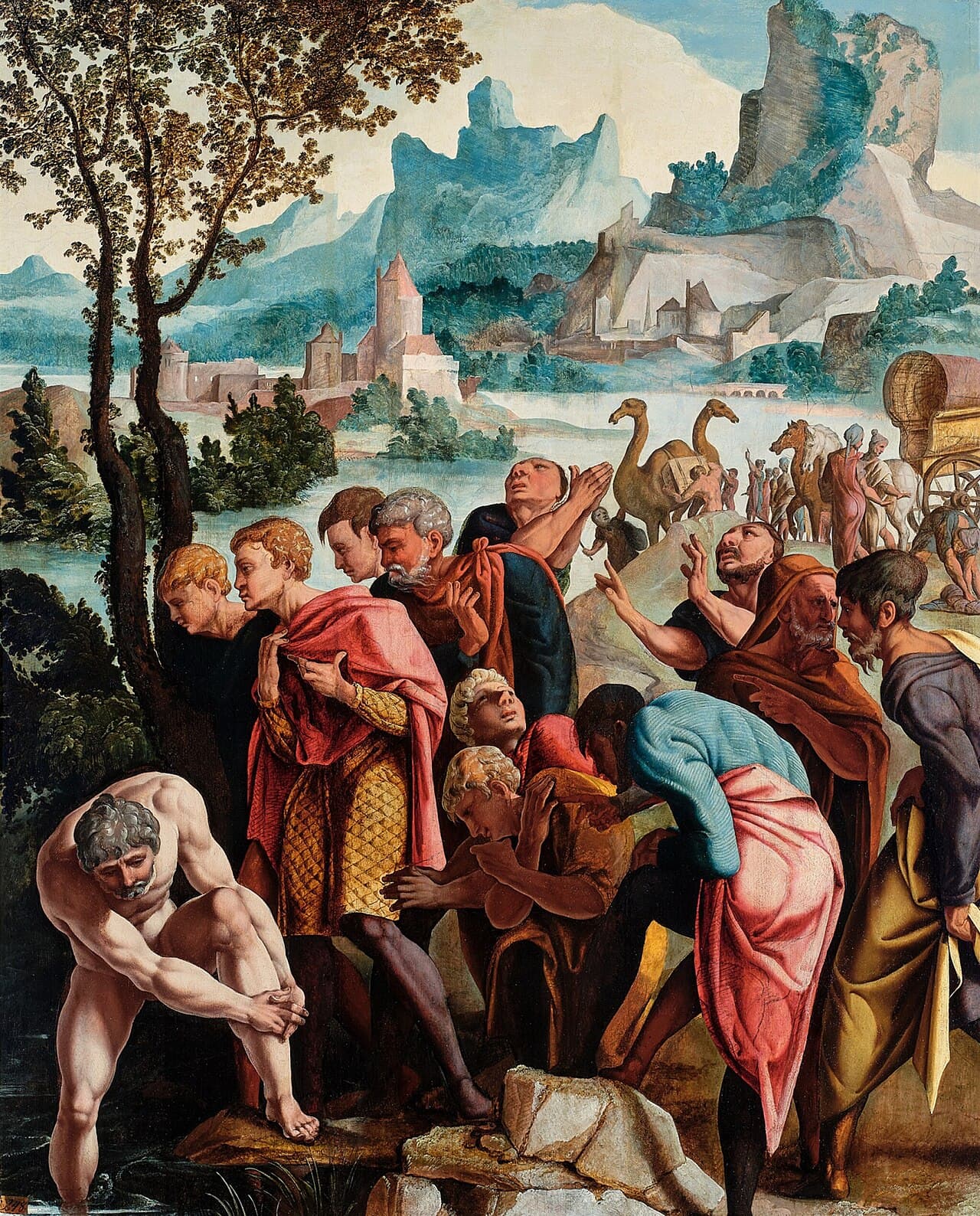
Naaman, a Syrian commander afflicted with leprosy, seeks healing in Israel after a captive maid suggests he visit the prophet Elisha. Despite initial reluctance, Naaman follows Elisha's instructions to wash in the Jordan River and is miraculously healed. Grateful, Naaman acknowledges the God of Israel and vows to worship Him alone.
Summary
The passage from 2 Kings 5:1-19 tells the story of Naaman, a highly esteemed Syrian military commander who suffers from leprosy. Despite his success and valor, his illness is a burden. A young Israelite girl, taken captive during a Syrian raid, serves his wife. She suggests that Naaman could find healing through a prophet in Samaria (5:2-3). Naaman reports this to the King of Syria, who sends him to the King of Israel with a letter and gifts, seeking a cure for Naaman's leprosy (5:5-6).
The King of Israel is distressed upon receiving the letter, believing the request to be a provocation, as he lacks the power to heal leprosy (5:7). Elisha, the prophet, hears of the king's distress and instructs him to send Naaman to him, asserting that there is a prophet in Israel (5:8). Naaman arrives at Elisha's house, and Elisha sends a messenger instructing him to wash in the Jordan River seven times to be cleansed (5:10). Initially angered by the simplicity of the instructions and the lack of personal attention from Elisha, Naaman's servants persuade him to follow the prophet's directive (5:11-13). He obeys, dips himself seven times in the Jordan, and is healed, his skin becoming like that of a child (5:14).
After his healing, Naaman returns to Elisha, acknowledging the God of Israel as the only true God and offering a gift, which Elisha refuses (5:15-16). Naaman requests to take some earth from Israel to worship the Lord in his homeland, committing to serve no other gods (5:17). He also seeks pardon for when he must accompany his master into the temple of Rimmon, a duty he cannot avoid (5:18). Elisha tells him to go in peace, concluding the encounter with Naaman's newfound faith and acknowledgment of Israel's God (5:19). The passage of Naaman's Healing in 2 Kings 5:1-19 primarily establishes the supremacy of the God of Israel over all other deities. Naaman, a foreign military leader, initially approaches the situation with his own expectations and cultural framework. However, his healing comes through actions that defy his expectations, showing that God’s power operates beyond human understanding. The miracle of Naaman's cleansing is not merely physical but also spiritual, leading to his acknowledgment of the God of Israel as the only true God (5:15). This transformation signifies a moment where divine power transcends national and religious boundaries, demonstrating God’s universal dominion.
Chiastic structure
ⓘ2 Kings 5:1
“Naaman... a mighty man in valour, but he was a leper.”
2 Kings 5:15
“Behold, now I know that there is no God in all the earth, but in Israel.”
2 Kings 5:14
“his flesh came again like unto the flesh of a little child, and he was clean.”
Both A and A' involve Naaman's condition and transformation, from leprosy to healing and from ignorance to faith.
Interpretation and theological stakes
Continue reading with a Scholar plan
Upgrade to Scholar