Matthew 24-25 · Matthew · Updated April 25, 2026
Olivet Discourse
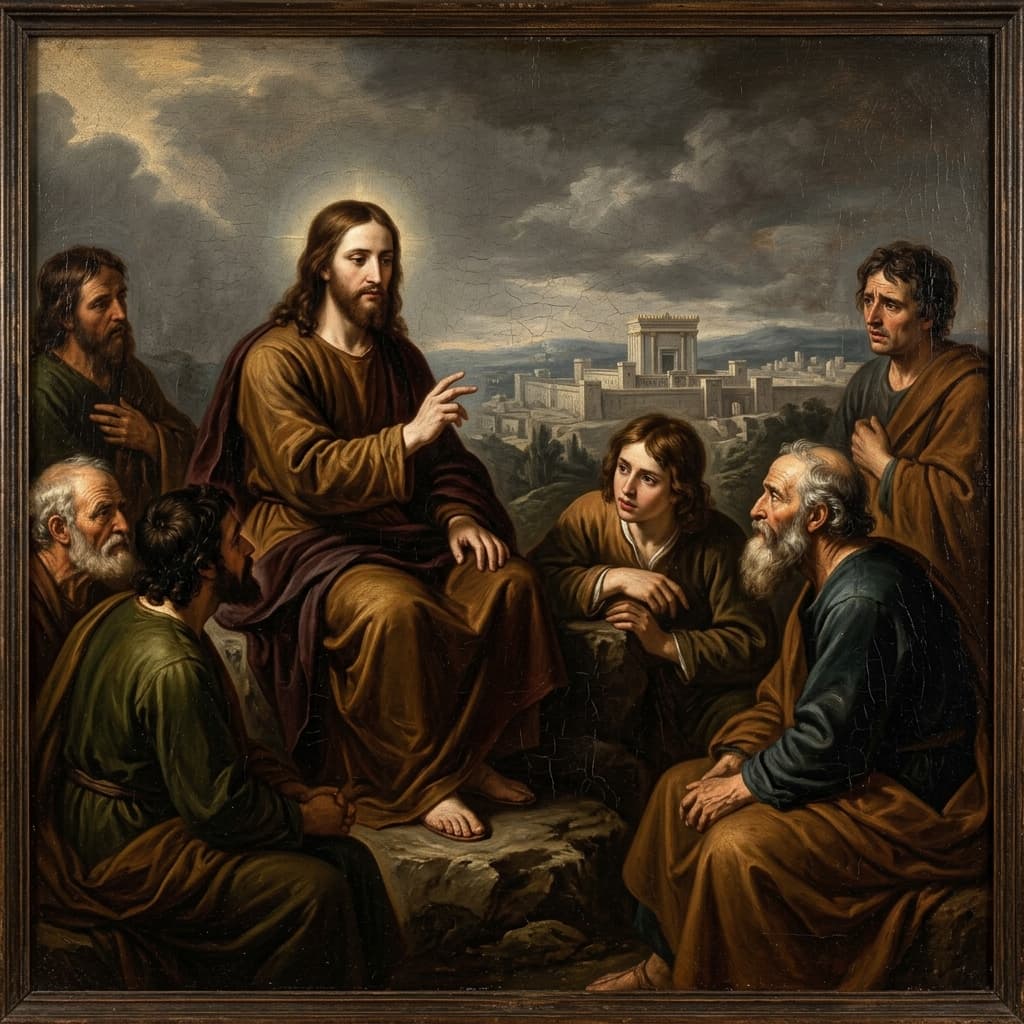
In the Olivet Discourse, Jesus speaks to his disciples about the signs of the end times and the coming of the Son of Man. He warns them of false prophets, tribulations, and the need for vigilance and preparedness through parables and teachings.
Summary
The Olivet Discourse, found in Matthew 24-25, is a significant passage where Jesus speaks to his disciples about future events, including the destruction of the temple, his second coming, and the end of the world. The setting is the Mount of Olives, where Jesus sits with his disciples. The disciples approach Jesus privately, asking when these events will occur and what signs will indicate his coming and the end times (24:3). This conversation follows Jesus's departure from the temple, where he predicts its destruction, setting the stage for the discussion on future events (24:1-2).
As Jesus responds to the disciples' questions, he outlines a series of events and warnings. He speaks of false prophets, wars, famines, and earthquakes as the beginning of sorrows (24:6-8). He warns that his followers will face persecution and that many will be led astray by false teachings (24:9-11). Jesus emphasizes the importance of endurance and the global proclamation of the gospel before the end comes (24:13-14). He describes the coming of the Son of Man with cosmic signs and the gathering of the elect (24:29-31). Jesus tells parables, such as those of the ten virgins and the talents, to illustrate the need for readiness and faithfulness (25:1-30). He concludes with a depiction of the final judgment, where the righteous and the wicked are separated, based on their actions toward "the least of these" (25:31-46).
The discourse concludes with a clear call to vigilance and preparedness. Jesus stresses that no one knows the exact day or hour of his return, emphasizing the need for constant readiness (24:36, 25:13). The passage ends with the separation of the righteous and the wicked, establishing the eternal consequences of their actions. The righteous enter eternal life, while the wicked face everlasting punishment (25:46).
Chiastic structure
ⓘMatthew 24:42-44
“Watch therefore: for ye know not what hour your Lord doth come.”
Matthew 25:31-33
“When the Son of man shall come in his glory, and all the holy angels with him, then shall he sit upon the throne of his glory.”
Matthew 25:34-46
“Then shall the King say unto them on his right hand, Come, ye blessed of my Father, inherit the kingdom prepared for you.”
A and A' both focus on the theme of readiness and judgment, with A discussing the signs and A' the final separation of the righteous and the wicked.
Interpretation and theological stakes
Continue reading with a Scholar plan
Upgrade to Scholar