Luke 14:15-24 · Luke · Updated April 30, 2026
Parable of the Great Banquet
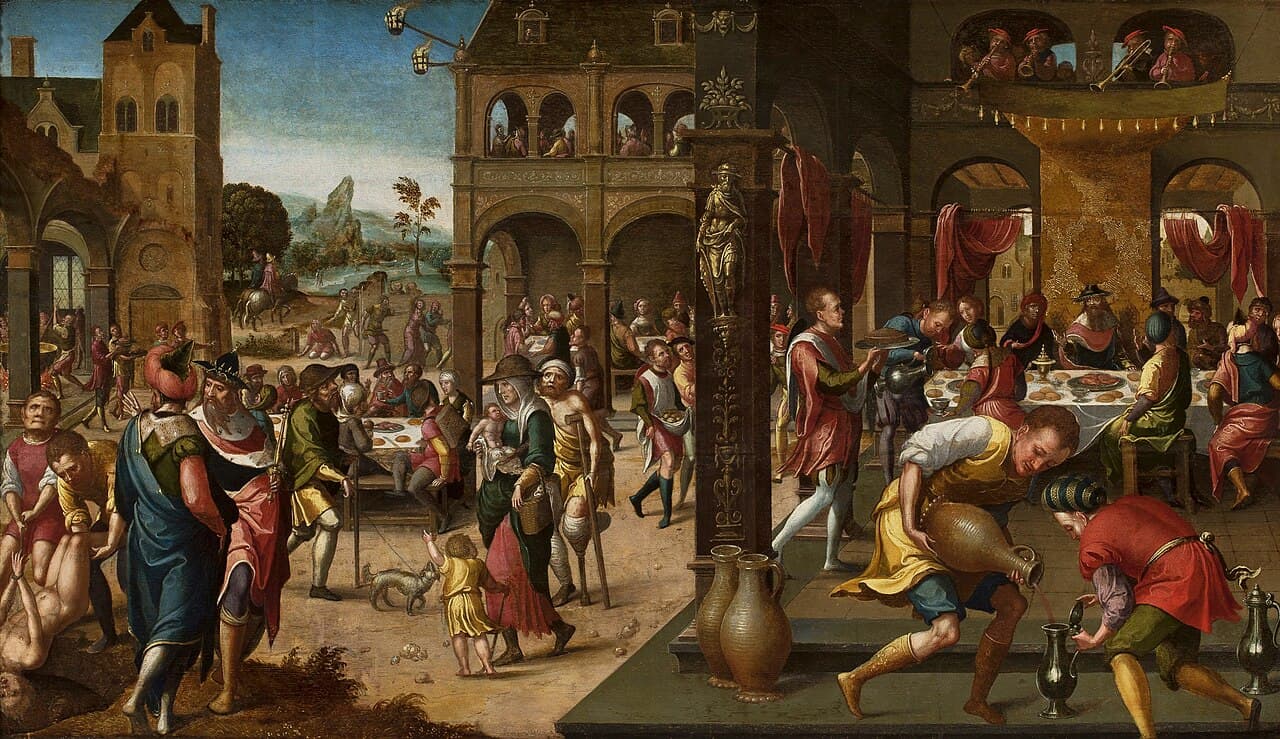
A man prepares a great banquet and invites many, but when the invited guests make excuses, he extends the invitation to the marginalized and outsiders.
Summary
The Parable of the Great Banquet, found in Luke 14:15-24, unfolds as Jesus responds to a remark about the blessedness of eating bread in the Kingdom of God (14:15). A man prepares a great banquet, symbolizing the divine invitation to salvation. He sends his servant to call the invited guests, but they all begin to make excuses (14:18-20). The excuses are varied — a new field, new oxen, a new wife — highlighting the distractions and priorities that keep people from accepting God's call. The host, angered by their refusal, instructs his servant to invite the poor, the maimed, the halt, and the blind from the streets and lanes (14:21). This reflects God's heart for the marginalized and the unexpected nature of His kingdom. When there is still room, the servant is sent to the highways and hedges to compel others to come, ensuring the house is filled (14:23). The parable concludes with a solemn declaration: those originally invited will not taste the banquet (14:24), underscoring the consequences of rejecting God's invitation.
Chiastic structure
ⓘ14:16
“A certain man made a great supper, and bade many:”
14:18
“And they all with one consent began to make excuse.”
14:21
“Go out quickly into the streets and lanes of the city, and bring in hither the poor, and the maimed, and the halt, and the blind.”
14:23
“Go out into the highways and hedges, and compel them to come in, that my house may be filled.”
14:24
“None of those men which were bidden shall taste of my supper.”
The initial invitation and the final exclusion of the original guests.
Interpretation and theological stakes
Continue reading with a Scholar plan
Upgrade to Scholar