Mark 2:1-12 · Mark · Updated April 25, 2026
Paralytic Lowered Through Roof
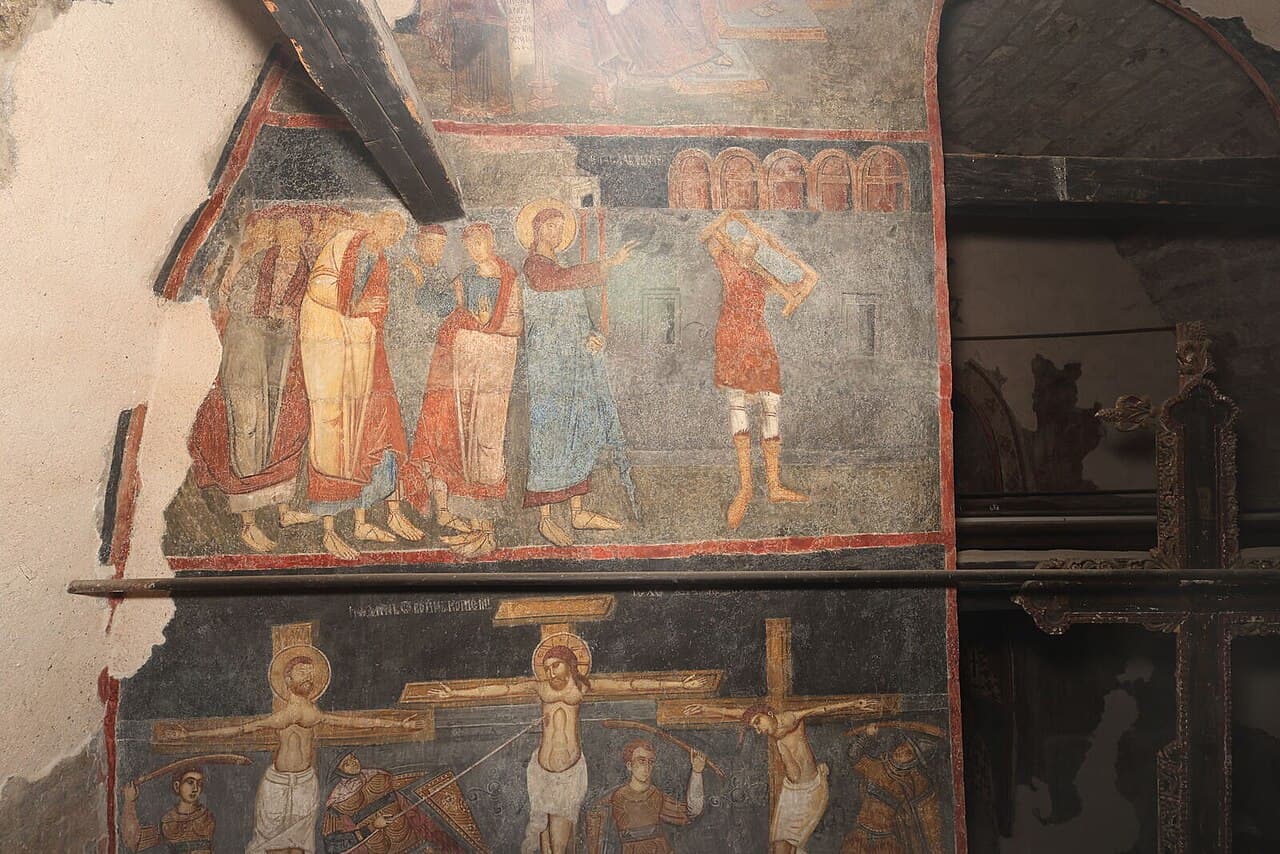
In Capernaum, Jesus is teaching in a crowded house when four men lower a paralytic through the roof to reach him. Jesus forgives the man's sins and heals him, prompting amazement and glorification of God among the witnesses.
Summary
In the Gospel of Mark, chapter 2, verses 1-12, Jesus returns to Capernaum, and word quickly spreads that he is in a house there. A large crowd gathers, filling the house to capacity and leaving no room even at the door. As Jesus preaches to the crowd, a paralytic man, carried by four friends, arrives at the scene (2:3). Unable to get through the crowd, they resort to an unusual method to reach Jesus.
The friends of the paralytic man remove part of the roof above Jesus and lower the man down on his bed (2:4). Observing their faith, Jesus tells the paralytic, "Son, thy sins be forgiven thee" (2:5). Some scribes present silently question Jesus' authority, wondering why he speaks blasphemies, as only God can forgive sins (2:7). Perceiving their thoughts, Jesus challenges them, asking which is easier: to forgive sins or to heal the man (2:9). To demonstrate his authority, Jesus commands the paralytic to rise, take up his bed, and go home (2:11).
The paralytic immediately stands up, takes his bed, and leaves in front of everyone, astonishing the crowd (2:12). The people are amazed and glorify God, remarking that they have never seen anything like this before. The passage concludes with the crowd's reaction, emphasizing the extraordinary nature of the event and the authority of Jesus as presented in the text.
Chiastic structure
ⓘMark 2:3-4
“bringing one sick of the palsy... they let down the bed”
Mark 2:10
“that ye may know that the Son of man hath power on earth to forgive sins”
Mark 2:11-12
“Arise, and take up thy bed, and go thy way... he arose, took up the bed”
Both A and A' involve actions related to the paralytic's healing, with A focusing on the faith and action of bringing the paralytic to Jesus, and A' focusing on the result of Jesus' command to the paralytic.
Interpretation and theological stakes
Continue reading with a Scholar plan
Upgrade to Scholar