Matthew 26:69-75 · Matthew · Updated April 25, 2026
Peter's Denial
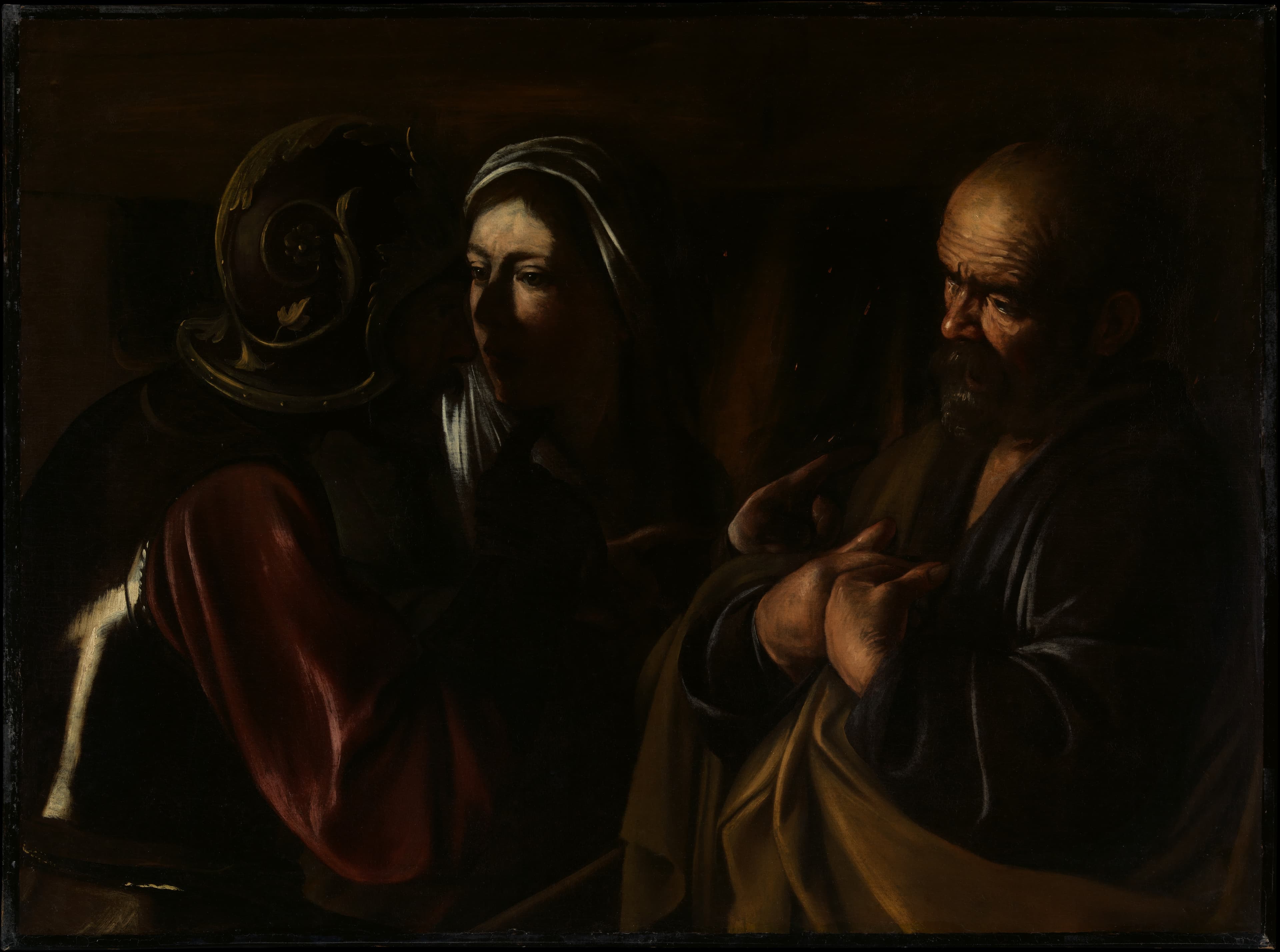
Peter denies knowing Jesus three times as predicted by Jesus. After the third denial, a rooster crows, and Peter remembers Jesus' prophecy, leading him to weep bitterly.
Summary
The passage from the Gospel of Matthew recounts when Peter denies knowing Jesus, fulfilling a prediction Jesus made earlier. This event occurs in Jerusalem during the night of Jesus' arrest. Peter, one of Jesus' closest disciples, follows Jesus to the high priest's courtyard, where Jesus is questioned. As Peter sits outside, others recognize him.
Events begin with a servant girl identifying Peter as someone who was with Jesus. Peter denies this, saying, "I know not what thou sayest" (Matthew 26:69). Moving to the porch, another person identifies him as a follower of Jesus. Peter denies it again, this time with an oath, stating, "I do not know the man" (Matthew 26:71). A little while later, bystanders approach Peter, insisting he must be one of Jesus' followers because of his accent. Peter denies it a third time, cursing and swearing, "I know not the man." Immediately, a rooster crows (Matthew 26:73).
The passage concludes with Peter remembering Jesus' prediction that Peter would deny him three times before the rooster crowed. Realizing what he has done, Peter goes outside and weeps bitterly (Matthew 26:74). The passage establishes the fulfillment of Jesus' earlier words and Peter's remorse and anguish following his denials. Peter's denial in Matthew 26:69-75 shows a moment of personal failure and subsequent remorse. Peter's triple denial of Jesus, just as Jesus predicted, is a reminder of human weakness and susceptibility to fear and pressure. The crowing rooster serves as an audible signal of Peter's error, reinforcing Jesus' earlier words and the theme of prophetic fulfillment. This moment underscores the frailty of human promises and the deep emotional response that true recognition of failure can evoke.
Chiastic structure
ⓘMatthew 26:69-70
“But he denied before all, saying, I know not what thou sayest.”
Matthew 26:74
“And immediately the cock crew.”
Matthew 26:75
“And he went out, and wept bitterly.”
Both A and A' involve Peter's denial of knowing Jesus, with A' being the final denial that leads to his remorse.
Interpretation and theological stakes
Continue reading with a Scholar plan
Upgrade to Scholar