Matthew 15:21-28 · Matthew · Updated April 25, 2026
Syrophoenician Woman
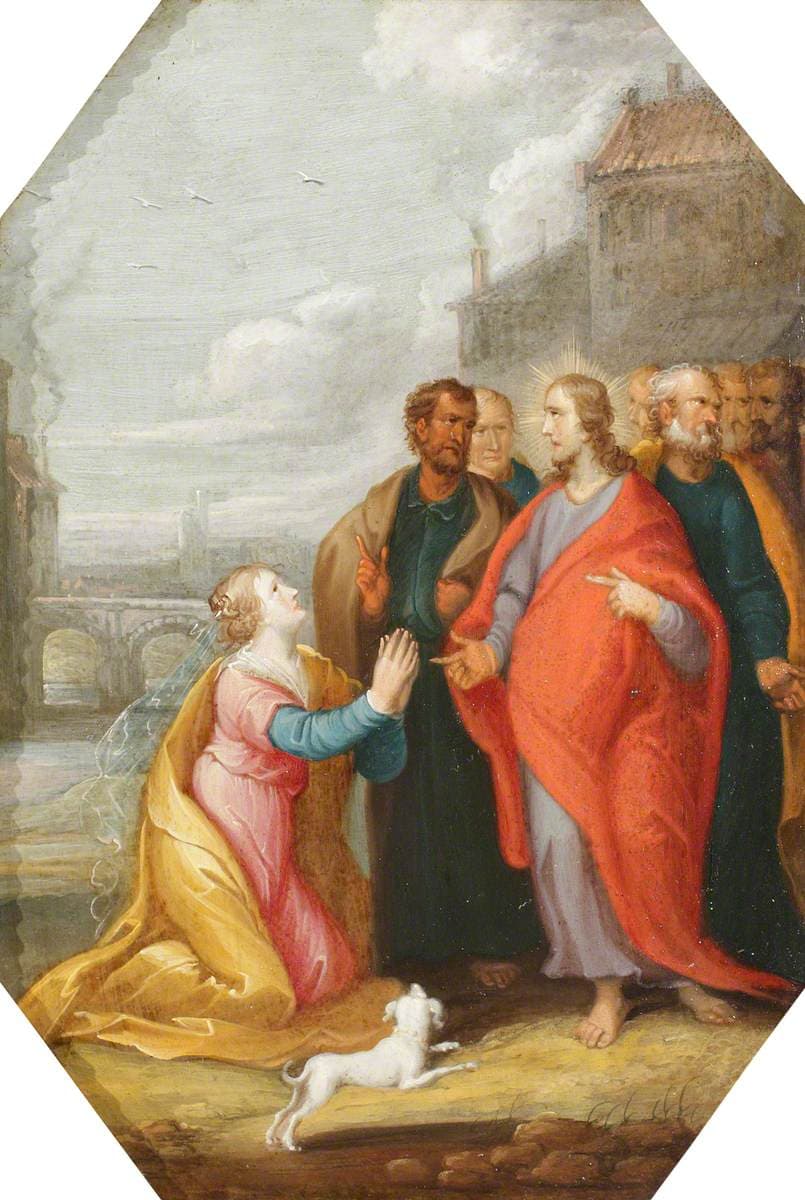
Jesus travels to the region of Tyre and Sidon, where a Canaanite woman approaches Him, pleading for her demon-possessed daughter's healing. Initially, Jesus does not respond, but after a brief exchange highlighting her faith, He grants her request, and her daughter is healed.
Summary
The passage from Matthew 15:21-28 is an account of Jesus's encounter with a Syrophoenician woman. This story depicts a moment where Jesus interacts with a Gentile, a non-Jew, during his ministry. Jesus has traveled to the region of Tyre and Sidon. A Canaanite woman from the area approaches him, pleading for mercy because her daughter is severely troubled by a demon (15:22). Present with Jesus, the disciples initially urge him to send her away because she is persistent in her cries for help (15:23).
As the event unfolds, Jesus initially does not respond to the woman's plea, explaining to his disciples that his mission is primarily to the lost sheep of Israel (15:24). Despite this, the woman continues to implore Jesus for assistance, showing her desperation and faith by worshipping him and asking for his help (15:25). Jesus then uses a metaphor, saying it is not right to take the children's bread and throw it to the dogs (15:26). The woman cleverly responds that even dogs eat the crumbs that fall from their master's table, demonstrating her humility and faith (15:27).
In the conclusion of the passage, Jesus acknowledges the woman's great faith and grants her request. He tells her that her desire is fulfilled, and her daughter is healed from that very hour (15:28). The passage concludes with the healing of the woman's daughter, emphasizing the power of faith and Jesus's willingness to respond to genuine belief, regardless of the person's ethnic background. The primary conclusion of the passage is that faith transcends ethnic and cultural boundaries. The Syrophoenician woman, a Gentile, approaches Jesus with a plea for her daughter's healing. Despite initial resistance, her persistent faith and clever response to Jesus's challenging metaphor lead to her request being granted (15:28). This story demonstrates the power of genuine faith and suggests that Jesus's ministry can extend beyond the Jewish people when met with true belief.
Chiastic structure
ⓘMatthew 15:22
“Have mercy on me, O Lord, Son of David; my daughter is grievously vexed with a devil.”
Matthew 15:26-27
“It is not meet to take the children's bread, and to cast it to dogs. And she said, Truth, Lord: yet the dogs eat of the crumbs which fall from their masters' table.”
Matthew 15:28
“O woman, great is thy faith: be it unto thee even as thou wilt.”
The initial plea for mercy and the final acknowledgment of faith both emphasize the woman's persistence and Jesus' ultimate response to her faith.
Interpretation and theological stakes
Continue reading with a Scholar plan
Upgrade to Scholar