Luke 17:11-19 · Luke · Updated April 25, 2026
Ten Lepers
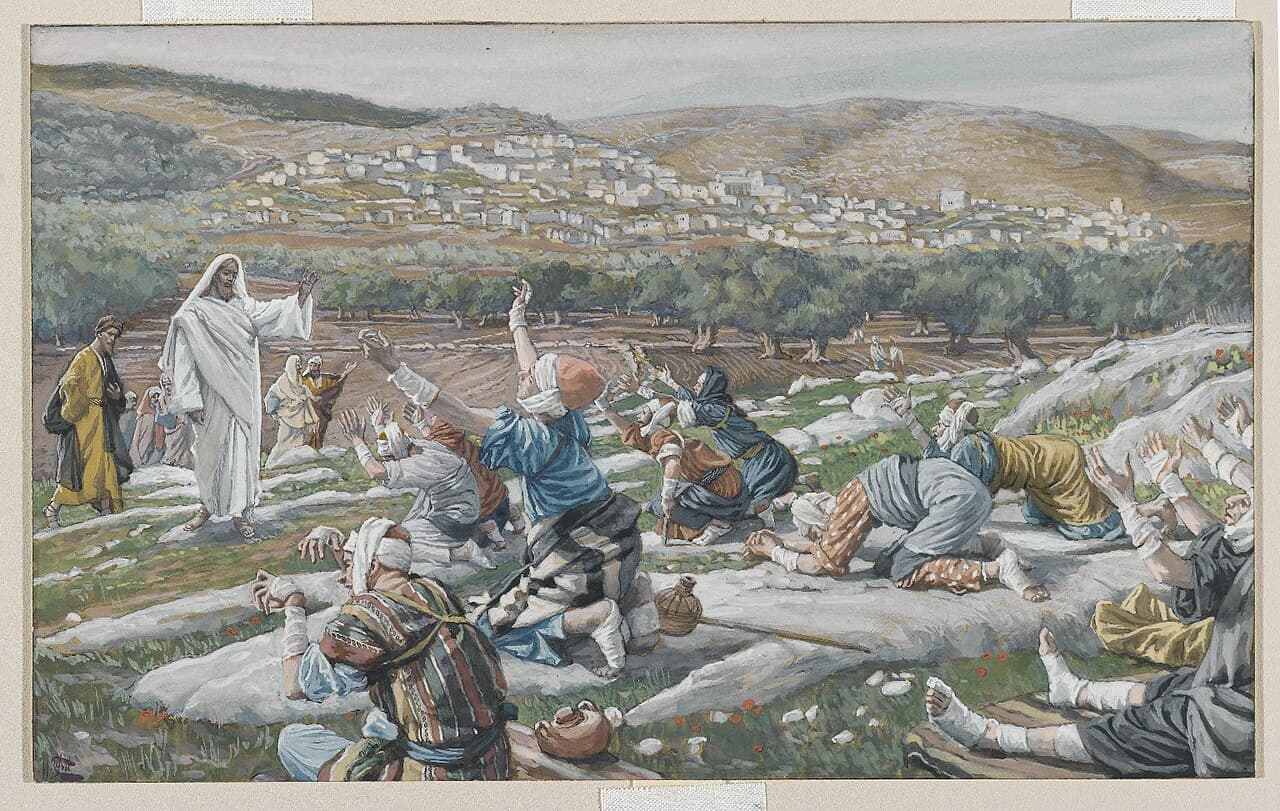
As Jesus travels to Jerusalem, he encounters ten lepers in a village who ask for mercy. Jesus instructs them to show themselves to the priests, and they are cleansed as they go. One of them, a Samaritan, returns to thank Jesus and glorify God.
Summary
In this passage from the Gospel of Luke, Jesus is traveling to Jerusalem and passes through a region between Samaria and Galilee (Luke 17:11). As he enters a village, he encounters ten men afflicted with leprosy. These men stand at a distance, adhering to the social norms of the time that required them to keep away from others due to their condition. They call out to Jesus, addressing him as "Master" and pleading for mercy (Luke 17:13).
Jesus responds to their plea by instructing them to go and show themselves to the priests, which was the customary procedure for those seeking to be declared clean from leprosy (Luke 17:14). As the ten men proceed to follow his instructions, they are miraculously cleansed of their leprosy. Noticing his healing, one of the men, who is identified as a Samaritan, turns back. He loudly praises God and falls at Jesus' feet to express his gratitude (Luke 17:15-16).
The passage concludes with Jesus questioning the absence of the other nine who were healed, highlighting that only the Samaritan returned to give thanks (Luke 17:17-18). Jesus then tells the Samaritan to rise and go his way, stating that his faith has made him whole (Luke 17:19). The passage establishes the importance of gratitude and faith, as seen in the Samaritan's actions and Jesus' final words.
Chiastic structure
ⓘLuke 17:12-13
“ten men that were lepers, which stood afar off: And they lifted up voices, and said, Jesus, Master, have mercy on us.”
Luke 17:15-16
“one of them, when he saw that he was healed, turned back, and with a loud voice glorified God, And fell down on his face at his feet, giving him thanks: and he was a Samaritan.”
Luke 17:19
“Arise, go thy way: thy faith hath made thee whole.”
Both A and A' involve the act of seeking mercy and the response to healing, highlighting the theme of faith and gratitude.
Interpretation and theological stakes
Continue reading with a Scholar plan
Upgrade to Scholar