The Vatican and Power
Secret Societies · Updated August 15, 2026
Overview
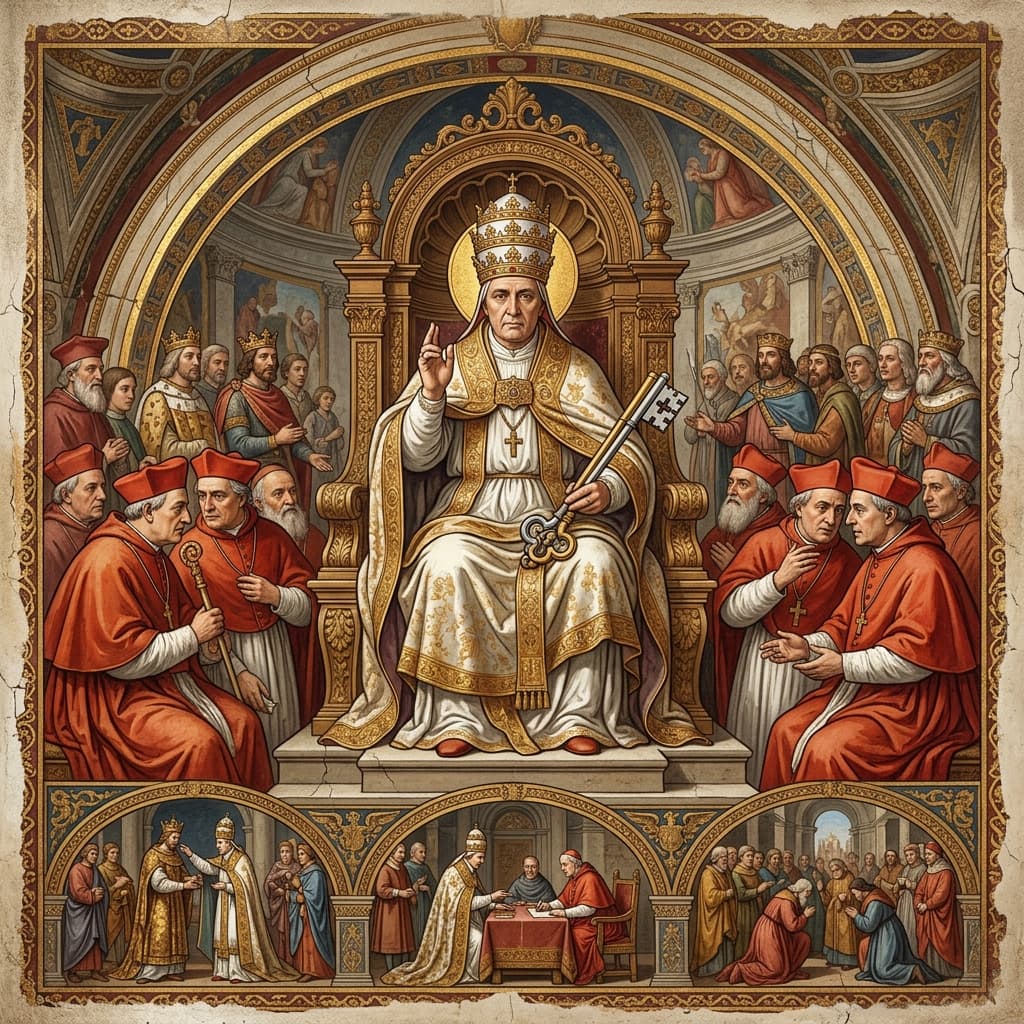
The long struggle between The Vatican and worldly powers looked like a fight over land, money, and political influence. The surface issues always involved taxes, rival kings, and contested bishop appointments. The real prize was absolute spiritual authority. The conflict determined whether The Papacy held an unbroken divine mandate stretching back to the first century, or whether that authority was conditional, reformable, and answerable to secular rulers, church councils, or national governments. Whoever controlled that mandate commanded the conscience of every baptized Christian on earth.
The crisis crested between 1415 and 1417 at the Council of Constance, an assembly gathered to end the Western Schism. Three rival popes claimed ultimate authority simultaneously, each excommunicating the others. The Conciliarists, led by scholar Jean Gerson, stormed the council with a radical proposition: a church council held authority above any pope. They needed a clean sweep to prevent papal tyranny and reform corrupted church leadership. Opposing them were the Papal Centralists, heirs to the absolute sovereign philosophy championed centuries earlier by Pope Gregory VII. The centralists needed the papacy to survive intact as an unquestionable divine office. The Holy Roman Emperor Sigismund forced the assembled bishops to act. The council deposed Pope John XXIII, accepted Gregory XII's resignation, and excommunicated Benedict XIII. The council elected Martin V to fill the emptied throne. The Conciliarists won the battle but lost the war. Martin V accepted his crown, ignored the council's claims of supremacy, and spent his papacy rebuilding absolute papal authority.
The structural conflict never disappeared. The Holy See operates today as a sovereign state under international law, claiming a first-century divine foundation that recognizes no earthly superior. Any secular government or church council attempting to limit papal power runs headfirst into that absolute jurisdiction. Every historical compromise simply delays the next confrontation. The competing claims to ultimate spiritual authority remain mutually exclusive in principle, even when temporarily reconciled in practice. Modern governments negotiate with The Vatican through ambassadors and formal treaties, a diplomatic courtesy extended to no other religious institution on earth.
The Holy See's claim to be the divinely founded, sovereign center of all Christian authority meant that every challenge to papal power was not merely political rebellion but theological defiance against God's own appointed order.
The Vatican and Power (stakes)
The long struggle between The Vatican and worldly powers looked like a fight over land, money, and political influence. The surface issues always involved taxes, rival kings, and contested bishop appointments. The real prize was absolute spiritual authority. The conflict determined whether The Papacy held an unbroken divine mandate stretching back to the first century, or whether that authority was conditional, reformable, and answerable to secular rulers, church councils, or national governments. Whoever controlled that mandate commanded the conscience of every baptized Christian on earth.
The crisis crested between 1415 and 1417 at the Council of Constance, an assembly gathered to end the Western Schism. Three rival popes claimed ultimate authority simultaneously, each excommunicating the others. The Conciliarists, led by scholar Jean Gerson, stormed the council with a radical proposition: a church council held authority above any pope. They needed a clean sweep to prevent papal tyranny and reform corrupted church leadership. Opposing them were the Papal Centralists, heirs to the absolute sovereign philosophy championed centuries earlier by Pope Gregory VII. The centralists needed the papacy to survive intact as an unquestionable divine office. The Holy Roman Emperor Sigismund forced the assembled bishops to act. The council deposed Pope John XXIII, accepted Gregory XII's resignation, and excommunicated Benedict XIII. The council elected Martin V to fill the emptied throne. The Conciliarists won the battle but lost the war. Martin V accepted his crown, ignored the council's claims of supremacy, and spent his papacy rebuilding absolute papal authority.
The structural conflict never disappeared. The Holy See operates today as a sovereign state under international law, claiming a first-century divine foundation that recognizes no earthly superior. Any secular government or church council attempting to limit papal power runs headfirst into that absolute jurisdiction. Every historical compromise simply delays the next confrontation. The competing claims to ultimate spiritual authority remain mutually exclusive in principle, even when temporarily reconciled in practice. Modern governments negotiate with The Vatican through ambassadors and formal treaties, a diplomatic courtesy extended to no other religious institution on earth.
Continue reading with a Scholar plan
Upgrade to Scholar