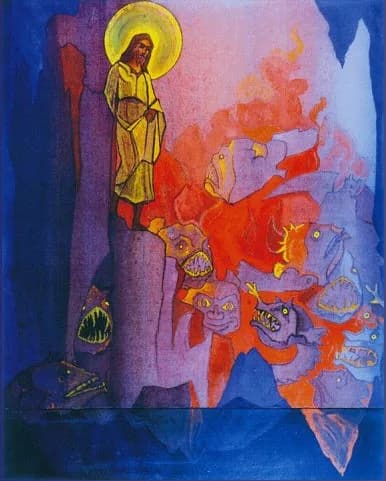
Hell
Theology · Updated August 15, 2026
Overview
Christianity's concept of hell as a place of eternal torment was not universally accepted in its early stages and has evolved over the centuries. Hebrew Scriptures depicted the afterlife as Sheol, a shadowy, indistinct realm where both the righteous and the wicked resided after death, devoid of the fiery punishments later associated with hell. New Testament references to "Hades" borrowed from Greek mythology, where it was simply the underworld and not inherently a place of suffering. Jesus spoke of "Gehenna," a term derived from a valley outside Jerusalem known for its associations with judgment and destruction. Over time, these varied interpretations began to coalesce into a more unified vision of Hell, influenced by theological debates and cultural narratives.
Various figures and movements have shaped the evolving concept of Hell. By the 3rd century, theologians like Origen argued for universal salvation, suggesting that all souls would eventually be reconciled with God. However, this view faced opposition, and over the centuries, hell increasingly took on a punitive character. The 14th-century poet Dante Alighieri popularized the image of hell as a place of eternal punishment through his "Inferno," a detailed and imaginative depiction that left a lasting impression on Western culture. As the church sought to solidify its doctrines, the image of hell as a realm of endless suffering for the wicked became more firmly entrenched, particularly during periods of religious reform and revival.
Today, the concept of Hell remains a topic of debate and interpretation within Christianity. While many denominations adhere to the traditional view of hell as a place of eternal torment, others, including some modern theologians, revisit earlier ideas like those of Origen, questioning the compatibility of eternal punishment with a loving and just deity. The diversity of views reflects an ongoing dialogue within the Christian community about the nature of divine justice and mercy. This conversation continues to evolve, shaped by historical interpretations, cultural influences, and theological reflections.
The concept of hell as a place of eternal torment was not universally accepted in early Christianity and has evolved significantly over the centuries.
Common questions
- What is hell according to Christianity?
- In Christianity, hell is traditionally viewed as a place of eternal punishment for the wicked after death, where they are separated from God. This concept has evolved over time, influenced by theological debates and cultural narratives.
- How is hell described in the Bible?
- In the Bible, hell is described using terms like 'Sheol' in the Hebrew Scriptures, a shadowy realm for all the dead, and 'Hades' in the New Testament, which refers to the underworld. Jesus also used the term 'Gehenna,' associated with judgment and destruction.
- What are the different levels of hell in Dante's Inferno?
- Dante's Inferno describes nine circles of hell, each representing different sins and corresponding punishments. These circles range from limbo for the unbaptized and virtuous pagans to treachery, the deepest circle reserved for traitors.
- What religions believe in hell?
- Religions that believe in hell include Christianity, Islam, and some branches of Judaism. Each religion has its own interpretation and understanding of hell's nature and purpose.
- How has the concept of hell evolved over time?
- The concept of hell has evolved from a shadowy afterlife in early Jewish thought to a more defined place of punishment in Christianity. Influences include Greek mythology, theological debates, and cultural works like Dante's Inferno.
- Is hell mentioned in the Quran?
- Yes, the Quran mentions hell, referred to as 'Jahannam,' as a place of punishment for those who reject faith and commit evil deeds. It is depicted as a fiery and tormenting realm.
- What is the purpose of hell in religious teachings?
- Hell serves as a place of punishment for the wicked and a deterrent against sin in religious teachings. It underscores the consequences of moral choices and the importance of living a righteous life.
- How do different denominations of Christianity view hell?
- Views on hell vary among Christian denominations; some hold to the traditional view of eternal punishment, while others, like some modern theologians, explore ideas of universal reconciliation or annihilationism. These differences reflect ongoing theological debates about divine justice and mercy.
- What are some common misconceptions about hell?
- Common misconceptions about hell include the idea that it is a literal place of fire and brimstone or that it is a medieval invention. In reality, the concept has ancient roots and has been interpreted in various symbolic and metaphorical ways.
- Who goes to hell according to Christian beliefs?
- According to traditional Christian beliefs, those who die in a state of mortal sin or without accepting God's grace and salvation through Jesus Christ go to hell. However, views on this can vary among different Christian denominations.
- What is the Catholic Church's teaching on hell?
- The Catholic Church teaches that hell is a state of eternal separation from God for those who freely choose to reject Him. It emphasizes the importance of free will and the consequences of one's choices in life.
- How do Jewish beliefs about hell differ from Christian beliefs?
- Jewish beliefs about the afterlife, including concepts similar to hell, are less defined and vary widely. Traditional Judaism speaks of Sheol, a shadowy place for all the dead, and some modern interpretations include ideas of temporary purification rather than eternal punishment.
- What is the historical origin of the concept of hell?
- The concept of hell has origins in ancient religious and cultural traditions, including the Hebrew Sheol and Greek Hades. Over time, these ideas merged and evolved within Christianity into a more defined doctrine of eternal punishment.
- How do modern interpretations of hell differ from traditional views?
- Modern interpretations of hell often question the compatibility of eternal punishment with a loving God, exploring ideas like universal reconciliation or annihilationism. These views contrast with traditional depictions of hell as a place of endless torment.
- What is the symbolism behind the imagery of hell in literature?
- In literature, hell often symbolizes the consequences of moral failings, the struggle between good and evil, and the human condition. Works like Dante's Inferno use vivid imagery to explore themes of justice, redemption, and the nature of sin.