The 6 Financial Habits That Separate Thriving Churches from Struggling Ones
It's rarely income. It's almost always habits.

Walk into two churches of similar size, similar demographics, similar communities. One is always scrambling: delayed building repairs, staff stretched thin, ministry initiatives that never quite launch. The other is steady, growing, and consistently able to say yes to things that matter.
The difference is rarely income. It's almost always habits.
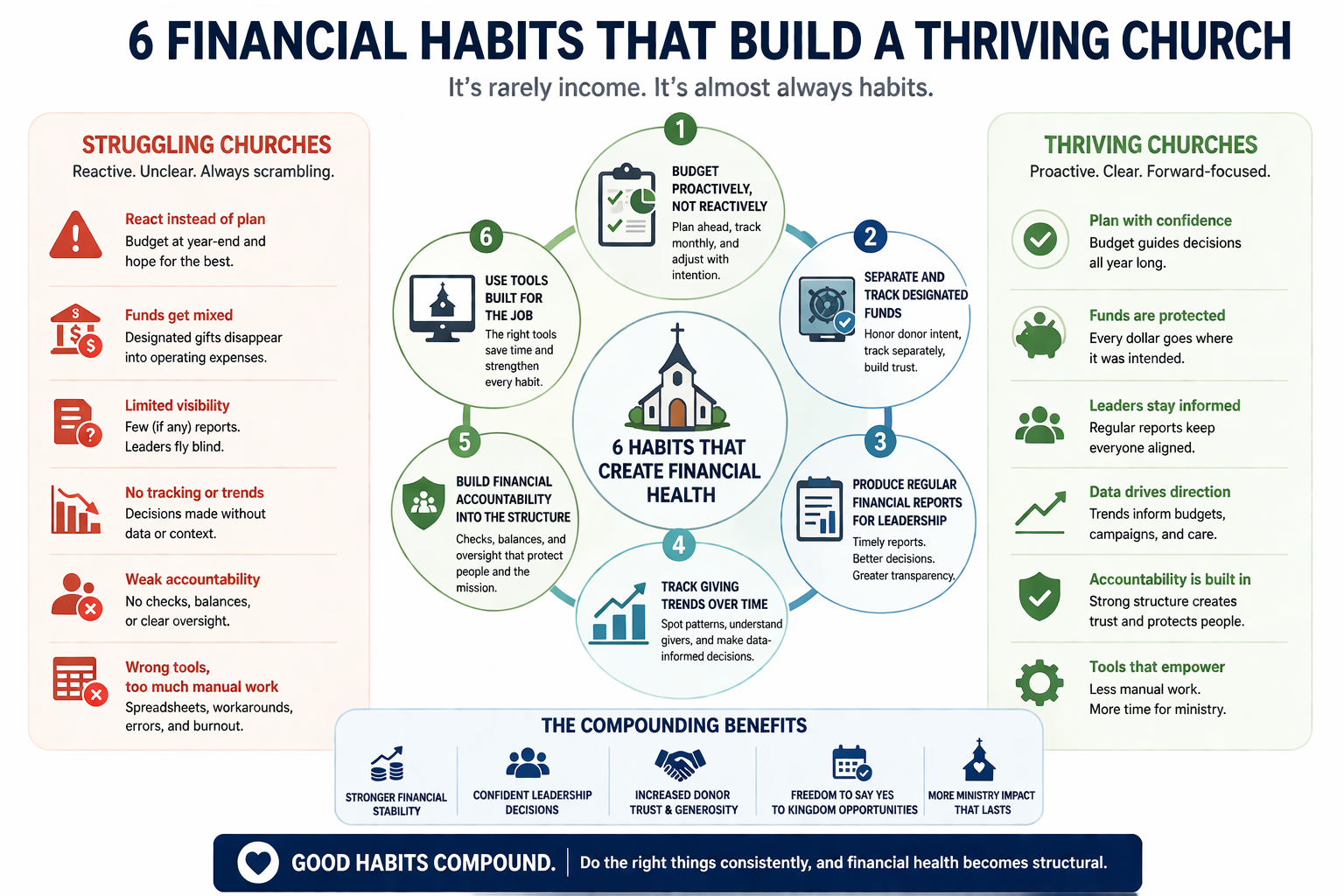
Financially healthy churches aren't necessarily the ones with the most generous congregations. They're the ones that manage what they have with intention, visibility, and accountability. Here are the habits that show up in churches that thrive financially — and that are conspicuously absent in the ones that don't.
1. They Budget Proactively, Not Reactively
Struggling churches treat budgeting as something that happens once a year in a long meeting and then gets filed away. Thriving churches treat the budget as a living document that guides real decisions throughout the year.
The difference shows up when something unexpected happens. A thriving church can answer the question "can we afford this?" by looking at their budget and their actuals. A reactive church answers that question with a gut feeling, a prayer, and a look at the checking account balance.
Proactive budgeting means setting spending targets by category before the year starts, tracking actual spending against those targets monthly, and adjusting when reality diverges from the plan. Church finance experts generally recommend keeping staff compensation between 45–55% of the budget, facilities and operations at 20–30%, and setting aside 5–10% in savings or reserves — benchmarks worth comparing your own allocations against. It sounds basic because it is. But the number of churches skipping this step entirely is higher than most financial leaders want to admit.
A related habit worth building alongside budgeting: maintaining a cash reserve. Three to six months of operating expenses held in reserve isn't hoarding — it's the difference between a church that can weather a slow summer or an unexpected repair and one that can't. Financial stability creates ministry freedom.
2. They Separate and Track Designated Funds
This is where a lot of small and mid-sized churches quietly get into trouble. A donor gives $500 specifically for the youth mission trip. That money goes into the general account. Three months later, a utility bill is tighter than expected, and that $500 is long gone into operating expenses. The mission trip comes around and there's nothing set aside.
Thriving churches treat designated funds as untouchable for anything other than their intended purpose. They track them separately, report on them regularly, and never let operational needs bleed into funds donors gave for something specific.
Beyond avoiding ethical and legal problems, this habit builds donor trust. When givers know their designated contributions will actually go where they said, they give more designated gifts. That cycle compounds over time. Church financial health experts at the Lewis Center for Church Leadership note that a church's ongoing expenses should be covered by recurring, predictable income — and honoring designated gifts is one of the most direct ways to build the kind of donor trust that makes that predictability possible.
3. They Produce Regular Financial Reports for Leadership
In a struggling church, the finances are something the treasurer knows about. Maybe the pastor. Occasionally the board, if there's a crisis.
In a thriving church, basic financial reports go to leadership on a predictable schedule: a monthly income and expense summary, a giving report, a budget variance overview. Nobody is kept in the dark. Everyone with decision-making responsibility has the information they need to make good decisions.
This isn't just about accountability, though that matters. It's about making better calls faster. When a pastor knows that giving is down 15 percent compared to the same month last year, he can address it directly with the congregation before it becomes a cash flow problem. When leadership can see that a particular ministry line is consistently over budget, they can have that conversation early instead of discovering it at year-end.
And the reporting shouldn't stop at the leadership level. Churches that share simple, accessible financial summaries with their congregations — not overwhelming spreadsheets, but honest updates on where the church stands — tend to see stronger generosity in return. Transparency communicates trust. Trust invites giving. Visibility is not a threat to leadership. It's a gift to it.
4. They Track Giving Trends Over Time
A single Sunday's offering tells you very little. A year's worth of weekly giving data tells you a great deal.
Thriving churches pay attention to giving trends: year-over-year comparisons, seasonal patterns, the ratio of one-time to recurring givers, how giving shifts during high-attendance periods like Easter versus slower summer months. This data shapes everything from budgeting assumptions to stewardship campaigns to staffing decisions.
It also surfaces pastoral opportunities. A long-time faithful giver who suddenly goes quiet for two months may be going through something. A spike in first-time gifts after a particular sermon series is worth noting and learning from. It's also worth paying attention to the age distribution of your givers over time — an over-reliance on a small group of older donors is one of the most common long-term financial vulnerabilities church leaders overlook.
When giving data is organized and visible, it stops being just a financial metric. It becomes a window into the health and engagement of your congregation.
5. They Build Financial Accountability Into the Structure
One of the quiet differences between financially stable churches and vulnerable ones is whether accountability is baked into how the finances are managed — or whether it depends entirely on one person's integrity and availability.
Thriving churches don't just trust people. They build structures that protect people: requiring two signatures for expenses above a set threshold, separating the roles of the person who receives donations from the person who records them, and using a finance committee that reviews accounts regularly and doesn't just rubber-stamp whatever the treasurer presents.
These controls aren't expressions of distrust. They're expressions of wisdom. They protect volunteers and staff from being placed in positions where a mistake — or worse — could go unnoticed. And they signal to the congregation that their giving is being handled with seriousness and care. A church with strong financial controls is a church people can trust with more.
6. They Use Tools Built for the Job
This is the habit that makes all the other habits sustainable.
Churches that try to manage finances in general-purpose spreadsheets or consumer accounting software spend enormous amounts of time on workarounds, manual reconciliation, and recreating reports that should generate automatically. The people doing that work are usually volunteers with limited availability. The result is either errors, delays, or burnout — and often all three.
Purpose-built church accounting software handles the specific realities of church finances that general tools ignore: fund accounting, donor management, giving statements, designated fund tracking, and the reporting formats that church boards and denominational bodies actually need. It's not just more convenient. It's genuinely better suited to the work.
CHMeetings is designed with this in mind. Churches that use the right tools spend less time on financial administration and more time on the ministry those finances are meant to support.
Good Habits Compound
None of these habits is complicated. None of them requires a finance degree or a full-time CFO. What they require is consistency: the decision to do the same right things week after week, month after month, until they become the way your church operates.
Thriving churches didn't get financially healthy all at once. They built habits, one at a time, until the health became structural. That's available to any church willing to start.