How Did Peter the Apostle Die? Traditional Account and Historical Evidence
Peter is the only apostle traditionally said to have been crucified upside-down — and why he asked for it that way.
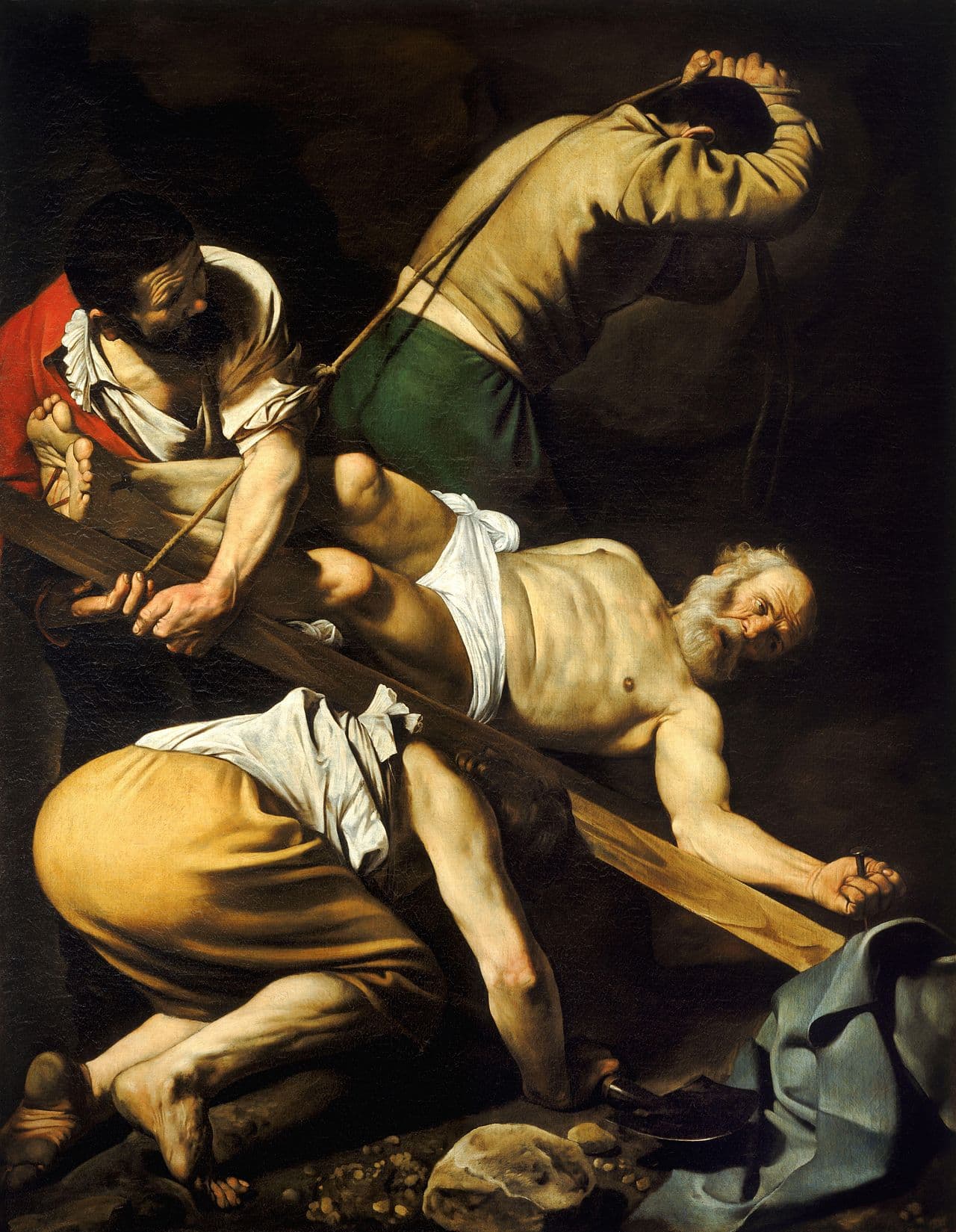
The tradition is specific and enduring: Peter was crucified upside-down in Rome, at his own request, because he considered himself unworthy to die in the same manner as Jesus. The location is identified as the Vatican Hill, beneath the basilica that now bears his name. But the New Testament says nothing about how Peter died. Everything we know - or think we know - comes from sources written decades after the event, and the question of how much they can be trusted is not simple.
Who Was Peter?
Simon Peter was a fisherman from Bethsaida on the Sea of Galilee, the brother of Andrew. Jesus renamed him Cephas, the Aramaic word for rock, and designated him the leader of the twelve apostles. He was the first to confess Jesus as the Messiah, the first to preach at Pentecost, and the first to bring the gospel to a Gentile household. The New Testament's final record of Peter is in Acts 15, where he speaks at the Jerusalem council. His letters are dated to the 60s AD. The canonical narrative ends there.
The Traditional Account
The tradition of Peter's inverted crucifixion is first recorded explicitly by Origen of Alexandria (writing around 230 AD), who states in his commentary on Genesis that Peter was crucified head downward at his own request. Eusebius of Caesarea (writing around 310 AD) repeats this in his Ecclesiastical History (Book 3, Chapter 1), citing Origen as his source.
Earlier sources confirm Peter died in Rome but do not specify the manner. Clement of Rome, writing around 96 AD, states that Peter 'endured not one or two but many labors, and having thus given his testimony, went to the glorious place which was his due.' Ignatius of Antioch, writing around 107 AD, refers to Peter and Paul in connection with Rome in terms that most scholars read as implying martyrdom. The Acts of Peter, an apocryphal text from around 180-190 AD, provides the first extended narrative of the inverted crucifixion, including Peter's speech from the cross on the theological significance of the inverted position.
What Ancient Sources Say
Clement of Rome (approx. 96 AD) - confirms Peter died as a martyr but gives no location or method.
Ignatius of Antioch (approx. 107 AD) - links Peter and Paul to Rome in a way most scholars read as implying martyrdom there.
Dionysius of Corinth (approx. 170 AD) - states explicitly that Peter and Paul 'taught together in Italy, and suffered martyrdom at the same time.'
The Acts of Peter (approx. 180-190 AD) - the first full narrative account; describes the inverted crucifixion in detail, including Peter's request and his address from the cross. Apocryphal and not historically reliable as a primary source, but evidence of what the tradition looked like by the late second century.
Origen (approx. 230 AD) - first explicit written reference to the inverted crucifixion, in his commentary on Genesis, cited by Eusebius.
The Historical Assessment
The death of Peter in Rome is one of the better-attested facts in early church history. The convergence of Clement of Rome (writing from Rome within a generation of the event), Ignatius, Dionysius, and the early Roman tradition of veneration at the Vatican site gives the location substantial credibility. Historian Martin Hengel argued that the Roman martyrdom is among the most historically secure facts about any apostle. Raymond Brown and John Meier, in their scholarly work on Peter, treat the Roman martyrdom as historically probable.
The inverted crucifixion is less certain. It appears first in the apocryphal Acts of Peter and is then cited by Origen. It may be historical, or it may be a legendary elaboration designed to emphasize Peter's humility. The detail is plausible - Roman authorities did not standardize crucifixion posture - but it cannot be independently verified. Archaeological excavations beneath St. Peter's Basilica, begun in 1939, uncovered a first-century burial site beneath the high altar. Bones found there were identified by Pope Paul VI in 1968 as probably Peter's. The identification is accepted by Catholic scholars; it remains contested by others.
Historical Confidence Rating: PLAUSIBLE. The death in Rome under Nero is attested by multiple early independent sources within two generations of the event. The inverted crucifixion is a later tradition, first recorded in an apocryphal text, that cannot be verified but is not historically implausible.
Key Ancient Sources
Clement of Rome, First Epistle to the Corinthians (approx. 96 AD) - earliest reference to Peter's martyrdom; no location or method specified.
Ignatius of Antioch, Epistle to the Romans (approx. 107 AD) - implies Roman martyrdom of Peter and Paul.
Dionysius of Corinth, Letter to the Romans (approx. 170 AD) - states Peter and Paul taught and were martyred in Italy simultaneously.
Origen, Commentary on Genesis (approx. 230 AD) - first explicit reference to inverted crucifixion, cited in Eusebius, Ecclesiastical History 3.1.
Further Reading
Raymond E. Brown and John P. Meier, Antioch and Rome (1983) - scholarly treatment of Peter's Roman ministry and death, situating the tradition within broader early church history.
Oscar Cullmann, Peter: Disciple, Apostle, Martyr (1953) - still a standard reference on the historical Peter; critical analysis of the martyrdom traditions.
This article is part of our series on the deaths of the apostles: Andrew, James son of Zebedee, John, Philip, Matthew, Thomas, James son of Alphaeus, Thaddaeus, Simon the Zealot, Judas Iscariot, Matthias, Bartholomew, and Paul.