Why Is the Book of Enoch Not in the Bible?
It is quoted as prophecy by a canonical New Testament author, copied more frequently than most Hebrew Bible books at Qumran, and kept as Scripture by one of the world's oldest Christian communities. The Western church excluded it and never explained why.

The Book of Enoch has been controversial since it was written, and it remains controversial today. No Western Christian tradition includes it in the canon. But it is quoted inside the Bible, specifically in the Epistle of Jude, where its author is named and his words are introduced as prophecy using the same citation language the New Testament uses for Isaiah and Psalms. A canonical New Testament author quoted a non-canonical book as Scripture, and the Western church has never formally explained what that means.
What is the Book of Enoch?
The Book of Enoch is an ancient Jewish text that is distinct from the biblical canon and not part of it. It was written in stages between roughly 300 BCE and 100 CE and is attributed to Enoch, the figure described in Genesis 5:24 as a man who walked with God and was taken directly into the divine presence without dying. That unusual fate (no death, direct assumption by God) made Enoch a natural vehicle for heavenly visions in the Second Temple period, the era of Jewish history between the return from Babylon and the destruction of the Temple in 70 CE. Texts attributed to ancient authoritative figures were a standard literary convention of this period, known as pseudepigrapha, and the attribution was a claim of interpretive lineage rather than an act of forgery.
The text centers on the story of the Watchers, two hundred angels who descend to earth, take human wives, and produce the Nephilim. Their leader Azazel teaches humanity metallurgy, weapons, and cosmetics. God responds with judgment, dispatching archangels to bind the Watchers and cleansing the earth through the flood. The Book of Enoch is an elaboration of four cryptic verses in Genesis 6 that the Hebrew Bible introduces and then leaves without explanation.
It has always been controversial
The Book of Enoch generated disagreement from its earliest circulation. Its content pressed against theological limits: it describes angels sinning of their own will, implies a cosmology with powerful supernatural actors operating beneath God, and makes detailed claims about heaven, judgment, and the structure of the cosmos that go well beyond anything the Hebrew Bible says. Some Second Temple communities embraced it as authoritative. Others kept their distance. The dispute was never about whether the text was interesting. It was about whether it had authority, and that question followed the text into the Christian era and intensified there.
It was widely read, and it is quoted in the Bible
In the centuries surrounding the New Testament, the Book of Enoch had genuine standing. The Dead Sea Scrolls are a cache of ancient Jewish manuscripts discovered between 1947 and 1956 at an archaeological site called Qumran in the Judean desert. The community that produced them was active from roughly 150 BCE to 70 CE, placing them in the same world and generation as the New Testament authors. Among the texts recovered at Qumran, Enoch was one of the most frequently copied, represented by more manuscript copies than most books of the Hebrew Bible.
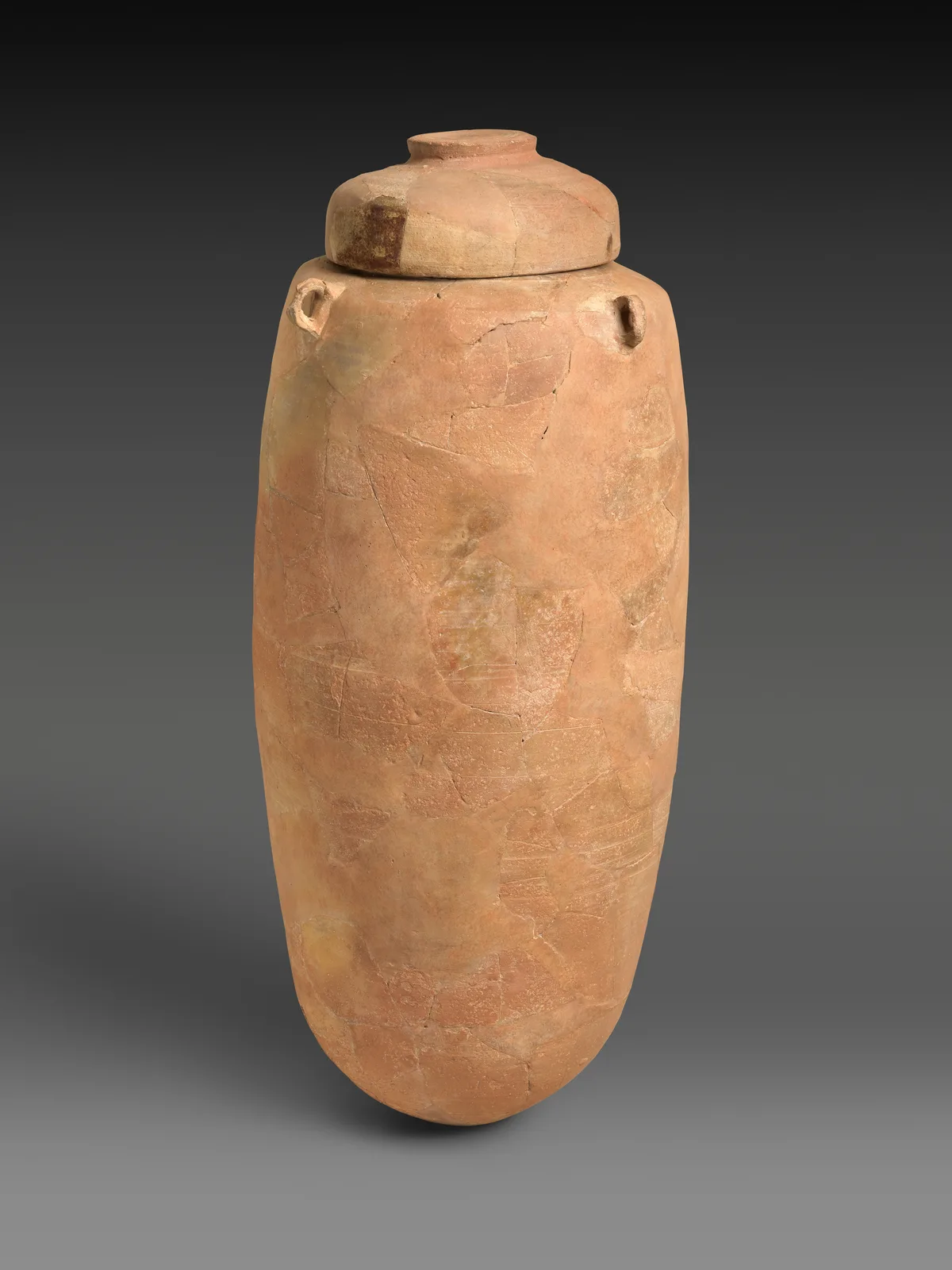
Early Christian writers engaged it seriously. Tertullian argued it deserved a place in the canon. Clement of Alexandria quoted it. Origen treated it as a legitimate theological source.
Most significantly, Jude 1:14-15 quotes 1 Enoch 1:9 directly, names the source, calls him a prophet, and introduces the passage using the same verb the New Testament uses when citing Isaiah or Deuteronomy. This is not an allusion. It is a direct citation of a specific text, framed as prophetic Scripture.
Enoch, the seventh from Adam, prophesied about them: 'See, the Lord is coming with thousands upon thousands of his holy ones to judge everyone, and to convict all of them of all the ungodly acts they have committed in their ungodliness, and of all the defiant words ungodly sinners have spoken against him.'
The Book of Enoch is not one of the books of the Bible. It is, however, quoted in one of them.
The canon debate
Not all early Christian voices accepted Enoch. Its elaborate angelology troubled some readers. Its pseudepigraphical character raised questions for others. As Christianity organized and the canon consolidated through the 3rd and 4th centuries, texts with disputed standing needed active defenders to survive, and Enoch found fewer defenders as the tradition moved forward.
The Western canon formed through three centuries of accumulating decisions rather than a single authoritative vote. Jerome, whose Latin Vulgate completed in 405 CE became the standard Bible of Western Christianity for a millennium, did not include Enoch. The Council of Laodicea in 363 CE produced an approved book list that excluded it. No council formally debated the Enoch question or issued a ruling on what to make of Jude's citation. The text fell out through accumulation, and as it ceased to be copied in Greek or Latin it ceased to exist for most of Western Christianity.
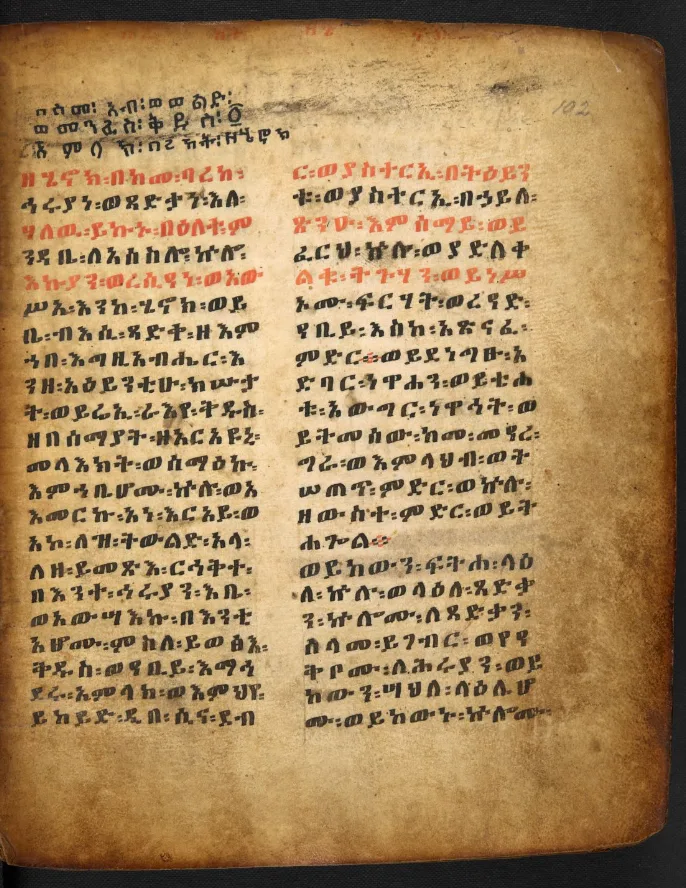
It survived in Ge'ez, the liturgical language of the Ethiopian Orthodox Tewahedo Church, one of the oldest continuous Christian communities in the world. Their 81-book canon has included Enoch since the 4th century, without interruption. When James Bruce brought Ethiopic manuscripts to Europe in 1773, Western scholars read the complete text for the first time in over a thousand years.
Why it remains controversial
The exclusion produced a problem the Western church never addressed. The canon contains Jude. Jude quoted 1 Enoch as prophecy. The canon therefore contains a prophetic citation to a book the canon excludes, and no council or authoritative voice ever explained what that means.
The controversy did not settle. It went underground and has resurfaced in every century since, in serious biblical scholarship and in conspiracy theories and in everything between, because texts that generate this much argument over two thousand years are rarely unimportant. The Ethiopian church has read it as Scripture for 1,600 years. The community at Qumran copied it more than they copied Exodus. A New Testament author called it prophecy. The Western church has spent seventeen centuries not quite explaining what to do with Jude 1:14-15. It was controversial when it was written. It was controversial when the canon closed around it. It is controversial now. The only thing that changed is that most Western Christians forgot it existed.
Read the Book of Enoch in the BibleTimes reader (Scholar access required).