Bible study / Biblical figures / Bathsheba

Old Testament

Bathsheba

United Monarchy (c. 1000 BC)

abuse of powersilence and agencyMessianic lineagepolitical survival

The Story of Bathsheba

Bathsheba, a figure from the United Monarchy period of ancient Israel, lived in a world of power struggles and royal intrigue. Her story unfolds in Jerusalem, the heart of King David's realm, a city that was both a political powerhouse and a spiritual center. Bathsheba was the wife of Uriah the Hittite, a loyal warrior in David's army. The narrative arc begins with a pivotal moment: King David, from the vantage point of his palace roof, sees Bathsheba bathing. Overcome by desire, he summons her, an act recorded in 2 Samuel 11:2-4. This encounter, marked by David's abuse of royal power, sets off a chain of events that will reshape Bathsheba's life and alter the course of Israel's history.

The initial fallout of this encounter is grave. David, realizing Bathsheba is pregnant, attempts to cover his actions. When his efforts to bring Uriah home from battle fail to conceal the affair, David resorts to drastic measures. He orders Uriah to the front lines, ensuring his death (2 Samuel 11:15). The prophet Nathan later confronts David with a parable, exposing the king's sin and pronouncing divine judgment (2 Samuel 12:7). This episode positions Bathsheba as a passive figure, swept along by the decisions of powerful men. Yet, the birth of her second son, Solomon, marks a turning point. This child, born after the death of their first, is beloved by the Lord, setting the stage for a new chapter in Bathsheba's life (2 Samuel 12:24).

As the narrative progresses, Bathsheba's role transforms from silent victim to active agent. In the latter days of David's reign, the question of succession looms large. Bathsheba, informed by the prophet Nathan, approaches David to remind him of his promise that Solomon would succeed him as king (1 Kings 1:17). This strategic move is pivotal in securing Solomon's place on the throne. It reflects Bathsheba's political acumen and her capacity to navigate the treacherous waters of court politics. Her actions not only ensure her son's future but also affirm her influence within the royal household.

The resolution of Bathsheba's story extends beyond her lifetime, echoing through the genealogies of Israel. Solomon's ascent to the throne is secured, and his reign becomes one of prosperity and wisdom. Bathsheba's legacy is cemented in the Messianic lineage, as noted in the Gospel of Matthew, where she is mentioned as "the wife of Uriah" (Matthew 1:6). This genealogical note underscores the enduring impact of her life, linking her directly to the lineage of Jesus, a testament to her pivotal role in the unfolding biblical narrative.

Who Was Bathsheba

To understand Bathsheba, one must consider the Hebrew word "חָכְמָה" (chokhmah), meaning "wisdom." Though not directly applied to her in the text, her actions in 1 Kings 1:11-31 reveal a woman operating with strategic intelligence. This passage recounts how Bathsheba navigates the treacherous waters of royal succession, ensuring her son Solomon’s ascent to the throne. While her initial appearance in the biblical narrative is marked by silence and passivity during her encounter with King David (2 Samuel 11:2-4), her later actions exhibit a nuanced character capable of exerting significant influence within the palace. In her role as mother to Solomon, Bathsheba transitions from a figure of victimhood to one of agency and resilience, showcasing the complexity of her character.
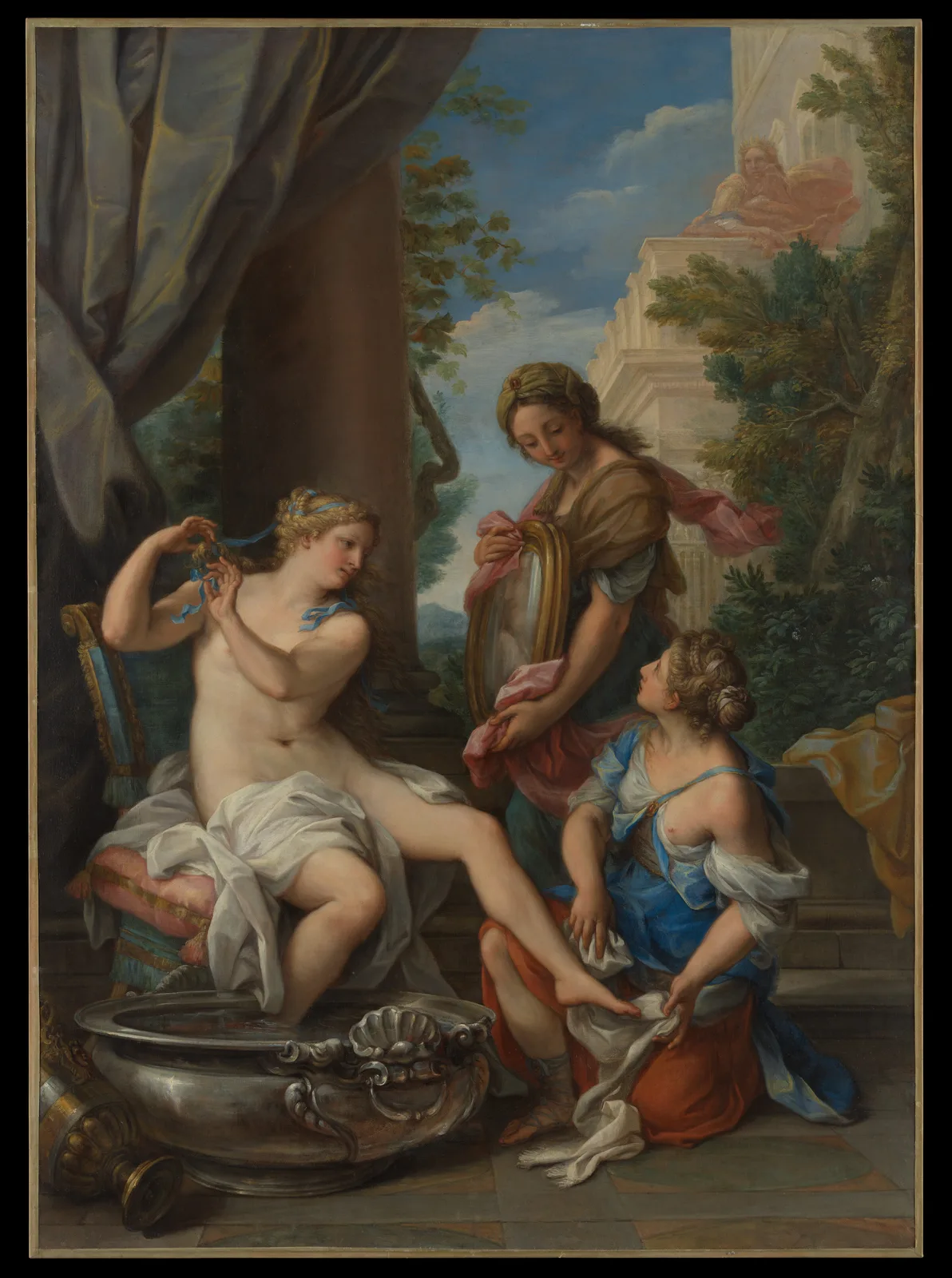
Bathsheba's key decisions underscore her transformation from a passive participant in David's narrative to an active player in her own right. When David’s son Adonijah attempts to usurp the throne, Bathsheba approaches David to remind him of his promise regarding Solomon’s succession (1 Kings 1:15-21). Her plea is not merely a mother’s concern for her child but a calculated move to secure her own position and legacy. This decisive action stands in stark contrast to her earlier silence, illustrating her growth and political acumen. Her initial lack of agency, as seen when she is summoned to David’s chamber (2 Samuel 11:4), is juxtaposed with the integrity of her first husband, Uriah, who remains loyal to his comrades even at the cost of his life. This contrast highlights the moral complexities and survival tactics required in the volatile environment of the royal court.

Modern readings often flatten Bathsheba’s character into a binary of victim or seductress, ignoring the layers of her story and her eventual role as a political figure. The simplistic portrayal misses her strategic maneuvering and the wisdom she exhibits in ensuring Solomon’s kingship. The text shows that her silence in the early narrative is not the full measure of her character. As the mother of Solomon, mentioned in the genealogy of Jesus as "the wife of Uriah" in Matthew 1:6, Bathsheba is integrated into the Messianic lineage, signifying her enduring impact. Her story, therefore, is not just one of personal survival but of significant influence in the unfolding history of Israel. Her life, marked by loss and strategic gain, paints a portrait of a woman who learned to wield the limited agency she had to shape the future of a kingdom.

The Significance of Bathsheba

Bathsheba's story highlights the intricate interplay of divine providence and human agency in the establishment of the Davidic line, despite moral failures. In the narrative of Bathsheba, found in 2 Samuel and 1 Kings, the theme of redemption and sovereignty, or גְּאוּלָה (ge'ulah), emerges prominently. After David's abuse of power, which leads to the death of her first husband Uriah (2 Samuel 11:2-4), Bathsheba becomes the mother of Solomon, a pivotal figure in Israel's history and the Messianic line. The birth of Solomon (2 Samuel 12:24-25) underscores the theological assertion that God can redeem situations marred by sin and fulfill His sovereign purposes through them.

The story addresses several theological themes, including the abuse of power and silence and agency. David's actions towards Bathsheba and Uriah are stark examples of unchecked power leading to personal and national turmoil (2 Samuel 11:4-5). Despite being initially silent, Bathsheba later becomes an active figure in securing her son's succession. Her strategic engagement with Nathan the prophet and her appeal to David in 1 Kings 1:11-31 demonstrate her nuanced role in the royal court, reflecting how women, often silent in biblical narratives, exercised agency in critical moments. A typological reading may view Bathsheba as a precursor to the Church as the Bride of Christ: transformed from a situation of sin to one of honor and inclusion in the Messianic line, illustrating redemption.

Bathsheba's inclusion in the genealogy of Jesus, noted in Matthew 1:6 as "the wife of Uriah," underscores the theme of grace and redemption, showing that God's purposes can be fulfilled through flawed human actions. This detail highlights the inclusivity of the Messianic promise, where even those with complex and morally challenging stories are woven into the fabric of salvation history. Bathsheba's story, marked by political acumen and survival, positions her at a critical juncture in the Biblical narrative, illustrating the unexpected ways through which divine promises are realized. Her insistence on Solomon's right to the throne, recorded in 1 Kings 1:28-30, is a testament to her significant, if often understated, influence within the royal lineage.

The Legacy of Bathsheba

In Jewish tradition, Bathsheba is a figure of complexity, embodying themes of power, repentance, and divine justice. While her voice in the biblical text is minimal, Jewish commentators have long explored her influence, particularly in securing her son Solomon's succession to the throne, as described in 1 Kings 1:11-31. The Talmud, specifically in Sanhedrin 107a, delves into her relationship with King David, framing it within the broader themes of repentance and forgiveness. Midrashic texts often highlight her as a symbol of the nuanced interplay between human morality and divine oversight. Though she does not have a specific feast day in Jewish liturgy, Bathsheba's story is revisited during readings from 2 Samuel and 1 Kings, where her role in the unfolding of Israel's history is acknowledged.

Christian interpretations of Bathsheba have evolved significantly over the centuries. Early theologians like Augustine regarded her story as a cautionary tale about the perils of lust and the misuse of power. During the Reformation, however, the focus shifted to her place in the genealogy of Jesus, as mentioned in Matthew 1:6, underscoring the idea that God can work through flawed human narratives. This shift in perspective highlights Bathsheba's key role in the Messianic lineage, a lineage that ultimately leads to Jesus Christ. Some Christian thinkers have even drawn typological parallels between Bathsheba and Mary, the mother of Jesus, viewing Bathsheba as a precursor in her role as a queen mother. Her story is part of the readings during the Feast of the Nativity in the Catholic tradition, symbolizing the continuity of divine purpose through generations.

Beyond religious texts, Bathsheba's story has permeated cultural consciousness, inspiring numerous works of art and literature. Rembrandt’s painting "Bathsheba at Her Bath" captures the moment of her vulnerability and beauty, while Nathaniel Hawthorne's "The Scarlet Letter" uses her narrative to explore themes of sin and redemption. In modern times, Bathsheba’s story touches on enduring issues of power dynamics, gender, and agency — topics that continue to resonate in contemporary discussions about women's roles in history and scripture. Her narrative becomes a lens through which to examine the complexities of human relationships and the persistent struggle for justice and voice amidst structures of power.