Bible study / Biblical figures / Esther

Old Testament

Esther

Persian Empire (c. 480 BC)

courageprovidencePurimidentity concealmentfemale heroismdeliverance

The Story of Esther

In the sprawling Persian Empire of the 5th century BC, a Jewish woman named Esther rose to prominence under extraordinary circumstances. The empire, stretching from India to Ethiopia with Susa as one of its capitals, was ruled by King Ahasuerus, known to history as Xerxes I. The king's decision to remove Queen Vashti from her position for defying his summons set the stage for Esther's unexpected ascent. Esther, an orphan raised by her cousin Mordecai, was chosen as queen following a royal beauty contest (Esther 2:17). Her Jewish identity remained concealed, a decision made at Mordecai's counsel (Esther 2:10). Meanwhile, Mordecai uncovered a conspiracy to assassinate the king, which he reported through Esther, further ingratiating her to Ahasuerus (Esther 2:21-23).

The tranquility of Esther's newfound role was shattered by the ambitions of Haman, a high-ranking advisor to the king. Haman, incensed by Mordecai’s refusal to bow to him, devised a plan to annihilate all Jews in the empire, securing the king's approval for his genocidal decree (Esther 3:8-11). Faced with this existential threat, Mordecai implored Esther to intervene. Esther, aware of the risk, approached the king unsummoned, an act punishable by death unless the king extended his golden scepter (Esther 4:16, 5:1-3). Her bold decision to host a banquet for the king and Haman set the stage for her strategic revelation.

At the second banquet, Esther exposed Haman's plot and disclosed her Jewish heritage to the king (Esther 7:3-6). The revelation was shocking, not only implicating Haman in treachery but also revealing the queen’s own stake in the decree’s outcome. Ahasuerus, incensed by Haman's betrayal, ordered his execution on the gallows Haman had built for Mordecai (Esther 7:9-10). This ironic twist underscored the narrative’s theme of poetic justice. The king then issued a new edict, allowing the Jews to defend themselves against their enemies, transforming their impending doom into a decisive victory (Esther 9:1).

The deliverance of the Jewish people under Esther's leadership is commemorated annually during the festival of Purim, a testament to the story's enduring impact. Esther’s narrative concludes without further mention in biblical genealogies or New Testament texts, leaving her legacy confined to the pages of the Hebrew Bible. Her story, however, continues to be a pivotal chapter in Jewish history, emblematic of courage and survival against overwhelming odds.

Who Was Esther

The Hebrew word "חֵן" (chen), meaning grace, deeply encapsulates the character of Esther, introduced in Esther 2:17 when she wins the favor of King Ahasuerus. This grace is not merely about physical beauty or charm; it represents a profound inner quality that enables Esther to navigate the perilous corridors of Persian power. Raised by her cousin Mordecai after the death of her parents, Esther becomes queen of Persia, a position that places her at the heart of a life-or-death struggle for her people. Her grace, therefore, is not passive but active, manifesting in the courage and wisdom she demonstrates throughout the narrative. Esther's defining moment comes when she decides to risk her life by approaching the king unsummoned, a decision that could result in her death (Esther 4:16). Her internal struggle with fear and identity is palpable, but her actions speak louder than any title; she becomes, through her deeds, the deliverer of the Jewish people.
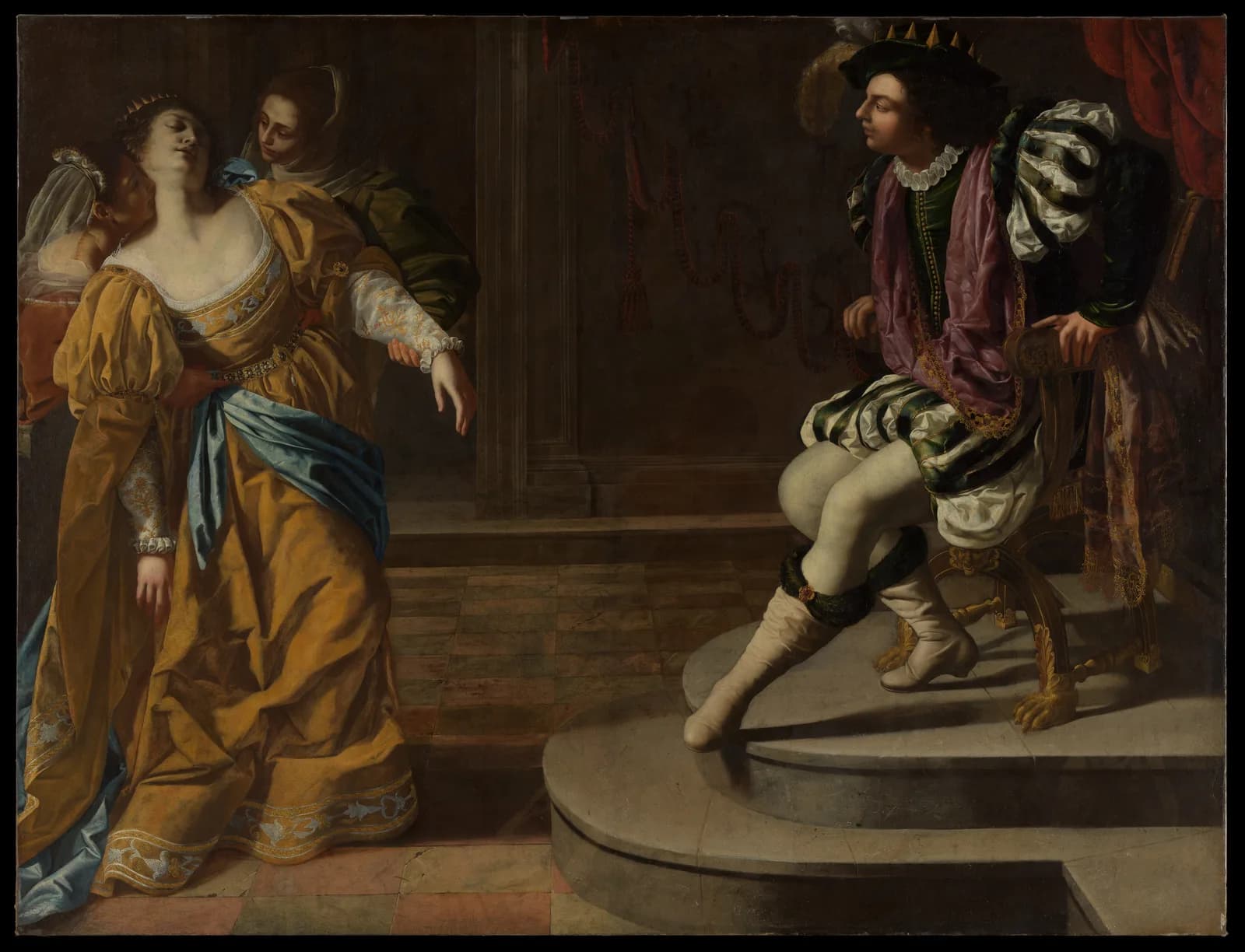
Esther's choices reveal the depth of her character, particularly when contrasted with her adversary, Haman. While Haman's arrogance and hatred drive him to seek the annihilation of the Jews, Esther's humility and strategic mind guide her to a different path. When Mordecai urges Esther to intercede with the king, she bravely decides to do so, despite the law that forbids her from approaching the king without a summons (Esther 4:16). This decision underscores her willingness to sacrifice her life for the survival of her people. At two carefully orchestrated banquets, Esther reveals her Jewish identity and Haman's plot, a move that requires both courage and cunning (Esther 7:3-6). Her actions contrast sharply with Haman's downfall, marked by his overreaching pride. The narrative juxtaposes Esther's quiet strength with Haman's hubris, highlighting the power of strategic humility over bluster and bravado.

Popular perceptions of Esther often reduce her to a passive beauty queen, a misreading that overlooks her pivotal role in the story. Esther is far from passive; she is a strategic and decisive figure whose intelligence and bravery are crucial to the narrative's outcome. The text does not dwell on her beauty but rather on her actions — her obedience to Mordecai's instructions (Esther 2:10), her strategic planning of the banquets, and her ultimate revelation of her identity. Such decisions reflect a woman who is deeply engaged in the survival of her people, not merely a figurehead. By focusing solely on her beauty, modern interpretations risk flattening Esther's complexity, missing the essence of her true heroism. Her story is one of astute leadership and self-sacrifice, elements that are integral to the Jewish festival of Purim, which commemorates this deliverance.

The Significance of Esther

The Book of Esther argues for divine providence, or השגחה (Hashgacha), illustrating how God's unseen hand orchestrates events for the salvation of the Jewish people, despite never being explicitly mentioned. This notion is encapsulated in Mordecai's question to Esther in Esther 4:14, "And who knows whether you have not come to the kingdom for such a time as this?" Esther, a Jewish woman in Persian exile, rises to queenship in a foreign land and becomes instrumental in averting the genocide planned by Haman, the king's adviser. Her ascent to power and the subsequent deliverance of her people underscore a theological narrative that divine will operates behind the scenes, weaving human actions into a greater tapestry of protection and deliverance.

The narrative of Esther addresses several themes, chiefly courage, identity concealment, and deliverance. Courage is embodied in Esther's willingness to risk her life by approaching King Ahasuerus unbidden, an act punishable by death, as seen in Esther 4:16: "I will go to the king, though it is against the law, and if I perish, I perish." Her bravery is pivotal in executing a plan that counters Haman's decree. Identity concealment also plays a crucial role; Esther initially hides her Jewish identity, following Mordecai's instruction in Esther 2:10. This concealment allows her to navigate the complexities of life in the Persian court until the moment demands she reveal her true self. Finally, the theme of deliverance is vividly portrayed in the Jews' triumph over their enemies in Esther 9:1-2, where those who sought their harm are defeated, signifying divine protection.

While the Book of Esther does not explicitly connect to the Messianic line or include a gentile dimension, it stands at an intriguing intersection of the Biblical narrative by highlighting a female hero within a male-dominated world. Esther's story is unique in that she wields her influence through strategic feasts (Esther 5:1-8), turning the tables on Haman and securing her people's safety. Her role as both a queen and a deliverer illustrates the unexpected means through which divine providence can manifest. The book's exclusion of God's name challenges readers to discern the divine in the ordinary, with each twist and turn suggesting a silent orchestration that culminates in the Jewish festival of Purim, commemorating this extraordinary deliverance.

The Legacy of Esther

In Jewish tradition, Esther is celebrated during the festival of Purim, where her story is central to the festivities. The Megillah, or the Book of Esther, is read aloud, capturing the dramatic narrative of her courage and strategic intervention to save the Jewish people from annihilation at the hands of Haman, the king's advisor. The Talmud, notably in Megillah 4a, extols Esther for her pivotal role, comparing her to the dawn in Yoma 29a, signifying the emergence of hope and deliverance. Despite the absence of explicit mention of God in the text, Esther's story is seen as a profound example of divine providence working through human agency. Her willingness to risk her life to approach King Ahasuerus, encapsulated in her words, "If I perish, I perish" (Esther 4:16), underscores her bravery and the implicit faith in a higher purpose guiding her actions.

In the Christian tradition, Esther's narrative has been interpreted through various theological lenses. Early Church Fathers like Augustine viewed Esther as a typological figure, representing the Church's triumph over evil. Her story was seen as prefiguring the victory of the faithful over adversity. During the Reformation, Martin Luther expressed skepticism about the book's religious significance due to its secular tone, yet Esther's inclusion in the canon persisted. Her bravery has been a focal point in Christian teachings, symbolizing faith and courage. Theological discussions often emphasize the theme of providence, drawing parallels between Esther's hidden identity and the covert workings of God's will. Esther's story, though lacking overt religious references, continues to be a source of inspiration, illustrating the power of individual faith and determination in the pursuit of justice.

Beyond religious contexts, Esther's legacy permeates art and literature, influencing works such as Rembrandt's painting "Ahasuerus and Haman at the Feast of Esther" and Jean Racine's play "Esther." Her narrative has transcended its biblical origins, becoming emblematic of female empowerment and political bravery. In contemporary discussions, Esther is frequently invoked as a symbol of advocacy and the ability of individuals to enact change amidst systemic oppression. The phrase "for such a time as this" (Esther 4:14) has detached from its scriptural roots, often used to describe moments requiring decisive action and leadership. Esther's enduring appeal lies in her embodiment of courage and the potential for personal agency to influence the course of history, resonating with modern audiences seeking inspiration in the face of injustice and adversity.