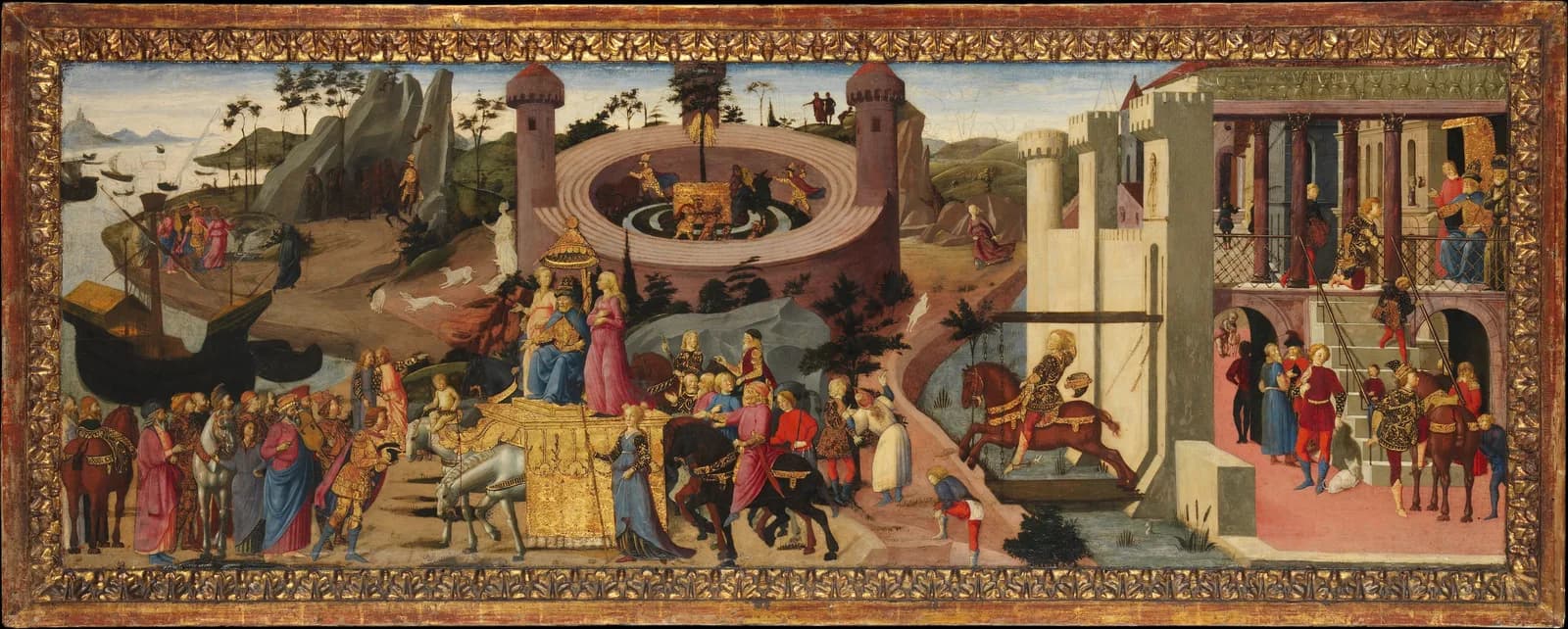
The Story of James (son of Alphaeus)
In the bustling and politically charged environment of first-century Judea, James, known as the son of Alphaeus, emerges as a quiet figure among the early followers of Jesus. Roman rule and fervent messianic hopes set the stage for the emergence of a new religious movement. James, a Jewish man, is chosen by Jesus to be one of the Twelve Apostles, as recorded in Matthew 10:3. This selection was not just a personal honor but an inclusion into the foundational group tasked with spreading Jesus' teachings. However, unlike some of his more vocal counterparts, James' presence is noted without fanfare or specific deeds.
James' journey as an apostle lacks individual spotlight. The Gospels of Mark (3:18) and Luke (6:15) mention him in lists of the apostles, yet they offer no glimpse into his thoughts or actions. This silent participation contrasts sharply with the roles of apostles like Peter, who is often seen leading and speaking out, and John, whose writings and close relationship with Jesus are well-documented. The narrative irony is palpable: James, despite his critical role, remains a figure shrouded in anonymity. His inclusion among the Twelve, however, shows Jesus' choice of a diverse group, each serving a unique purpose, whether in the limelight or in the shadows.
Following Jesus' crucifixion and resurrection, the Apostles regroup, seeking to understand their roles in the nascent church. In Acts 1:13, James is among the disciples gathered in the upper room, a setting that transitions the followers from a group of learners to leaders of a growing movement. This moment is crucial, as it marks the shift from following Jesus directly to sustaining his teachings and community in his physical absence. James' continued presence in these gatherings signals his steadfast commitment, even if it remains unheralded by any recorded action or speech.
The legacy of James, son of Alphaeus, is in his persistent yet understated contribution to the early Christian church. He appears in the texts of Matthew, Mark, Luke, and Acts, always as part of a collective, never isolated for individual achievements. The lack of personal anecdotes or teachings attributed to him does not diminish his role; rather, it highlights the theme of faithful obscurity. James' steady, albeit silent, participation reflects the diverse nature of the early church, where every member, whether visible or not, was vital to the whole. The Greek term "ἀφανής" (aphanēs), meaning "unseen" or "obscure," describes the character of James, son of Alphaeus, often called "James the Less." This term, while not directly applied to him in the biblical texts, aligns with his portrayal throughout the New Testament. James is mentioned in the Gospels of Matthew, Mark, and Luke, as well as in Acts, but unlike his fellow apostle Peter, James does not speak or act prominently. For instance, Matthew 10:3 lists him simply among the apostles without further elaboration. His obscurity, however, should not be mistaken for insignificance. Instead, it shows a form of discipleship grounded in faithful presence rather than public action. James's quiet role among the apostles reflects an aspect of early Christian witness that values humble service over notoriety.