Library
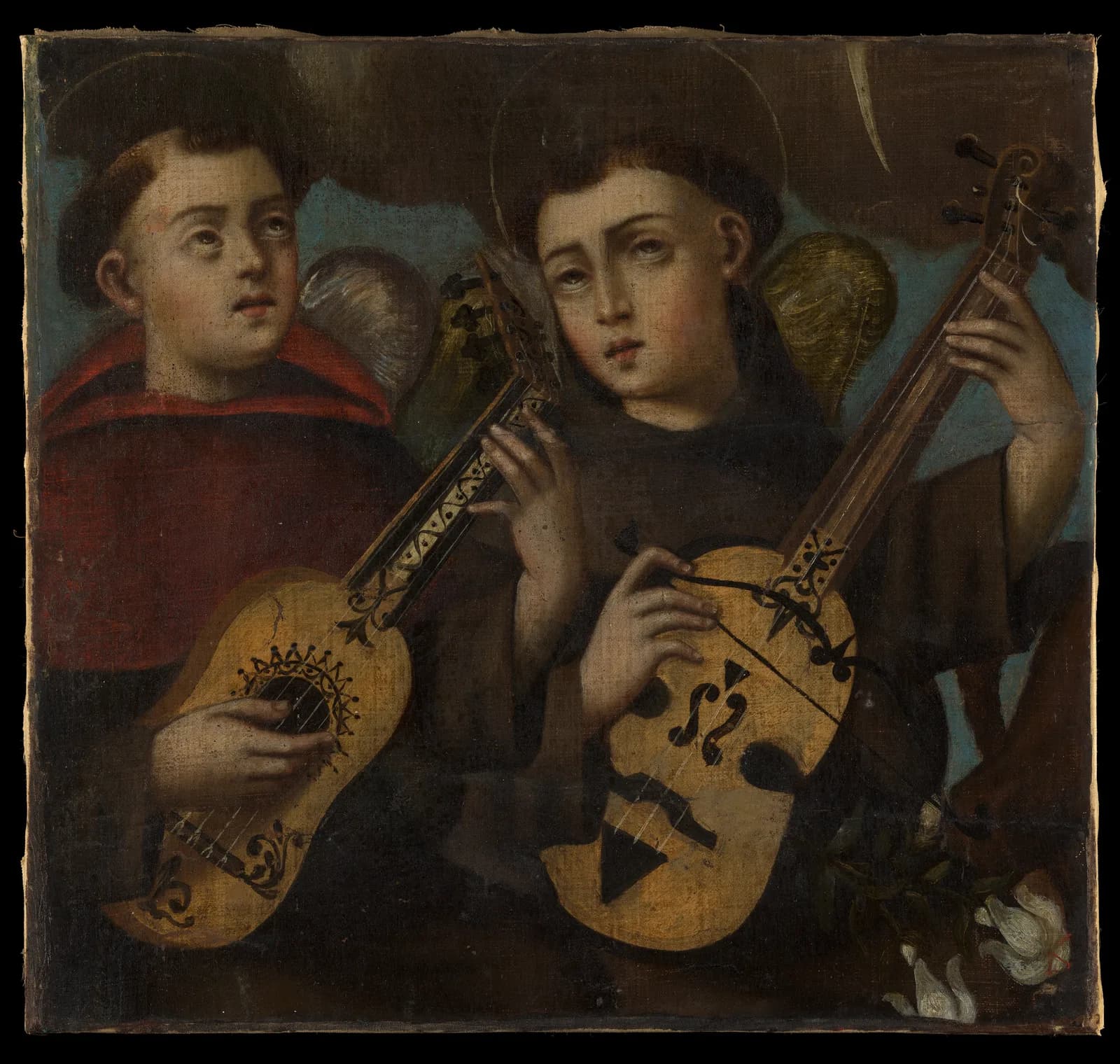
AI-generated illustration
Library
Medieval (9th-15th C) · c. 1221-1274 CE · Updated April 9, 2026
Bonaventure was a Franciscan friar, theologian, and cardinal bishop who lived in 13th-century Italy and France. He played a crucial role in shaping Christian theology during a time of great intellectual ferment. Known for his deep spirituality and philosophical insight, Bonaventure's influence extended beyond the confines of the Franciscan Order, impacting broader theological debates of his time.
Born around 1221 in Bagnoregio, Italy, Bonaventure immersed himself in the religious life by joining the Franciscans. By 1257, he rose to become the Minister General of the Order, steering it through challenging times. His intellectual journey took him to the University of Paris, where he became a leading theologian engaging with scholars like Thomas Aquinas. In 1273, Pope Gregory X appointed him Cardinal Bishop of Albano. Bonaventure's writings, such as "The Soul's Journey into God" and "The Life of Francis," continue to be revered for their depth and clarity. He died in 1274 in Lyon, France, leaving a lasting legacy that earned him the title of Doctor of the Church in 1588.
Bonaventure lived during a period marked by theological innovation and tension. The rise of mendicant orders like the Franciscans and Dominicans challenged the established church structure, leading to friction with secular clergy and universities. The rediscovery of Aristotle's works further fueled debates about integrating philosophy with Christian doctrine. Bonaventure stood at the center of these discussions, often opposing the purely rational approach of his contemporary, Thomas Aquinas. His balanced synthesis of faith and reason made him a pivotal figure in medieval theology. The Council of Lyon, where he participated just before his death, underscored the era's complex interplay of religious and intellectual forces.
How does the human mind ascend to God — through the rational analysis of nature, or through the movement of the will in love?
Bonaventure dedicated his life to resolving the tension between the intellectual and mystical dimensions of faith. His animating question was how the human soul could ascend to God in a way that harmonized reason and spiritual experience. In a world where scholasticism dominated theological discourse, Bonaventure sought to integrate the rigorous demands of intellectual inquiry with the transformative power of mystical love. He believed the path to God wasn't just a matter of accumulating knowledge but involved a profound, loving relationship with the divine.
Bonaventure's key ideas centered around the soul's ascent to God, exemplarism, and the primacy of love over intellect. He proposed that the soul could rise to God through stages, beginning with an appreciation of creation, moving through the insights of Scripture, and culminating in contemplation. This framework offered a structured yet holistic route to spiritual growth, blending intellectual and mystical pursuits. Bonaventure also embraced exemplarism, arguing that creation reflected divine ideas, with everything in existence mirroring God's eternal models. This view provided a counter to the rise of Aristotelian naturalism by affirming a purposeful universe. Finally, he insisted that love and the will held priority over intellect in theological matters, challenging the intellectual focus of contemporaries like Thomas Aquinas and aligning with the Franciscan emphasis on heartfelt devotion.
Beyond these ideas, Bonaventure made significant contributions to the Franciscan Order's understanding of poverty and apostolic life. He navigated internal debates over the nature of poverty, balancing the strict views of the Franciscan Spirituals with more moderate perspectives. His efforts were crucial in maintaining unity within the order. Bonaventure also played a pivotal role in integrating mysticism with scholasticism. His dual identity as a mystic and a scholar allowed him to bridge these aspects, offering a comprehensive approach to theology that valued both intellectual rigor and spiritual depth.
At the heart of Bonaventure's thought was his signature argument: the ascent to God is primarily a movement of the will in love rather than just an intellectual exercise. He contended that true knowledge of God transcends rational analysis and is achieved through a loving relationship where the soul is drawn to God by love. This was compelling because it shifted the focus of theology away from mere intellectualism, emphasizing a more dynamic and relational understanding of the divine. Bonaventure's perspective enriched Christian thought by integrating the emotional and volitional aspects of faith, paving the way for a more holistic approach to spiritual life.
Before Bonaventure, Christian thought leaned heavily on the Scholastic method, dominated by rational analysis and dialectical reasoning. Theologians like Augustine and the early Church Fathers shaped discourse, focusing on the intellectual apprehension of divine truths. Mystical experience and the role of love took a backseat. The dominant assumptions revolved around Aristotelian logic and natural order, with theology largely a cerebral exercise. Theological pursuits prioritized the intellect, often sidelining affective dimensions of faith. Mendicant orders, such as the Franciscans, faced resistance from secular clergy and universities questioning their rights and roles within the Church.
Bonaventure shifted this landscape by integrating mysticism with Scholasticism. He synthesized the two, emphasizing the soul's ascent to God through contemplation and love, thus balancing rational inquiry with mystical experience. Bonaventure introduced exemplarism, suggesting creation reflects divine ideas and serves as a pathway to understand God, moving beyond mere Aristotelian causality. He argued for the primacy of love over intellect, asserting that love is the ultimate means of union with the divine. This shifted the focus from intellectual understanding to the will and love in the spiritual journey. He also defended mendicant rights, particularly those of the Franciscans, championing their apostolic poverty and spiritual mission, thus securing their place in the Church and academia.
The ripple effects of Bonaventure’s contributions are profound. His integration of mysticism with Scholasticism paved the way for later mystical theologians like Meister Eckhart and shaped the Franciscan school of thought. The emphasis on love and the will birthed affective spirituality, evident in movements like the Devotio Moderna. Bonaventure’s defense of mendicant orders cemented their role, enabling future contributions to theology and education. Without Bonaventure, these movements might not have flourished. By the time of his death in 1274, Bonaventure had left an indelible mark on Christian theology, influencing generations that followed.
Bonaventure's intellectual legacy includes significant areas of contention. His concept of exemplarism, which posits that creation reflects divine ideas, drew criticism from those who felt it blurred the line between God and creation. Critics, particularly from the Thomistic tradition, argued that this view could lead to a deterministic understanding of the universe, reducing the autonomy of Creation. Additionally, Bonaventure's emphasis on love over intellect in theology faced backlash for potentially minimizing the role of reason. Scholastics and followers of Aquinas championed rational inquiry as essential to understanding God, fearing that Bonaventure's approach veered towards anti-intellectualism. His staunch advocacy for mendicant rights at universities also stirred controversy, as it was perceived to challenge established clerical and academic structures.
The most contentious aspect of Bonaventure's legacy lies in his rigid stance on Franciscan poverty. This insistence on absolute poverty fueled internal strife within the Franciscan Order, leading to a significant schism between the Spirituals and the Conventuals. Bonaventure's position, deemed impractical by many, strained relationships and sowed discord among his followers. The conflict over poverty not only fractured the order but also left a lasting scar, illustrating the real-world consequences of his unwavering ideals. The resulting divisions weakened the Franciscans and highlighted the challenges of adhering to strict interpretations of poverty within a growing religious movement.
Some modern scholars have attempted to rehabilitate Bonaventure's legacy, particularly his emphasis on love and mystical theology. They argue these elements provide a valuable counterbalance to overly rationalistic approaches prevalent in contemporary discourse. Yet, the criticisms of his exemplarism and the consequences of his views on poverty remain largely accepted. The Franciscan Order's division stands as a concrete testament to the enduring impact of his uncompromising positions. While Bonaventure's contributions to mystical theology are acknowledged, the controversies surrounding his ideas continue to shape theological discussions today.
After the condemnation of certain Franciscan teachings in the 13th century, Bonaventure rose to prominence, balancing the turbulent dynamics within the Franciscan Order. As Minister General, he reformed the order, ensuring its survival and growth. Pope Gregory X later appointed him Cardinal Bishop of Albano, thrusting him into the heart of ecclesiastical politics. At the Second Council of Lyon, he worked tirelessly to reconcile the Western and Eastern Churches. His sudden death in 1274, under suspicious circumstances, left a void in both the order and the broader Church.
Bonaventure's teachings lived on through his followers and the wider Franciscan movement. His ideas shaped the work of influential theologians like Duns Scotus and William of Ockham. These scholars drew from his focus on love and the mystical journey toward God. His influence spread through Europe, resonating with the Franciscan Spirituals and other mystical groups who sought deeper spiritual experiences. His legacy endured in the evolving landscape of medieval theology, where his thoughts on divine love and knowledge continued to inspire.
Today, Bonaventure's legacy thrives, especially within the Roman Catholic Church and Franciscan circles. His writings remain a staple in theological education, offering insights into the synthesis of mystical and rational thought. Franciscan communities celebrate his devotion to love and contemplation, emphasizing these values in their teachings and practices. His impact reaches beyond academia; for instance, the Franciscan University of Steubenville in Ohio bears his name, symbolizing his lasting influence on education and spirituality.
Continue reading with a Scholar plan
Upgrade to ScholarAI-generated illustration