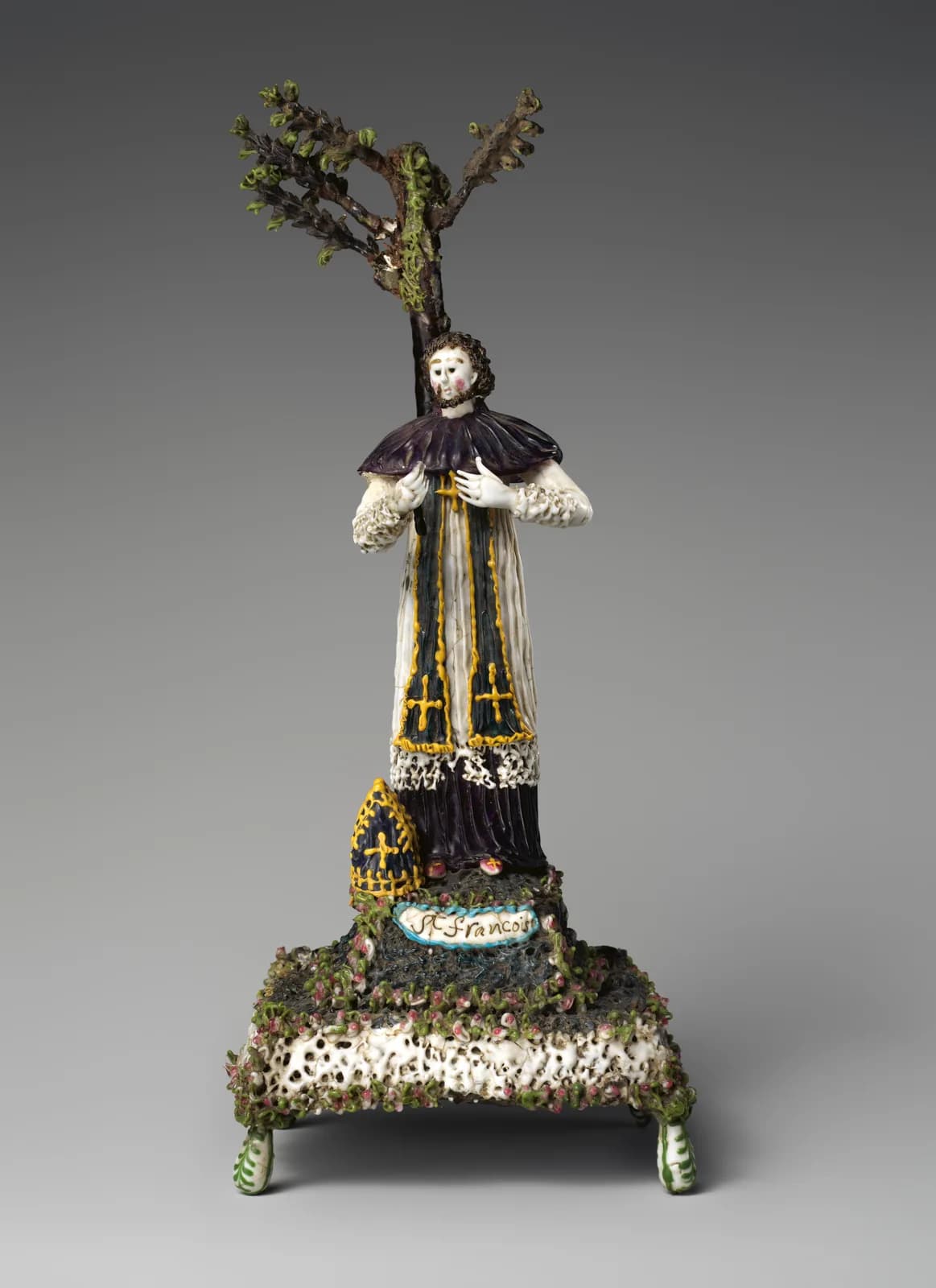
Francis de Sales
theologianModern (17th C+) · 1567-1622 CE · Updated April 9, 2026
Biography
Francis de Sales was a French bishop of Geneva in the late 16th and early 17th centuries, known for his role as a co-founder of the Order of the Visitation and as a Doctor of the Church. He navigated the turbulent waters of the Counter-Reformation, a time when the Catholic Church sought to address internal corruption and counter the rising tide of Protestantism. His approach to spirituality emphasized active engagement with the world, setting him apart from the more inward-focused spiritual movements of the time.
Born in 1567 in the Duchy of Savoy, Francis de Sales embarked on a life dedicated to faith and service. In 1609, he published "Introduction to the Devout Life," making spirituality accessible to laypeople. This work became a guide for those seeking to live a devout Christian life outside the cloistered walls of monasteries. In 1610, alongside Jane de Chantal, he founded the Order of the Visitation of Holy Mary, focusing on a life of prayer and service. His "Treatise on the Love of God," published in 1616, delved into the nature of divine love, offering insight into the soul's journey towards God. He died in 1622 in Lyon, leaving behind a legacy of compassionate evangelism.
The religious tensions of Francis de Sales' era, particularly in regions like Chablais, shaped his mission and methods. He led a successful mission to convert Calvinists back to Catholicism in Chablais, relying on gentle persuasion rather than force. This approach contrasted sharply with the confrontational methods often employed during the Counter-Reformation. His ability to communicate effectively earned him recognition as the patron saint of writers and the deaf. His life and work exemplified a commitment to dialogue and understanding, crucial in a time of deep religious division.
Is the devout life only for those who withdraw from the world — or can holiness be pursued in the middle of ordinary work, family, and society?
The ideas
Francis de Sales dedicated his life to bridging the gap between spiritual and everyday life. At a time when many believed holiness required retreat into monastic solitude or clerical life, de Sales posed a radical question: Can ordinary people, engaged in the secular world, achieve true devotion? He challenged the prevailing notion that spirituality was a privilege of the religious elite, arguing instead for a spirituality accessible to everyone, regardless of their social or professional obligations.
Central to de Sales' vision was the idea that devotion is not exclusive to monks or clergy. In his work "Introduction to the Devout Life," he claimed that anyone could pursue holiness amidst their daily responsibilities. This democratization of spirituality was a response to his pastoral experiences and the rigid religious hierarchy of his time. Another cornerstone of his thought was the use of gentleness in spiritual guidance. De Sales believed that compassion, rather than harshness, should guide evangelism and spiritual leadership. This approach arose from his efforts to convert Calvinists in the Chablais region, where he found that kindness opened more hearts than force.
De Sales also contributed significantly to the understanding of the will and love in spiritual development. He argued that the will is the primary means through which love is expressed in one's journey towards God. This active role of human will countered the passive approaches of movements like Quietism. His practical spirituality, aimed at laypeople, emphasized integrating faith into everyday actions. His writings offered concrete guidance, making spirituality relevant and achievable, not just theoretical.
The signature argument of Francis de Sales centered on the idea that true devotion does not demand withdrawal from the world. He uniquely argued that holiness can flourish within the ordinary contexts of life. This was compelling because it offered a path to spiritual fulfillment that was inclusive and realistic, transforming the lives of countless laypeople by encouraging them to practice love and gentleness in their daily interactions. De Sales' vision changed how people understood their relationship with the divine, making spirituality a shared journey rather than a solitary pursuit.
What changed
Before Francis de Sales, Christian spirituality was often a domain reserved for those who withdrew from the world. Monks, nuns, and clergy were seen as the primary candidates for true holiness, living lives of contemplation and asceticism. Ordinary people, engaged in daily work and family responsibilities, were considered less capable of achieving deep spiritual commitment. Spiritual direction focused on strict discipline, often emphasizing harsh penance and ascetic practices. Quietism, which promoted passive contemplation over active engagement, influenced many believers. Spirituality appeared abstract and detached, offering little guidance for those navigating the complexities of everyday life.
Francis de Sales transformed these perceptions by advocating for a spirituality accessible to everyone, regardless of their life situation. He argued that devotion could thrive amid ordinary work and family life, democratizing the pursuit of holiness. He introduced a gentle, kind approach to spiritual guidance, replacing the harsh methods of his time. This shift encouraged a more compassionate pastoral care within the church. Francis also opposed the passive Quietism of his day, advocating for an active spirituality that involved personal effort and will. His practical advice integrated faith into the ordinary activities and relationships of life, making spirituality relevant and accessible.
The impact of Francis de Sales rippled through history, shaping later movements and thinkers. The Catholic Action movement, with its focus on lay involvement, drew inspiration from his ideas. The Second Vatican Council’s emphasis on the universal call to holiness echoed his belief in inclusive spirituality. Modern spiritual writers like Henri Nouwen and Thomas Merton, who emphasize the integration of faith into daily life, stand on the foundation he built. Francis de Sales' legacy continues in the church’s ongoing efforts to engage laypeople in spiritual life. His canonization in 1665 underscored his lasting influence on Christian thought.
Disputed legacy
Francis de Sales, a Catholic bishop and writer from the early 17th century, left a complicated legacy. His approach to converting Calvinists in the Chablais region relied heavily on state power and social pressure, which many saw as coercive and manipulative. This strategy faced criticism from Protestant communities and even some Catholic reformers who preferred peaceful coexistence. His writings on gender roles, while considered progressive for his time, still confined women to traditional domestic roles. Modern feminist scholars argue that his views limit gender equality. His emphasis on active spirituality clashed with Quietist movements, which valued contemplative practices. This created tension, as many saw his stance as dismissive of other valid spiritual expressions. Furthermore, his idea of a universal call to devotion demanded much from laypeople, leading some to spiritual burnout. Critics argue that these expectations are impractical for those with busy secular lives.
The forced conversions of Calvinists in the Chablais region stand as the most indefensible part of his legacy. Francis de Sales used political influence and social pressure to compel religious conformity, actions contrary to genuine religious freedom. His methods stirred resentment among the local Protestant communities and challenged the notion of true conversion through personal conviction. The consequences were long-lasting, creating deep divisions and skepticism between Catholics and Protestants in the region. This chapter in his life highlights the dangers of intertwining religious aims with political power, leading to forced beliefs rather than genuine faith.
Some Catholic scholars try to contextualize his actions within the norms of his time, arguing that religious uniformity was often seen as necessary for social stability. They claim his intentions were pastoral, aiming to guide souls rather than force them. Despite these defenses, the criticisms remain robust. His methods in Chablais cannot be easily excused by the standards of his era. The Church's later emphasis on religious freedom underscores the flaws in his approach. Today, his legacy serves as a reminder of the perils of coercion in matters of faith, a lesson that remains relevant in discussions on religious freedom.
Legacy
After Francis de Sales' death in 1622, his impact did not fade. He was canonized as a saint by the Catholic Church in 1665, acknowledging his spiritual legacy. Later, in 1877, the Church declared him a Doctor of the Church, a title given to saints who have made significant contributions to theology and doctrine. This recognition underscored his importance in shaping Catholic thought. As Bishop of Geneva, although he faced challenges from Protestant reformers, his gentle approach and persuasive writings left a lasting mark on the Catholic Reformation.
The legacy of Francis de Sales did not end with his canonization. His teachings on practical spirituality and the call to holiness lived on through the Order of the Visitation, which he co-founded with Jane Frances de Chantal. This order spread his ideas throughout Europe, focusing on spirituality accessible to all, not just the clergy or monastics. The Salesian tradition, inspired by his teachings, emerged as a major spiritual movement, emphasizing kindness and practical approaches to faith. This tradition influenced various Catholic groups and reached beyond Europe, impacting spiritual practices in regions such as North America and Asia.
Today, Francis de Sales' influence remains strong in Catholic teachings, particularly in the context of the universal call to holiness, a concept emphasized in the Second Vatican Council's documents. His gentle and practical approach to spirituality continues to shape modern spiritual direction and pastoral care. His ideas cross denominational lines, influencing not just Catholics but also other Christian groups interested in a compassionate and achievable spiritual life. His writings, especially "Introduction to the Devout Life," remain widely read and respected, guiding individuals in their spiritual journeys across the world.
Continue reading with a Scholar plan
Upgrade to ScholarCommon questions
- What is Francis de Sales most known for in Christian history?
- Francis de Sales is most known for his emphasis on the universal call to holiness, advocating that devotion is accessible to everyone, not just clergy or monastics. He is also recognized for his gentle approach to spiritual direction and evangelism, which emphasized love and patience.
- What were Francis de Sales's most important works?
- Francis de Sales's most important works are 'Introduction to the Devout Life' (1609) and 'Treatise on the Love of God' (1616). These texts provide practical guidance on living a devout Christian life and explore the nature of divine love, respectively.
- What were Francis de Sales's most influential theological ideas?
- His most influential ideas include the belief that devotion is for everyone, not just religious elites, and that gentleness should be the foundation of spiritual guidance. He also emphasized the will as the faculty of love, crucial for the soul's ascent to God, and promoted practical spirituality for everyday life.
- What controversies did Francis de Sales engage in — and what was at stake?
- Francis de Sales engaged in controversies related to the Protestant Reformation, particularly in his efforts to reconvert Calvinists in the Chablais region. The stakes involved the religious unity of the area and the broader Catholic-Protestant divide in Europe.
- How did Francis de Sales influence later Christianity — Catholic, Protestant, and beyond?
- Francis de Sales influenced later Christianity by shaping Catholic spiritual direction and pastoral care with his emphasis on love and gentleness. His ideas on universal holiness influenced the Second Vatican Council, and his writings have been appreciated by some Protestant groups for their practical spirituality.
- What did Francis de Sales get wrong, or what ideas have been seriously disputed?
- Some critics argue that his emphasis on gentleness may overlook the need for more assertive approaches in certain spiritual or moral situations. However, his overall approach to spirituality remains widely respected.
- Is Francis de Sales considered a saint? By which traditions?
- Yes, Francis de Sales is considered a saint in the Roman Catholic Church. He was canonized in 1665 by Pope Alexander VII and is also recognized as a Doctor of the Church.
- Why does Francis de Sales still matter today?
- Francis de Sales matters today because his teachings on the universal call to holiness and practical spirituality resonate with modern believers seeking to integrate faith into everyday life. His gentle approach to spiritual guidance offers a model for compassionate leadership and pastoral care.
- What is the most surprising or counterintuitive thing about Francis de Sales?
- One surprising aspect of Francis de Sales is his success in reconverting many Calvinists through peaceful persuasion rather than force, during a time when religious conflicts were often violent. His approach demonstrated the power of patience and love in religious dialogue.
- What is the best place to start reading Francis de Sales?
- The best place to start reading Francis de Sales is 'Introduction to the Devout Life,' as it provides accessible guidance on living a devout Christian life and is intended for laypeople seeking to grow in their faith.