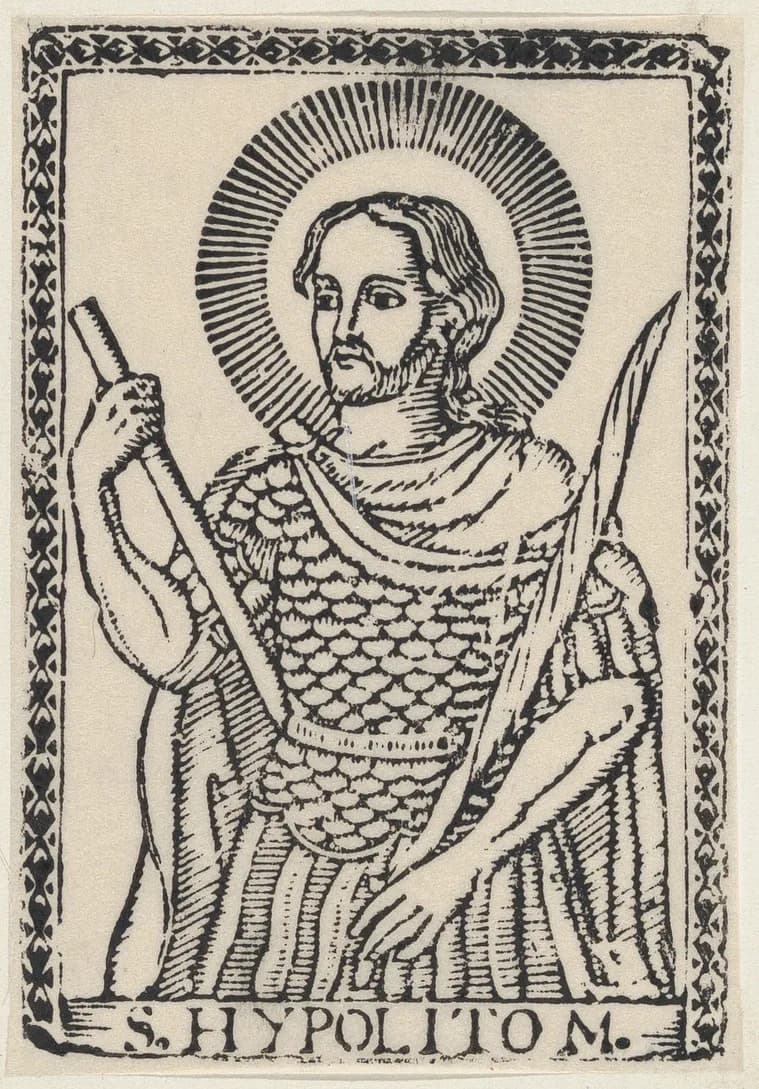
Hippolytus of Rome
theologianEarly Church (2nd-3rd C) · c. 170-235 CE · Updated April 9, 2026
Biography
Hippolytus of Rome was a presbyter in Rome during the late 2nd and early 3rd centuries CE, known as the first antipope and a prolific early Christian writer. His contributions shaped early Christian theology and church practices. Living in a time when the church was still defining its identity amidst Roman persecution and internal strife, Hippolytus became a central figure in the debates over doctrine and authority.
Born around 170 CE, Hippolytus grew up during a period of theological exploration and dispute. He emerged as a prominent theologian and writer, producing significant works like the "Apostolic Tradition" and "Refutation of All Heresies." His commentaries on Daniel and the Song of Songs further illustrate his deep engagement with scripture. His conflict with Pope Callixtus I, primarily over issues of penitential discipline, led to his being labeled the first antipope. This schism reflected his commitment to strict church standards, contrasting with Callixtus's more lenient approach. Despite his opposition, Hippolytus reconciled with the church before his martyrdom in 235 CE.
The world Hippolytus inhabited was one of intense theological debate, particularly regarding the nature of the Trinity and church governance. His Logos theology, which distinguished the Son from the Father, fueled accusations of promoting a dualistic view of God, adding to his controversial reputation. The tension between maintaining doctrinal purity and adapting to pastoral needs underscored his clash with Callixtus. This struggle was emblematic of broader efforts within early Christianity to establish a unified orthodoxy. In a final act of unity, Hippolytus died a martyr, symbolizing his ultimate reconciliation with the church he once opposed.
When a pope relaxes the standards of church discipline, does a stricter community have the right — or duty — to separate and maintain the higher standard?
The ideas
Hippolytus of Rome dedicated his life to preserving the authenticity of Christian doctrine in a rapidly diversifying religious landscape. His central concern was the purity of the church's teachings and practices amidst a growing tide of heretical ideas. Faced with the challenge of preserving the integrity of the faith, Hippolytus saw the need for a steadfast adherence to the traditions handed down by the apostles. His struggle revolved around a core question: How can the church remain true to its foundational beliefs while navigating internal and external pressures for change?
Among Hippolytus's most significant contributions was his Logos theology, which attempted to clarify the relationship between the Father and the Son. He argued that while the Son, or Logos, was distinct in function from the Father, they shared the same divine essence. This idea sought to balance the unity of God with the distinct roles within the Trinity, countering both modalist views that blurred these distinctions and ditheist tendencies that overly separated them. Hippolytus also championed the Apostolic Tradition, a detailed account of early Christian liturgical practices, aiming to anchor church rituals in their apostolic roots. His work responded to what he viewed as unwelcome innovations by church leaders of his time.
Hippolytus's "Refutation of All Heresies" stands as a monumental effort to catalog and counter the divergent teachings threatening early Christian unity. By tracing these heresies to their origins, he provided a framework for defending orthodox Christianity. His commentaries on Daniel and the Song of Songs further demonstrated his commitment to interpreting scripture as a source of encouragement and guidance for the Christian community, especially during times of persecution. These writings contributed to the development of allegorical and prophetic interpretations that influenced Christian thought for centuries.
Hippolytus's signature argument lay in his insistence on strict adherence to apostolic tradition, even if it meant opposing ecclesiastical authorities like Pope Callixtus I. He argued that doctrinal purity took precedence over church unity, a stance that led to his schism with the pope. For Hippolytus, the integrity of the faith was non-negotiable, and compromising on this front was a greater threat than division. This uncompromising position highlighted the tension between maintaining doctrinal purity and achieving institutional harmony, a dilemma that has continued to shape debates within Christianity. His legacy endures as a testament to the enduring struggle for orthodoxy in the face of change.
What changed
Before Hippolytus of Rome, early Christians wrestled with understanding the relationship between the Father and the Son. The lack of clarity led to diverse interpretations, with some viewing them as indistinguishable, while others saw them as entirely separate. This confusion created fertile ground for theological debates and schisms. Liturgical practices varied widely across communities, with no standardized form of worship. Each congregation developed its own traditions, often undocumented, leading to inconsistencies in Christian rites. Additionally, the church struggled with heresies, lacking a systematic approach to identify and counter false teachings, which allowed divergent beliefs to spread unchecked.
Hippolytus of Rome changed this landscape. He articulated a clear distinction between the Father and the Son, emphasizing their unique roles within the divine economy — an early step towards what would become Logos theology. This distinction laid the groundwork for later Trinitarian debates. In his work, "Apostolic Tradition," Hippolytus provided one of the first detailed descriptions of Christian liturgy, offering a model that shaped future worship practices. His methodical approach in "Refutation of All Heresies" systematically identified and countered heretical teachings, setting a new standard for theological discourse. Furthermore, his schism with Pope Callixtus I over church discipline underscored the tension between strict and lenient approaches to penitential practices, sparking debates on church authority.
The influence of Hippolytus extended far beyond his time. His contributions to Logos theology paved the way for the Nicene Creed and the eventual formulation of the doctrine of the Trinity. His liturgical writings influenced later liturgical reforms, leading to more standardized worship practices. The method he pioneered for cataloguing heresies became a cornerstone for later theologians and church councils in their pursuit of doctrinal purity. Without Hippolytus, the church's understanding of the Trinity and its approach to worship and heresies might be unrecognizable today. His legacy lives on, echoed in every recitation of the Nicene Creed.
Disputed legacy
Hippolytus of Rome stumbled significantly in his theological and ecclesiastical pursuits. His Logos theology leaned dangerously close to suggesting two separate gods, a concept known as ditheism. Critics, including followers of modalism and later theologians, found this view incompatible with the idea of the Trinity's unity. The Nicene Creed eventually overshadowed his stance, affirming the Father and the Son as one substance. Hippolytus also fell short in his rigid approach to cataloguing heresies. He dismissed theological diversity, fostering a culture of exclusion and rigidity. His liturgical prescriptions, too inflexible, resisted necessary adaptations that would allow the church to thrive in diverse communities.
The darkest chapter of Hippolytus's career was his schism with Pope Callixtus I. This conflict over penitential discipline disrupted the early church's unity and earned him the title of the first antipope. Hippolytus opposed Callixtus's perceived leniency in accepting sinners back into the church, arguing for a stricter approach. This division not only fractured the community but also set a troubling precedent for future schisms. The reconciliation that eventually followed did little to erase the damage done. The schism highlighted the dangers of rigid adherence to doctrine over communal harmony.
Some modern scholars attempt to rehabilitate Hippolytus by arguing that his insistence on doctrinal purity and liturgical tradition served as a necessary check against the laxity of his contemporaries. They suggest his intentions aimed at preserving the early church's integrity. Yet, these defenses fail to overshadow the lasting impact of his divisive actions. The schism he caused remains a historical fact, a reminder of the consequences of placing ideology above unity.
Legacy
Hippolytus of Rome found himself in a dire situation after being condemned by the Roman authorities. He was exiled to the harsh conditions of Sardinia alongside Pope Pontian. Despite their earlier conflicts, Hippolytus reconciled with the Roman church before his death. Both men died in exile around 235 CE and are honored as martyrs. Their shared suffering and eventual peace with the church left a mark on early Christian history, symbolizing unity after division.
Hippolytus's teachings left a lasting imprint on the early church. His detailed descriptions of liturgical practices and biblical commentaries influenced Christian theology and liturgy. His works, which tackled issues of doctrine and heresy, became essential reading for later theologians. Regions like North Africa and the Eastern Mediterranean engaged deeply with his ideas, which helped shape their religious practices and debates. His methodical approach to cataloging heresies provided a framework that many church leaders adopted to address theological disputes.
Today, Hippolytus's influence endures in the liturgical traditions of both the Roman Catholic and Eastern Orthodox churches. Elements of the early Christian liturgies he described continue to echo in modern practices. The structure of many church services owes much to his detailed accounts. Additionally, his approach to confronting heresies still informs how many denominations handle doctrinal disagreements. The very act of recounting and preserving orthodox beliefs in Christian communities today traces back to the groundwork Hippolytus laid nearly two millennia ago.
Continue reading with a Scholar plan
Upgrade to ScholarCommon questions
- What is Hippolytus of Rome most known for in Christian history?
- Hippolytus of Rome is most known for being the first antipope and a prolific early Christian writer. He is recognized for his extensive contributions to early Christian theology and liturgy, particularly through his work 'Apostolic Tradition,' which provides the earliest detailed description of Christian liturgical practices.
- What were Hippolytus of Rome's most important works?
- Hippolytus's most important works include 'Apostolic Tradition,' which outlines early Christian liturgical practices, 'Refutation of All Heresies,' which critiques various heretical movements, and his biblical commentaries on Daniel and the Song of Songs. These works were influential in shaping early Christian thought and practice.
- What were Hippolytus of Rome's most influential theological ideas?
- Hippolytus's most influential theological ideas include his Logos theology, where he described the Son as distinct from the Father in an economic sense rather than an essential one. He also emphasized the importance of maintaining detailed liturgical traditions and used the cataloguing of heresies as a method for theological discourse.
- What controversies did Hippolytus of Rome engage in — and what was at stake?
- Hippolytus engaged in controversies over the nature of the Trinity and church authority, opposing the Roman bishops whom he accused of heresy and laxity. The stakes involved the correct understanding of the relationship between the Father and the Son and the proper governance of the church.
- How did Hippolytus of Rome influence later Christianity — Catholic, Protestant, and beyond?
- Hippolytus influenced later Christianity by providing a foundation for liturgical practices and contributing to the development of Trinitarian theology. His works were referenced by both Catholic and Protestant theologians, and his approach to heresy influenced how later Christians engaged with doctrinal disputes.
- What did Hippolytus of Rome get wrong, or what ideas have been seriously disputed?
- Hippolytus's rigid stance against certain bishops and his claim to the papacy as an antipope have been disputed. His understanding of the Trinity, particularly his subordinationist tendencies, was later refined by the Nicene Creed, which emphasized the consubstantiality of the Father and the Son.
- Is Hippolytus of Rome considered a saint? By which traditions?
- Hippolytus is considered a saint by both the Roman Catholic Church and the Eastern Orthodox Church. Despite his status as an antipope, he was reconciled with the church before his death and is venerated as a martyr.
- Why does Hippolytus of Rome still matter today?
- Hippolytus matters today because his writings provide valuable insights into early Christian liturgy, theology, and church practices. His works continue to be studied for their historical significance and their influence on the development of Christian doctrine.
- What is the most surprising or counterintuitive thing about Hippolytus of Rome?
- The most surprising aspect of Hippolytus is that despite being an antipope, he was later reconciled with the church and canonized as a saint. This highlights the complexity of early church politics and the possibility of reconciliation and unity within the Christian tradition.
- What is the best place to start reading Hippolytus of Rome?
- The best place to start reading Hippolytus is his 'Apostolic Tradition,' as it provides a comprehensive look at early Christian liturgical practices and offers insights into the structure and theology of the early church. This work is foundational for understanding his influence on Christian liturgy.