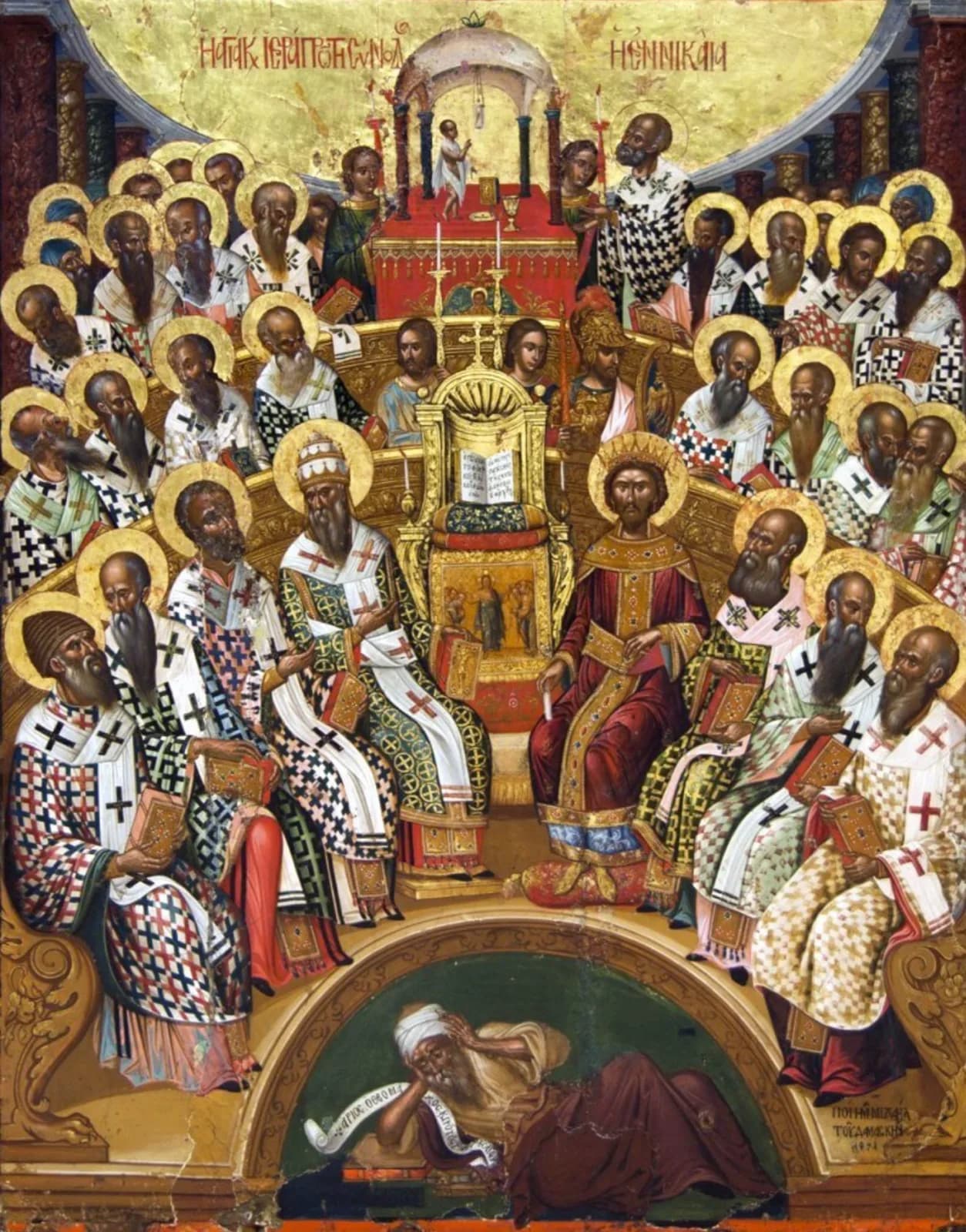
The Council of Nicaea
Church history · Updated August 15, 2026
Overview
The Council of Nicaea was convened to settle theological disputes and to unify the Roman Empire under a single Christian doctrine. In 325 AD, Roman Emperor Constantine I called for this gathering in the city of Nicaea, now located in modern-day Turkey. Christianity had grown in influence within his realm, and Constantine sought to use religion as a cohesive force to stabilize and strengthen his empire. A key issue threatening this unity was the Arian controversy, a theological debate over whether Christ was divine in the same way as God the Father or a created being. By addressing such rifts, Constantine aimed to create a unified Christian doctrine that could function as a foundation for both religious and political harmony.
The Council of Nicaea brought together bishops from across the Roman world to deliberate on these matters. Central to their discussions was the nature of Christ's divinity, which had pitted followers of Arius, a priest from Alexandria, against other church leaders. After intense debate, the council rejected Arius's views, affirming that Christ was of the same substance as God the Father. The decision was enshrined in what became known as the Nicene Creed, a declaration of faith that established the core tenets of Christian belief. By crafting this creed, the council resolved a theological crisis and laid the groundwork for a unified church that could bolster Constantine's vision of a cohesive empire.
Today, the Nicene Creed remains a standard of Christian orthodoxy, recited in churches around the world as a statement of shared faith. The Council of Nicaea's decisions fixed the doctrine that Christ is of the same substance as God the Father, a position held by Catholic, Orthodox, and many Protestant churches to the present day. The creed formulated by the Nicaean bishops in 325 AD still defines the faith of millions of Christians.
Why Fighting Over The Council of Nicaea Was a Big Deal
The Council of Nicaea was not merely about resolving a theological disagreement over the nature of Christ; it was a battle over who held the authority to define Christianity itself. The debate was a struggle for control over the Church's teachings and the power to determine religious truth. The issue was not just about Jesus's divinity but about who would wield the power to shape the Christian doctrine that would guide the faithful. This struggle for doctrinal supremacy had implications for the Church's future, as it would influence the direction of Christian thought and the Church's role in society.
During the Council in 325 AD, key figures from various factions passionately argued their positions. Arius, a priest from Alexandria, led the group that believed Christ was a created being and distinct from God the Father, aiming to preserve a monotheistic understanding of God. Opposing him, Athanasius represented those who insisted that Christ was of the same substance as God the Father, co-eternal and co-equal, seeking to uphold the unity and divinity of Christ. A middle group, led by Eusebius of Caesarea, sought a compromise, proposing that Christ was similar to God but not of the same essence. Each faction understood that defining Christ's nature would set a precedent for Church authority and unity. Only one view could prevail to establish a unified doctrine, and Constantine's empire needed a definitive stance to maintain cohesion.
Despite the Council's decision to affirm the Nicene Creed, which declared Christ's consubstantiality with God the Father, the theological battle was far from settled. The Arian controversy continued to simmer, with differing interpretations of Christ's nature fueling further councils and leading to enduring schisms. The debates that began in Nicaea echoed through the centuries, challenging the Church's unity and authority. This persistent discord highlights how the question of Christ's nature resonated within the Church and why it remained a source of contention long after the council concluded. Even today, the theological ripples of these early debates can be felt, as the Nicene Creed continues to be a touchstone of Christian orthodoxy.
Continue reading with a Scholar plan
Upgrade to ScholarCommon questions
- What was the Council of Nicaea?
- The Council of Nicaea was a gathering convened in 325 AD by Roman Emperor Constantine I in the city of Nicaea, modern-day Turkey, to address theological disputes and unify the Roman Empire under a single Christian doctrine.
- What is the Nicene Creed?
- The Nicene Creed is a declaration of faith formulated at the Council of Nicaea, affirming the belief that Christ is of the same substance as God the Father and establishing core tenets of Christian belief.
- How did the Council of Nicaea address Arianism?
- The Council of Nicaea addressed Arianism by rejecting Arius's view that Christ was a created being and affirming that Christ was consubstantial with God the Father.
- What role did Emperor Constantine play in the Council of Nicaea?
- Emperor Constantine convened the Council of Nicaea to resolve theological disputes and unify the Roman Empire under a single Christian doctrine, using religion as a cohesive force for stability.
- How did the Council of Nicaea influence the date of Easter?
- The Council of Nicaea addressed the calculation of Easter, deciding that it should be celebrated on the first Sunday after the first full moon following the vernal equinox, separate from the Jewish Passover.
- What were the main theological debates at the Council of Nicaea?
- The main theological debate at the Council of Nicaea centered on the nature of Christ's divinity, specifically whether Christ was of the same substance as God the Father or a created being, as argued by Arius.
- How did the Council of Nicaea impact the development of the Christian Church?
- The Council of Nicaea impacted the development of the Christian Church by establishing a unified doctrine through the Nicene Creed, which became a cornerstone of Christian orthodoxy and helped to unify the Church.
- How did the Council of Nicaea address the relationship between God the Father and Jesus Christ?
- The Council of Nicaea addressed the relationship between God the Father and Jesus Christ by affirming that Christ was of the same substance as God the Father, rejecting the Arian view of Christ as a created being.
- What were the long-term effects of the Council of Nicaea on Christianity?
- The long-term effects of the Council of Nicaea on Christianity include the establishment of the Nicene Creed as a central statement of faith, influencing Christian orthodoxy and shaping the Church's teachings for centuries.
- How did the Council of Nicaea contribute to the formation of Christian orthodoxy?
- The Council of Nicaea contributed to the formation of Christian orthodoxy by resolving key theological disputes, particularly regarding the nature of Christ, and establishing the Nicene Creed as a foundational doctrine for the Church.