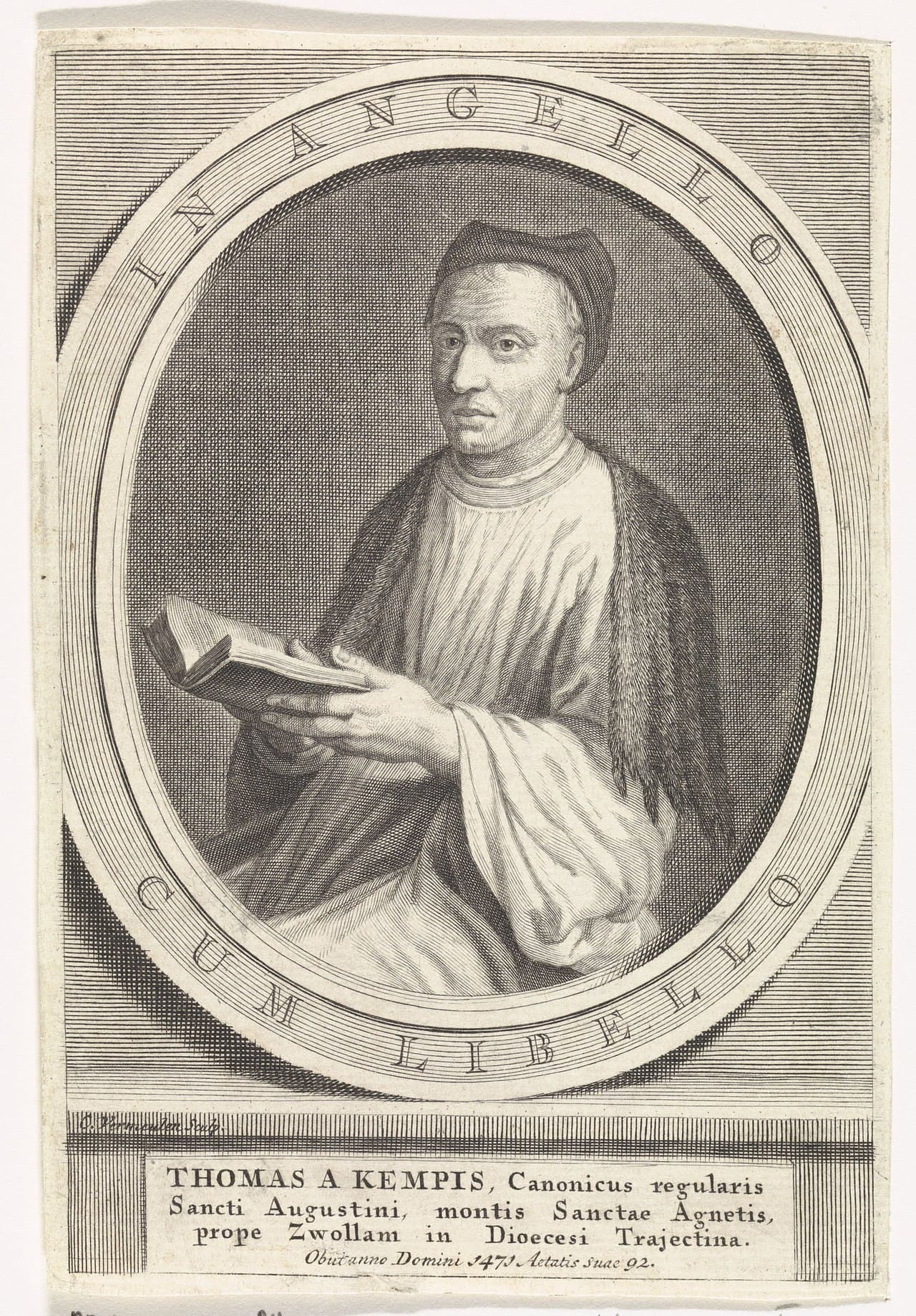
Thomas a Kempis
theologianMedieval (9th-15th C) · c. 1380-1471 CE · Updated April 8, 2026
Biography
Thomas à Kempis was an Augustinian canon in the Netherlands during the late medieval period, known for authoring 'The Imitation of Christ', one of the most influential Christian devotional works. Living at a time when Europe was experiencing significant religious and intellectual shifts, he became a key figure in the movement known as the Devotio Moderna. This movement aimed to reform the Church by focusing on personal piety and practical devotion rather than scholastic theology.
Born around 1380 in Kempen, in what is now Germany, Thomas à Kempis spent most of his life in the monastery of Mount St. Agnes in the Netherlands. He joined the Augustinian order and devoted himself to a life of religious contemplation and writing. Between 1418 and 1427, he penned 'The Imitation of Christ', which has been translated into numerous languages and continues to inspire Christians worldwide. Despite a long-standing dispute over its authorship, it is now widely accepted that Thomas à Kempis was indeed the author. He lived to the ripe age of about 91, passing away in 1471 at the same monastery where he had spent most of his life.
Thomas à Kempis lived during a time when the Devotio Moderna was gaining traction as a response to the perceived excesses of the Church and scholasticism. This movement emphasized personal devotion and humility over academic learning, reflecting broader debates about the role of education and piety in Christian life. Although 'The Imitation of Christ' seems to lean towards anti-intellectualism, it coexisted with the educational programs of the Devotio Moderna, which sought to cultivate a deeper, more personal faith. This tension between learning and devotion defined the era, and Thomas à Kempis's work remains a testament to the spiritual aspirations of his time.
Is deep learning about God an obstacle to knowing God — and can humility and self-denial accomplish what theological argument cannot?
The ideas
Thomas à Kempis dedicated his life to addressing a deep concern within the Christian faith: the gap between intellectual achievement and genuine spiritual devotion. He observed that many within the Church, caught up in theological speculation and academic pursuits, were losing sight of the essence of a Christ-centered life. His life's work aimed to redirect focus from scholarly accomplishments to personal piety, humility, and an authentic relationship with God. À Kempis believed that true spiritual fulfillment lay not in the accumulation of knowledge but in a heartfelt commitment to living in Christ's image, emphasizing humility and self-denial as the path to divine understanding.
Among his most important ideas, à Kempis argued that intellectual achievements are meaningless without love and devotion to God. This perspective challenged the prevailing scholasticism of his time, which prioritized intellectualism over personal faith. In the context of the Devotio Moderna movement, which sought to reform the Church through personal piety, his emphasis on love and devotion resonated with many who found the academic approach to faith cold and detached. Another key idea was that true discipleship involves imitating Christ's humility and self-denial. This provided a practical framework for Christian living, emphasizing actions over theoretical knowledge. At a time when humanism and intellectualism were on the rise, à Kempis offered an alternative path to spiritual fulfillment through simplicity and self-denial.
In addition to these ideas, Thomas à Kempis made significant contributions by advocating for the importance of the interior life over external observance. He believed that a genuine relationship with God is cultivated through internal devotion rather than mere ritualistic practices, which he saw as often lacking sincerity. His work, particularly "The Imitation of Christ," written around 1427, remains one of the most influential devotional texts, calling believers to seek a deeper, more personal connection with God. He also placed great importance on the Eucharist as the source of a devout life, underscoring its role in sustaining and deepening one's faith amidst calls for Church reform.
Thomas à Kempis's signature argument is that true knowledge of God is achieved not through intellectual prowess but through a life of humility, self-denial, and personal devotion. This reasoning was compelling because it addressed a widespread dissatisfaction with the Church's focus on theological argumentation as the primary means to divine understanding. By advocating for a life modeled on Christ's humility and the centrality of the Eucharist, à Kempis offered a path to spiritual enlightenment that was accessible to all believers, not just the learned. His ideas challenged the existing norms and inspired a movement towards a more heartfelt and personal Christian faith, leaving a lasting impact on devotional practices within the Church.
What changed
Before Thomas à Kempis, Christian thought was deeply rooted in scholasticism, which prioritized intellectual rigor and debate to grasp theological truths. The church emphasized external rituals and observances as primary expressions of faith, reflecting a belief that visible acts of devotion could lead to spiritual growth. Scholastic theologians engaged in complex discussions, often prioritizing theological precision over personal experience. This approach left many believers feeling disconnected from a personal relationship with God, as the focus remained on external adherence to religious practices and the accumulation of theological knowledge.
Thomas à Kempis changed this by shifting the focus from external observance to the interior life. He emphasized personal humility, self-denial, and a direct relationship with Christ, suggesting that genuine faith arises from within rather than through outward rituals. He critiqued the prevailing intellectualism of scholasticism, arguing that love and humility were necessary for true understanding of God. Additionally, he highlighted the Eucharist as central to spiritual life, portraying it as a source of nourishment and union with Christ. These shifts encouraged believers to seek personal contrition and heartfelt repentance over precise theological definitions, fostering a more introspective approach to faith.
The impact of Thomas à Kempis's ideas rippled through later spiritual movements. The Devotio Moderna movement embraced his emphasis on personal devotion and humility, seeking to renew the Church from within. His focus on personal piety influenced the Protestant Reformation, which prioritized individual faith and a personal relationship with God. The Catholic Counter-Reformation, too, reflected his influence with its emphasis on personal spirituality and the Eucharist. Without Thomas à Kempis, these movements might not have developed as they did. His enduring influence is seen in the widespread and continued readership of his classic work, "The Imitation of Christ," which remains one of the most published books in history.
Disputed legacy
Thomas a Kempis's work, particularly "The Imitation of Christ," has faced significant criticism for its anti-intellectual stance. By emphasizing humility and self-denial over intellectual engagement, Thomas's writings have discouraged theological inquiry and academic study. This perspective clashed with the Scholastic tradition, which valued rigorous intellectual exploration of faith. Additionally, his focus on mysticism has been viewed as undermining rational approaches to Christianity, alienating rationalist theologians who advocate for a faith grounded in reason. Critics also highlight his promotion of personal spirituality, which can overshadow communal worship and collective religious practice. Lastly, Thomas's view of the Eucharist as the centerpiece of devout life risks marginalizing other spiritual disciplines crucial for a balanced Christian life.
The most troubling legacy of Thomas a Kempis is how his work has bolstered anti-intellectualism within the Church. By prioritizing personal piety over intellectual pursuit, his teachings have been used to justify discouraging critical thinking and deeper theological exploration. This approach has led to a version of faith that favors blind devotion, limiting the Church's ability to engage with new ideas and understandings. The consequences have been far-reaching, stifling theological development and contributing to a culture where questioning and exploring one's faith is seen as unnecessary or even undesirable.
Some modern theologians argue that Thomas’s emphasis on humility and personal devotion serves as a necessary counterbalance to overly academic forms of faith. They suggest that his work can complement theological study rather than contradict it. However, the criticisms remain robust, particularly regarding the neglect of communal aspects of faith and the undermining of rational engagement. Despite attempts to rehabilitate his legacy, the concerns about his promotion of anti-intellectualism and individualism within Christianity persist. Thomas a Kempis's influence continues to spark debate, highlighting the ongoing tension between personal devotion and intellectual engagement in the Church.
Legacy
After the condemnation of some mystical writings in his time, Thomas à Kempis remained largely unaffected by the controversies. He continued his life as an Augustinian canon in the Netherlands, committed to his spiritual writings and monastic duties. À Kempis lived quietly, focusing on a life of devotion and humility, until his death in 1471. His personal dedication and pious lifestyle ensured that his work was mostly seen as an embodiment of genuine Christian devotion, allowing him to avoid the conflicts that embroiled other religious figures of his era.
The teachings of Thomas à Kempis, especially through his seminal work 'The Imitation of Christ,' found a significant following in the Devotio Moderna movement. This movement, which began in the Low Countries, promoted personal piety and inner devotion, aligning closely with à Kempis's ideas. His influence extended beyond Catholicism, impacting Protestant reformers like John Wesley and other figures who valued personal faith over institutional rituals. His emphasis on humility and personal devotion resonated with religious communities across Europe, including groups like the Jesuits and the Franciscans, who integrated his teachings into their spiritual practices.
Today, the impact of 'The Imitation of Christ' is still visible in both Catholic and Protestant traditions. The book remains a cornerstone of Christian devotional literature, often read by those seeking a deeper personal relationship with God. It is available in numerous translations and continues to influence modern spiritual practices with its emphasis on internal devotion over external observance. Many Christians turn to à Kempis's writings for guidance, and 'The Imitation of Christ' is frequently found in church libraries and personal collections worldwide, attesting to its enduring legacy in fostering personal spiritual growth.
Continue reading with a Scholar plan
Upgrade to ScholarCommon questions
- What is Thomas a Kempis most known for in Christian history?
- Thomas a Kempis is most known for writing 'The Imitation of Christ,' a highly influential Christian devotional book. It emphasizes personal piety and the interior life, making it one of the most widely read Christian texts after the Bible.
- What were Thomas a Kempis's most important works?
- Thomas a Kempis's most important work is 'The Imitation of Christ,' written between 1418 and 1427. This book has been a cornerstone of Christian devotional literature for centuries.
- What were Thomas a Kempis's most influential theological ideas?
- Thomas a Kempis emphasized the importance of humility, self-denial, and the interior spiritual life over external religious observance. He also highlighted the significance of the Eucharist as central to the devout life and valued love over intellectual learning.
- What controversies did Thomas a Kempis engage in — and what was at stake?
- Thomas a Kempis did not engage in major theological controversies of his time. His focus was on personal piety and devotion rather than doctrinal disputes, which helped his work appeal across different Christian traditions.
- How did Thomas a Kempis influence later Christianity — Catholic, Protestant, and beyond?
- Thomas a Kempis influenced later Christianity by shaping the devotional practices of both Catholics and Protestants. His emphasis on personal piety and the imitation of Christ resonated with reformers and mystics alike, impacting figures like Ignatius of Loyola and John Wesley.
- What did Thomas a Kempis get wrong, or what ideas have been seriously disputed?
- Some critics argue that Thomas a Kempis's focus on personal piety and withdrawal from the world can lead to an overly individualistic spirituality. However, his emphasis on humility and devotion remains widely respected.
- Is Thomas a Kempis considered a saint? By which traditions?
- Thomas a Kempis is not officially canonized as a saint in the Catholic Church or any major Christian tradition. However, he is venerated by some as a model of Christian piety and devotion.
- Why does Thomas a Kempis still matter today?
- Thomas a Kempis still matters today because his teachings on humility, self-denial, and the interior life offer timeless guidance for personal spiritual growth. His work continues to inspire Christians seeking a deeper relationship with God.
- What is the most surprising or counterintuitive thing about Thomas a Kempis?
- One surprising aspect of Thomas a Kempis is that despite his profound influence, he lived a relatively obscure life as an Augustinian canon. His work's enduring impact contrasts with his humble and quiet existence.
- What is the best place to start reading Thomas a Kempis?
- The best place to start reading Thomas a Kempis is 'The Imitation of Christ,' as it encapsulates his key ideas and has been a foundational text for Christian devotion across centuries.