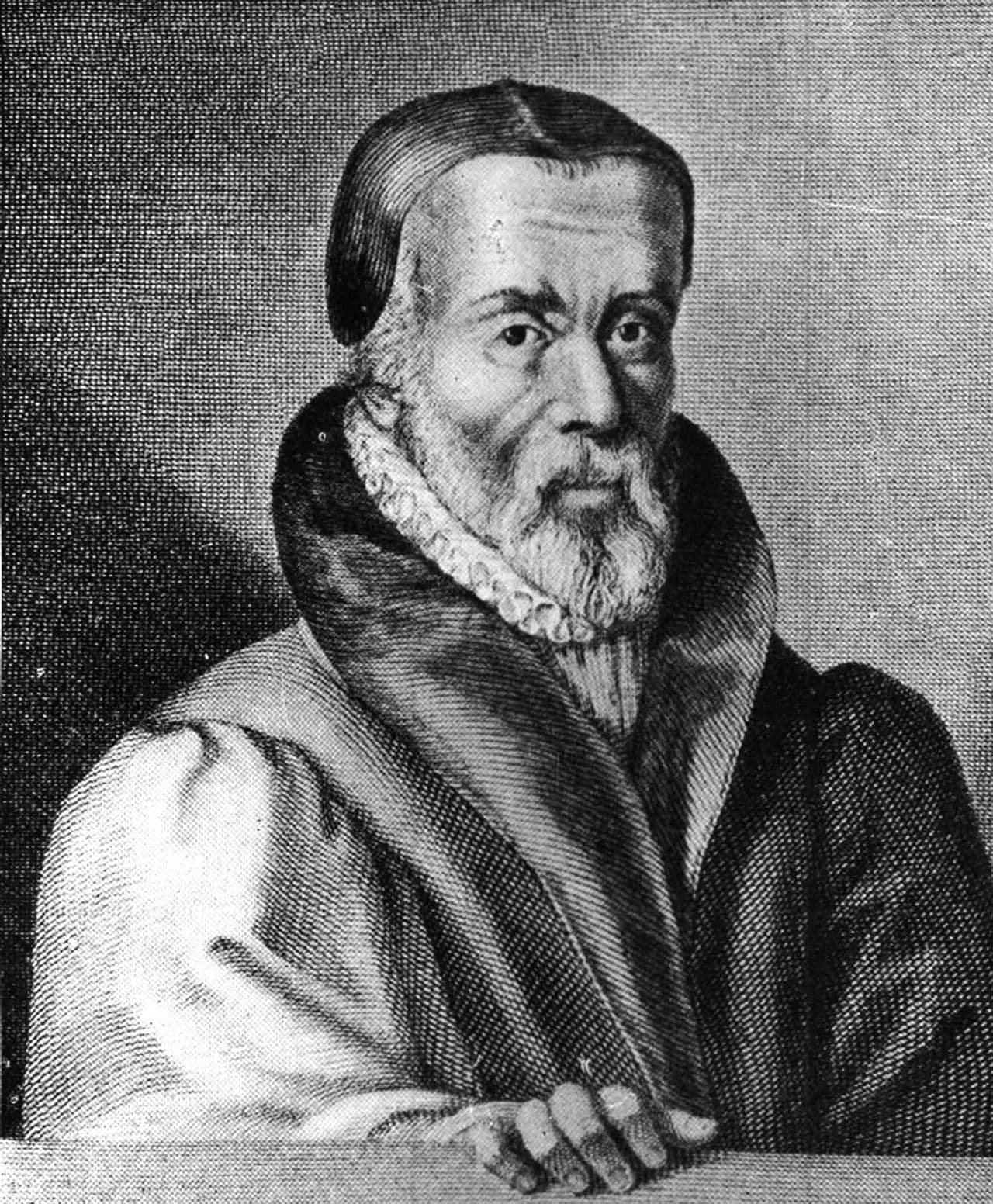
William Tyndale
theologianReformation (15th-16th C) · c. 1494-1536 CE · Updated April 8, 2026
Biography
William Tyndale was an English reformer, linguist, and Bible translator active in the early 16th century, known for his efforts to translate the Bible into English and his subsequent execution for heresy in the Netherlands. Born around 1494 in Gloucestershire, Tyndale lived during a time of intense religious change. The Protestant Reformation was gaining momentum, challenging the Catholic Church's authority and sparking debates about religious practices and beliefs across Europe.
Tyndale's commitment to making the Bible accessible to English speakers led him to produce the first English translation of the New Testament in 1526. This translation was printed in Germany and smuggled into England, where it was considered illegal. In 1528, he wrote "The Obedience of a Christian Man," arguing for the supremacy of Scripture over church tradition. His translation choices, such as using "congregation" instead of "church" and "elder" instead of "priest," directly challenged the established ecclesiastical hierarchy. Tyndale's efforts ultimately led to his capture and execution in 1536 in Vilvoorde, near Brussels, where he was strangled and then burned at the stake.
The period Tyndale lived in was ripe for religious reform, fueled by the invention of the printing press, which made the spread of new ideas rapid and far-reaching. The Catholic Church's control over religious knowledge was weakening, as the Reformation encouraged the questioning of its authority. Tyndale’s translation work laid the groundwork for future English Bibles, significantly influencing the King James Bible, which retained about 80% of his wording. His actions showed the power of the written word in challenging entrenched systems and sparked a transformation in how ordinary people could engage with their faith.
What happens to church authority when ordinary people can read Scripture for themselves — and is the translation of the Bible into the language of the people an act of piety or subversion?
The ideas
William Tyndale was driven by the conviction that every person should have direct access to the Scriptures. He saw the Church's control over biblical interpretation, maintained by keeping the Bible in Latin, as a barrier to genuine faith and understanding. His life's work focused on breaking down this barrier, aiming to empower individuals to engage with God's word personally. Tyndale believed that without the ability to read the Bible in their own language, ordinary people were subject to the whims and interpretations of a clerical elite, a situation he found intolerable.
Tyndale's insistence on translating the Bible into English was revolutionary. He argued that Scripture should be available in the vernacular, making religious knowledge accessible to all, not just the educated clergy. This idea was part of a broader Reformation movement, influenced by thinkers like Martin Luther, who also called for the democratization of religious texts. Tyndale's emphasis on justification by faith alone challenged the Catholic Church's teachings on salvation, which relied heavily on works and sacraments administered by the clergy. He contended that faith in Christ was sufficient for salvation, a belief that undercut the Church's authority and its system of indulgences and penances.
In addition to his translation work, Tyndale criticized the privileges and corruption of the clergy, advocating for a Christianity that was more rooted in Scripture than in Church tradition. His opposition to clerical privilege reflected widespread discontent with the Church's abuses and contributed to the call for reform. Tyndale also asserted that Scripture should be the supreme authority in matters of faith, above the traditions and decrees of the Church. This stance aligned with the Reformation's emphasis on "Scripture alone" as the ultimate guide for Christian life and practice.
Tyndale's most distinctive argument was that even a ploughboy should know more of the Bible than the clergy. This assertion encapsulated his radical vision for religious reform. By translating the Bible into English, he aimed to put knowledge and spiritual authority into the hands of ordinary people, challenging the Church's monopoly on religious truth. This democratization of religious knowledge was both an act of faith and a profound challenge to ecclesiastical power. It laid the groundwork for future generations to question and reform religious institutions, fundamentally altering the landscape of Christianity in England and beyond.
What changed
Before William Tyndale, Christian thought in England was tightly controlled by the Church, which held a monopoly on biblical interpretation. The Latin Vulgate Bible was the only version of Scripture available, and since most laypeople could not read Latin, they relied entirely on the clergy for spiritual guidance. This arrangement kept the laity in a passive role, with little opportunity to engage with religious texts directly. The Church's traditions were often given equal or greater weight than the Bible itself, reinforcing clerical authority and leaving significant theological questions, such as the nature of salvation and the role of ordinary believers, unresolved.
William Tyndale transformed this landscape by translating the New Testament and parts of the Old Testament into English, making the Bible accessible to the common people for the first time. This monumental shift allowed individuals to read and interpret Scripture independently, challenging the Church's exclusive control over biblical knowledge. Tyndale also argued that faith alone was sufficient for salvation, a direct challenge to the Church's teaching that combined faith with good works. By doing so, he aligned himself with emerging Reformation ideas and forced the Church to confront its doctrines. Furthermore, Tyndale reinterpreted key ecclesiastical terms, using words like "congregation" instead of "church" and "elder" instead of "priest," emphasizing a more egalitarian and community-focused faith.
The impact of Tyndale's work reverberated through the Protestant Reformation, particularly in England. His translations laid the foundation for the English Reformation and influenced the creation of the King James Bible, which retained much of his language. Tyndale's emphasis on Scripture's authority over church tradition inspired later reformers and theologians, helping to shape the development of Protestant theology. Without Tyndale's pioneering efforts, movements like the Church of England might have taken a very different path. His influence endures, as nearly 80% of the King James Bible's New Testament is rooted in Tyndale's original translation.
Disputed legacy
William Tyndale's translation choices sparked significant controversy and backlash. By translating the Greek term "ekklesia" as "congregation" instead of the traditional "church," and "presbyteros" as "elder" instead of "priest," he directly challenged the established ecclesiastical hierarchy. The Catholic Church and traditionalists saw these changes as intentional efforts to undermine clerical authority. His focus on justification by faith alone further alienated Catholic theologians, who believed that sacraments and good works were essential for salvation. Tyndale's outright rejection of papal authority threatened the religious and political status quo, shaking the foundation of the Church's power and influence in Europe. His translations and ideas contributed to religious fragmentation, igniting conflicts that fractured communities and led to prolonged religious wars.
The darkest chapter in Tyndale's story is his execution for heresy. Arrested and tried for his radical ideas and translations, Tyndale faced the ultimate punishment for challenging the Church's doctrines. He was strangled and then burned at the stake in 1536, a brutal reminder of the lethal stakes involved in religious reform. The Church argued that his work was heretical, a direct attack on its authority and unity. Tyndale's death underscored the fierce opposition to vernacular Scripture and the extreme measures taken to suppress dissenting theological views. His execution marked a grim period in the struggle for religious freedom and expression.
Despite the criticisms, many Protestant scholars and historians argue that Tyndale's work was crucial for advancing religious literacy and personal faith. They claim that the objections to his translations and theological positions often overshadow the positive impact he had on Christianity. His insistence on making Scripture accessible in the vernacular set a precedent for future translations and reforms. While some criticisms of his choices remain valid, his contribution to the spread of Scripture cannot be denied. Today, Tyndale's translations influence many English versions of the Bible, a testament to his enduring legacy.
Legacy
William Tyndale's commitment to translating the Bible into English led to his condemnation and execution in 1536 in the Netherlands. Accused of heresy, Tyndale was strangled and then burned at the stake. Despite the Church's efforts to suppress his work, Tyndale's translations continued to spread secretly among the English-speaking populace. His translation of the New Testament into English was groundbreaking and became a symbol of resistance against the Church's control over religious texts.
Tyndale's work did not end with his death; his translations and ideas laid the foundation for future English Bible translations, most notably the King James Version, completed in 1611. Tyndale's insistence that the Scriptures be accessible to everyone influenced the Protestant Reformation, inspiring groups like the Puritans who sought to reform the Church from within. His emphasis on the authority of Scripture over church tradition played a significant role in shaping religious thought in England and beyond, contributing to the spread of Protestantism across Europe.
Today, Tyndale's legacy is visible in the widespread availability of the Bible in everyday languages around the world. This principle, rooted in Tyndale's work, is embraced by many Protestant denominations that prioritize personal Bible study and uphold the Scripture's authority over church traditions. His influence endures in evangelical and non-denominational Christian communities, where these values remain central. Tyndale's vision of a Bible accessible to all is realized in the fact that the Bible is now available in over 700 languages, fulfilling his mission to bring the Scriptures to the common person.
Continue reading with a Scholar plan
Upgrade to ScholarCommon questions
- What is William Tyndale most known for in Christian history?
- William Tyndale is most known for translating the Bible into English, making it accessible to the common people. His translation laid the foundation for future English versions, including the King James Version.
- What were William Tyndale's most important works?
- Tyndale's most important works include the English New Testament (1526), the Pentateuch in English (1530), The Obedience of a Christian Man (1528), and The Practice of Prelates (1530). These works were pivotal in spreading Reformation ideas in England.
- What were William Tyndale's most influential theological ideas?
- Tyndale's influential ideas included the belief that the Bible should be available in the vernacular, justification by faith alone, and the supremacy of Scripture over church tradition. He also opposed clerical privilege and papal authority.
- What controversies did William Tyndale engage in — and what was at stake?
- Tyndale engaged in controversies over translating the Bible into English, which was illegal at the time. The stakes included the authority of the Catholic Church and the accessibility of Scripture to laypeople.
- How did William Tyndale influence later Christianity — Catholic, Protestant, and beyond?
- Tyndale's translations influenced the Protestant Reformation by promoting the idea that Scripture should be accessible to all. His work also indirectly influenced the Catholic Church, which later allowed vernacular translations after the Council of Trent.
- What did William Tyndale get wrong, or what ideas have been seriously disputed?
- Some of Tyndale's translations and interpretations were disputed by Catholic authorities, who saw them as heretical. His emphasis on Scripture alone was also challenged by those who valued church tradition.
- Is William Tyndale considered a saint? By which traditions?
- William Tyndale is not officially recognized as a saint by any major Christian tradition. However, he is honored as a martyr and reformer by many Protestant groups.
- Why does William Tyndale still matter today?
- Tyndale matters today because his work laid the groundwork for the widespread availability of the Bible in English. His emphasis on Scripture's accessibility continues to influence Christian thought and practice.
- What is the most surprising or counterintuitive thing about William Tyndale?
- It is surprising that despite his significant contributions to English Christianity, Tyndale was executed as a heretic. His work, once condemned, became foundational for the English-speaking Protestant world.
- What is the best place to start reading William Tyndale?
- The best place to start reading Tyndale is his English New Testament, as it showcases his translation skills and theological insights. The Obedience of a Christian Man is also recommended for understanding his reformist ideas.