Maundy Thursday
Holidays & seasons · Updated August 15, 2026
Overview
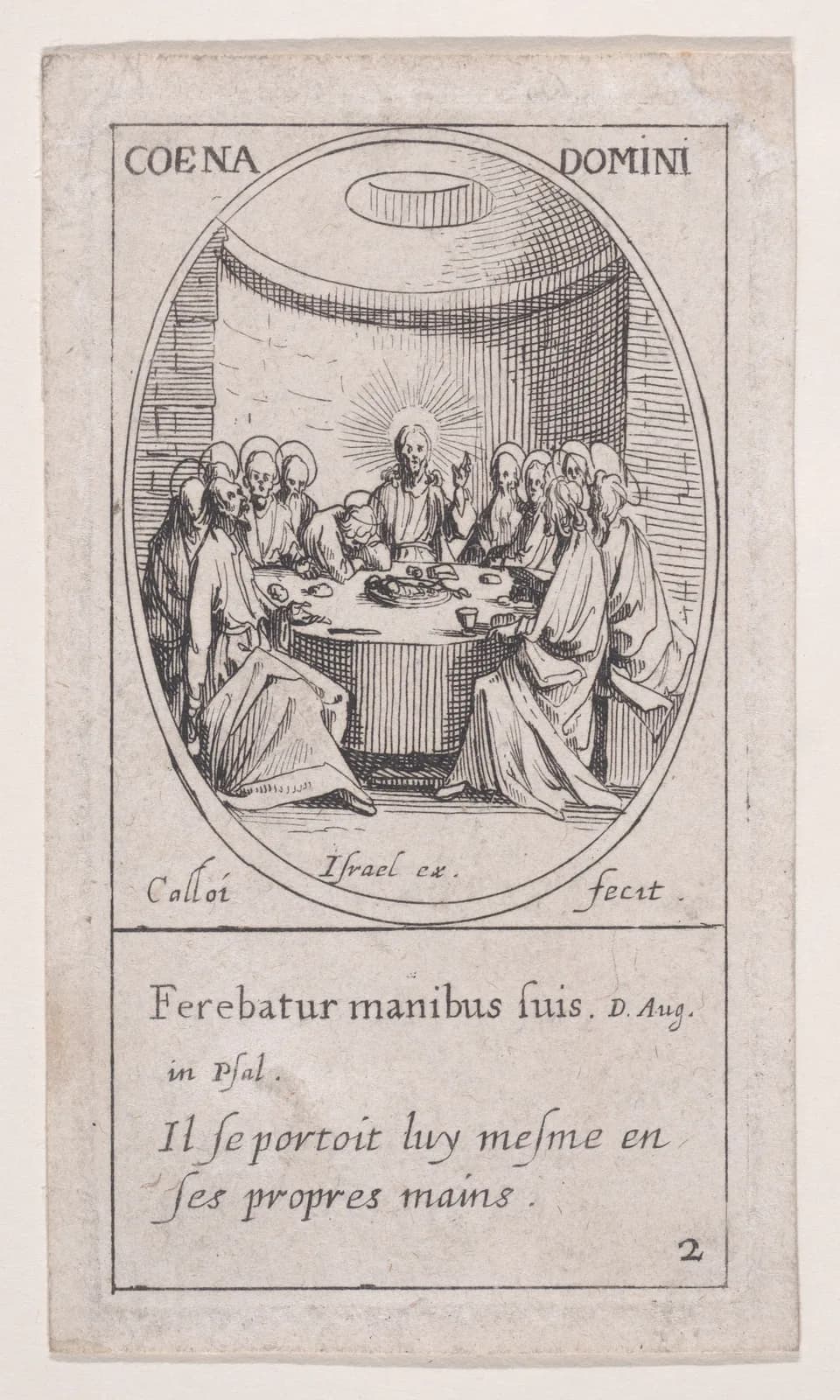
Maundy Thursday has included foot-washing ceremonies since at least the 4th century. Jesus washed the feet of his disciples during the Last Supper, as recorded in the Gospel of John, and this act is the basis for the ritual. The ceremony enacts humility and service, reflecting Jesus' commandment to love one another in John 13:34. "Maundy" comes from the Latin word "mandatum," meaning "command," referring directly to that commandment. By washing feet, early Christians imitated Jesus' example of selfless service.
Early Christian communities in Jerusalem began observing Maundy Thursday around the 4th century. Pilgrims gathered in the city to recall the events of the Last Supper and the final days of Jesus' life. The practice spread across the Christian world and developed in various regions. In England, the Royal Maundy tradition emerged in the 13th century, where the monarch distributed alms to the poor. This included specially minted coins, a practice of charity that continues to this day. The ceremonies have adapted over the centuries, with revisions in the Roman Catholic liturgy occurring after the Second Vatican Council in the 1960s, which updated the ritual forms while retaining the same acts of foot-washing and Eucharist.
Today, Maundy Thursday remains part of Holy Week celebrations for many Christian denominations worldwide. Rituals including the Eucharist and foot-washing ceremonies continue to enact humility and community. In the United Kingdom, the Royal Maundy service is still held annually, with the reigning monarch presenting Maundy money to selected recipients. The monarch distributes coins first minted in the 13th century to pensioners selected for service to their communities.
Why Fighting Over Maundy Thursday Was a Big Deal
Struggles over Maundy Thursday weren't just about how to wash feet or the specifics of a church service. This was a battle over power and authority within the Christian world. On one side, the Roman Church, represented by figures like Pope Innocent III, insisted on a uniform way to celebrate Maundy Thursday. They believed that maintaining consistency across Christendom was crucial for unity and ecclesiastical authority. Reformist groups, led by Martin Luther, pushed for the right of local congregations to interpret and celebrate according to their understanding of the scriptures. This wasn't just a liturgical disagreement but a fundamental clash over who got to decide what true Christian practice looked like.
The clash came to a head at the Diet of Worms in 1521. Here, Martin Luther stood before Emperor Charles V and representatives of the Roman Church. Luther was asked to recant his teachings, which included his views on liturgical practices like Maundy Thursday. Luther, driven by his belief in the primacy of scripture over tradition, refused to back down. For the Roman Church, a victory would mean reaffirming their control over Christian practices, ensuring the stability and uniformity of the faith. For Luther and his followers, winning would mean freedom from what they saw as the Church's overreach, allowing scripture to guide practice. Luther's refusal led to his excommunication, but it also fueled the spread of Reformation ideas, marking a shift in religious power dynamics.
Conflicts over Maundy Thursday and authority remain unresolved. The tension between tradition and reform continues, as does the question of who holds the power to define Christian belief and practice. Churches today still face these issues, as seen in continuing debates over liturgical practices. The struggle, rooted in the early 16th century, highlights a fundamental aspect of religious life: the ongoing negotiation of tradition and innovation. While the specifics of the past may have faded, the underlying questions of authority and interpretation endure, ensuring that the debate over Maundy Thursday remains relevant.
Continue reading with a Scholar plan
Upgrade to ScholarCommon questions
- What is Maundy Thursday?
- Maundy Thursday is a Christian observance that commemorates the Last Supper of Jesus Christ with his disciples, as well as the institution of the Eucharist. It is part of Holy Week, occurring the day before Good Friday.
- What is the significance of foot washing on Maundy Thursday?
- Foot washing on Maundy Thursday symbolizes humility and service, reflecting Jesus' act of washing his disciples' feet during the Last Supper and his command to love one another.
- What biblical events happened on Maundy Thursday?
- On Maundy Thursday, Jesus shared the Last Supper with his disciples, instituted the Eucharist, and washed their feet, as recorded in the Gospel of John.
- How do churches prepare for Maundy Thursday services?
- Churches prepare for Maundy Thursday services by organizing the liturgy, setting up for the Eucharist and foot-washing ceremonies, and selecting appropriate hymns and scripture readings.
- How does Maundy Thursday differ from Good Friday?
- Maundy Thursday focuses on the Last Supper and Jesus' acts of service, while Good Friday commemorates Jesus' crucifixion and death, emphasizing themes of sacrifice and redemption.
- What are common readings or scriptures for Maundy Thursday?
- Common readings for Maundy Thursday include the Gospel of John 13:1-17, which describes Jesus washing the disciples' feet, and the accounts of the Last Supper from the Synoptic Gospels.