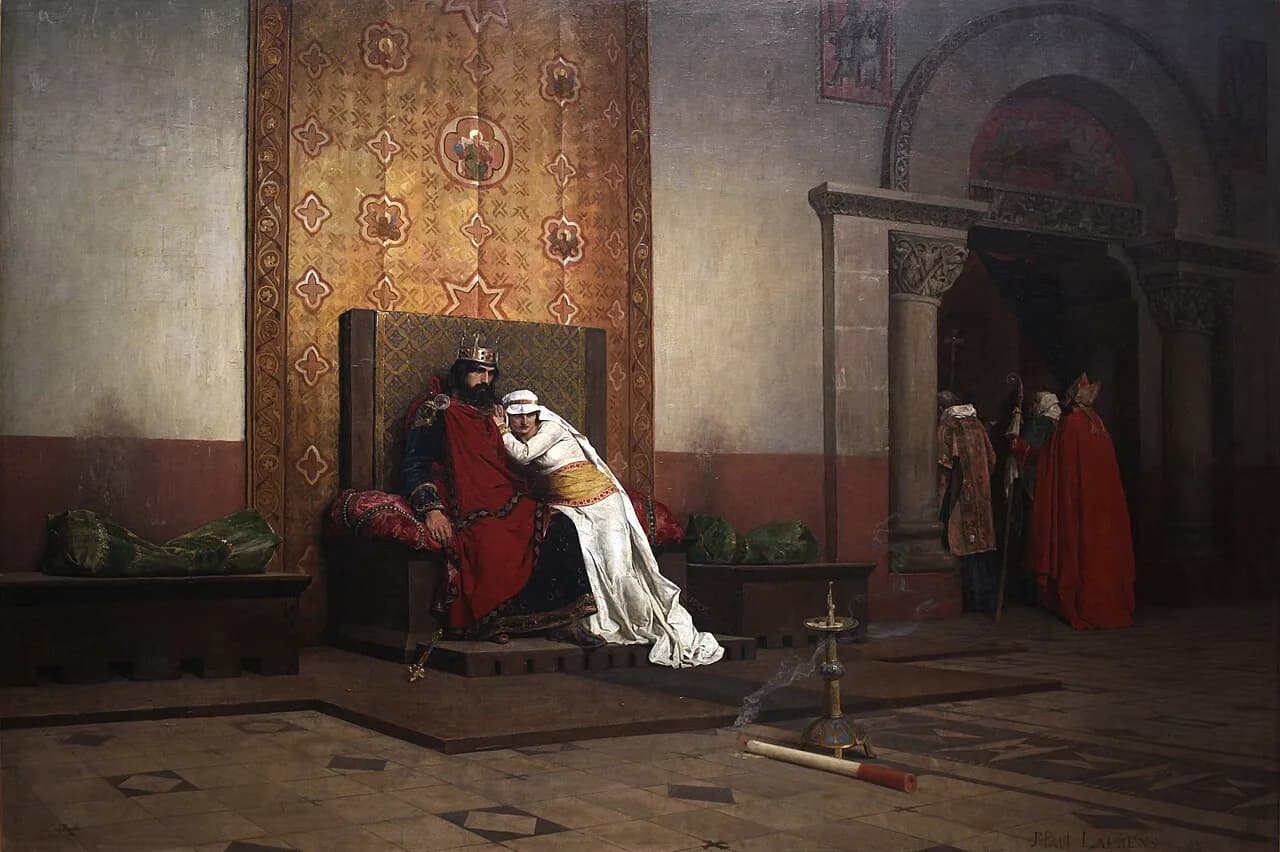
Excommunication
Theology · Updated August 15, 2026
Overview
Excommunication was not always a permanent sentence in the Christian Church. It could be revoked if the person demonstrated genuine repentance and took steps to rectify their wrongs. The early church applied this approach to balance discipline with mercy, aiming to restore individuals to the community rather than banish them indefinitely. The possibility of reversing excommunication functioned both as a warning and a path to redemption, encouraging wayward members to return to the fold.
The formal guidelines for Excommunication were established during the First Council of Nicaea in 325 AD, focusing initially on heresy. This council produced canonical rules for how the church would handle dissent and misconduct. Over the centuries, notable figures faced Excommunication, each under unique circumstances. Martin Luther was excommunicated in 1521 by Pope Leo X after refusing to retract his 95 Theses, challenging the church's teachings. In 1533, Henry VIII was excommunicated by Pope Clement VII following his break from the Catholic Church to form the Church of England. Not all faced permanent exclusion. Galileo Galilei, who was threatened with excommunication in 1633, avoided it by recanting his support of the heliocentric model, though he still spent his remaining years under house arrest.
Today, excommunication is regarded as a measure of last resort, used only after attempts at reconciliation have failed. The process and implications have evolved, but it remains an active church discipline applied for specific actions or beliefs. In modern times, the Catholic Church maintains the possibility of reversal upon sincere repentance, reflecting the principle that excommunication is not meant to be an irrevocable punishment, but rather a corrective measure with the hope of eventual reintegration.
Why Fighting Over Excommunication Was a Big Deal
Battles over excommunication centered on authority and control, with religious and political power at stake. excommunication functioned as a religious penalty aimed at disciplining wayward believers. Its effects extended further, as it could strip leaders of their legitimacy, destabilize movements, and shift power dynamics within both the Church and society. By excommunicating a prominent figure, the Church could undermine a ruler's divine right to govern, thereby altering the political landscape. This made Excommunication a tool wielded not just for spiritual correction but as a means to assert dominance and control over both ecclesiastical and secular realms.
The Investiture Controversy of 1076 exemplified this clash of powers, with Pope Gregory VII and Emperor Henry IV at the center. Pope Gregory VII asserted that the pope held supreme authority to excommunicate individuals and define church orthodoxy. He believed this centralized control was necessary to maintain the Church's integrity and independence. Emperor Henry IV argued that secular leaders like himself should influence religious matters, especially when they impacted political stability. By appointing bishops, Henry IV sought to ensure loyalty within his territories. When Gregory excommunicated Henry, it was not just a spiritual censure but a direct challenge to his authority as emperor. This confrontation led to a power struggle that culminated in the Concordat of Worms, which partially resolved the conflict by delineating the roles of church and state but left tensions unresolved.
The issue of Excommunication was never fully settled because it stemmed from an ongoing tension between religious and secular authority. This conflict continued to evolve, reappearing in various forms across centuries. Despite attempts at resolution, the question of who held supreme power, the Church or the state, remained a contested and fluid dynamic. The Concordat of Worms drew temporary boundaries, but the underlying struggle persisted, as shown by later events like the Reformation and the English Reformation. The dispute continues to inform present-day relations between faith and governance that have shaped civilizations.
Continue reading with a Scholar plan
Upgrade to ScholarCommon questions
- What is excommunication in the Catholic Church?
- Excommunication is a severe ecclesiastical penalty imposed by the Catholic Church, which excludes a person from participating in the sacraments and the communal life of the Church. It is intended as a corrective measure to encourage repentance and reconciliation.
- How does excommunication affect a person's standing in the church?
- Excommunication removes a person from the sacramental life of the Church, barring them from receiving the Eucharist and other sacraments. It signals a serious breach in their relationship with the Church community.
- Can someone return to the church after being excommunicated?
- Yes, a person can return to the Church after being excommunicated if they demonstrate sincere repentance and take steps to rectify their wrongs. The Church allows for the reversal of excommunication to restore individuals to the community.
- What are the reasons someone might be excommunicated?
- Excommunication can result from grave offenses such as heresy, apostasy, schism, or other serious violations of Church law. It is used as a last resort when attempts at reconciliation have failed.
- How does excommunication differ between Catholic and Orthodox churches?
- In both Catholic and Orthodox churches, excommunication serves as a disciplinary measure, but the processes and theological interpretations can differ. The Orthodox Church often emphasizes reconciliation and healing, while the Catholic Church has a more formalized legal process.
- Who has the authority to excommunicate someone in the Catholic Church?
- In the Catholic Church, bishops and the Pope have the authority to excommunicate individuals. Certain grave offenses may also incur automatic excommunication, known as latae sententiae.
- What historical events have involved mass excommunications?
- Mass excommunications have occurred during significant historical conflicts, such as the Investiture Controversy and the Protestant Reformation. These events often involved clashes between religious and political authorities.
- How is excommunication viewed in modern times?
- Today, excommunication is seen as a measure of last resort, emphasizing the hope for repentance and reconciliation rather than permanent exclusion. It underscores the seriousness of certain actions or beliefs within the Church.
- Can excommunication be appealed or reversed?
- Yes, excommunication can be appealed or reversed if the individual shows genuine repentance and seeks reconciliation with the Church. The process involves confession and absolution by a bishop or priest.
- What are the consequences of a public excommunication?
- Public excommunication can lead to social and spiritual isolation, damaging a person's reputation and standing within the community. It serves as a public declaration of the individual's serious breach with Church teachings.
- How does excommunication impact a person's family and community?
- Excommunication can create tension and division within a person's family and community, as it publicly marks them as being outside the Church's communion. It may also affect the family's participation in Church activities.
- What is the process for a formal excommunication?
- Formal excommunication involves a canonical process where the Church authorities determine the gravity of the offense and attempt reconciliation. If unresolved, a formal declaration of excommunication is issued.
- Are there famous cases of excommunication in history?
- Notable cases include Martin Luther, excommunicated in 1521 for his 95 Theses, and Henry VIII, excommunicated in 1533 for breaking from the Catholic Church. These cases had significant religious and political repercussions.
- How did excommunication play a role in the Protestant Reformation?
- Excommunication was a key factor in the Protestant Reformation, as figures like Martin Luther were excommunicated for challenging Church teachings. This led to the formation of new Christian denominations separate from the Catholic Church.
- What are the different types of excommunication?
- There are two main types of excommunication: ferendae sententiae, imposed by a Church authority, and latae sententiae, which occurs automatically upon committing certain grave offenses. Both serve to exclude individuals from the Church's sacramental life.