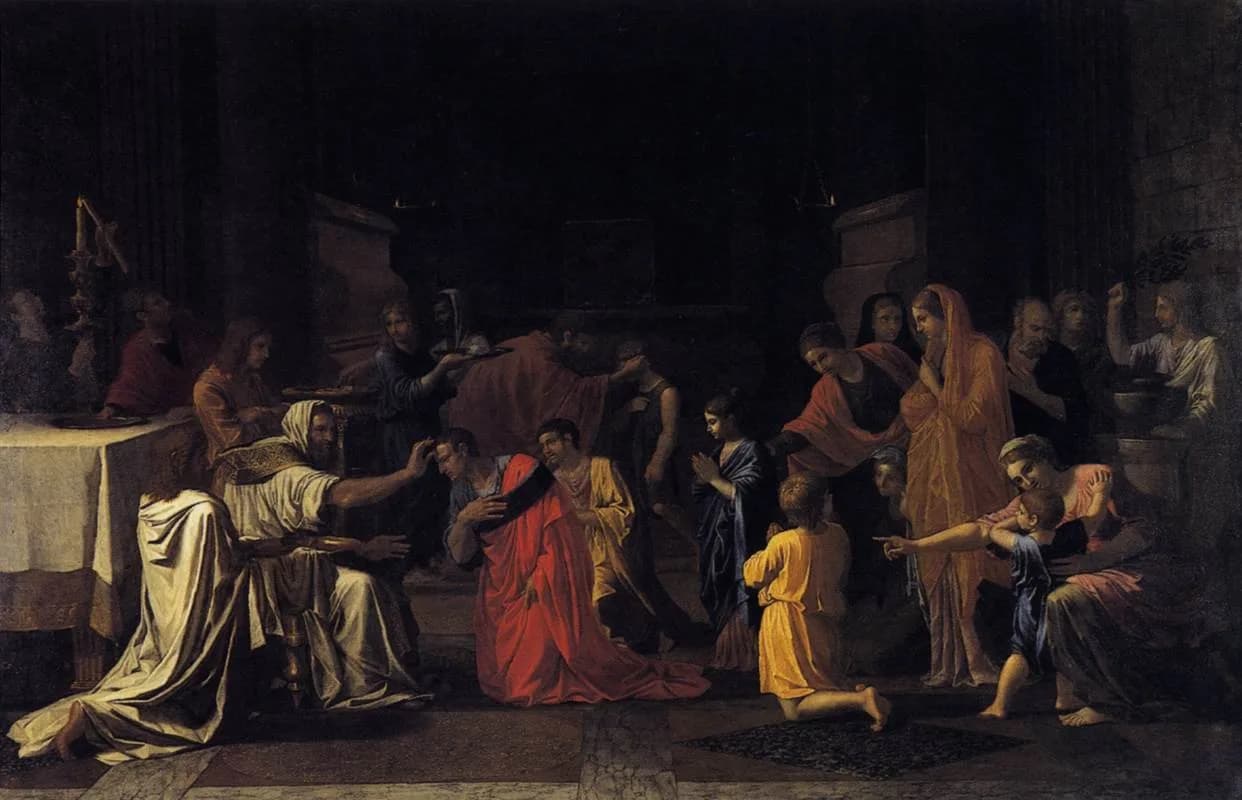
Confirmation
Liturgical forms · Updated August 15, 2026
Overview
Confirmation was not originally a separate sacrament but evolved from the early Christian initiation rites over centuries. Early Christians underwent a unified ceremony that included baptism, confirmation, and the Eucharist, marking their full entry into the Christian community. This rite symbolized both the cleansing of the soul and the reception of the Holy Spirit. However, as the Church expanded across regions, the logistics of these initiation rites began to pose challenges, particularly the requirement that only bishops could perform confirmations.
By the 4th century, the growing number of converts meant that bishops could not be present at every baptismal ceremony. Gradually, baptism and Confirmation became distinct rites. The Council of Trent in the 16th century formally recognized Confirmation as its own sacrament. The council taught that confirmation strengthens the faith of baptized Christians through the gift of the Holy Spirit. This decision was partly a response to the Protestant Reformation, which challenged traditional Catholic practices, prompting the Church to clearly define and affirm its rites.
Today, the practice of confirmation varies widely among Christian denominations. In the Roman Catholic Church, bishops typically administer it when a person reaches adolescence, signifying a mature commitment to the faith. Meanwhile, the Eastern Orthodox Church maintains the ancient tradition of chrismation, performing the rite immediately after baptism, even for infants. These differing practices stem from the separation of confirmation from baptism in the Western Church and the preservation of a unified initiation rite in the Eastern Church.
Common questions
- What is the sacrament of Confirmation in Christianity?
- Confirmation is a sacrament in Christianity that signifies the strengthening of a baptized person's faith and the reception of the Holy Spirit. It is considered a rite of passage marking a mature commitment to the faith.
- Why do Catholics get confirmed?
- Catholics get confirmed to strengthen their faith and receive the Holy Spirit, affirming their commitment to the Church. It is seen as a deepening of baptismal grace and a step towards spiritual maturity.
- What is the difference between Baptism and Confirmation?
- Baptism is the sacrament of initiation into the Christian faith, symbolizing the cleansing of sin and rebirth. Confirmation, on the other hand, strengthens the grace received at baptism and involves the reception of the Holy Spirit.
- At what age do people usually receive Confirmation?
- In the Roman Catholic Church, Confirmation is typically received during adolescence, often between the ages of 12 and 16. However, the age can vary depending on the diocese and local traditions.
- What are the requirements for Confirmation in the Catholic Church?
- To be confirmed in the Catholic Church, one must be baptized, have received the Eucharist, and usually undergo a period of preparation or catechesis. A sponsor, who is a practicing Catholic, is also required to guide the confirmand.
- Can you be confirmed without being baptized?
- No, in the Catholic Church, baptism is a prerequisite for Confirmation. It is the first sacrament of initiation, and Confirmation completes the process of initiation into the Church.
- How is Confirmation celebrated in different Christian denominations?
- In the Roman Catholic Church, Confirmation is a separate rite typically performed by a bishop. In the Eastern Orthodox Church, chrismation is performed immediately after baptism, even for infants, while Protestant denominations may vary in their practices.
- What is the role of a sponsor in Confirmation?
- A sponsor in Confirmation acts as a spiritual mentor and guide for the confirmand. The sponsor supports the confirmand in their faith journey and helps them prepare for the sacrament.
- Why do some Christians receive a new name at Confirmation?
- Some Christians choose a new name at Confirmation to honor a saint or biblical figure they admire. This practice symbolizes a new identity and deeper commitment to their faith.
- How does Confirmation affect one's role in the Church?
- Confirmation strengthens a person's bond with the Church and empowers them to take on greater responsibilities within the community. It is seen as a call to active participation in the Church's mission and life.
- What is the historical origin of the Confirmation sacrament?
- Confirmation originated from the early Christian initiation rites, which included baptism, confirmation, and the Eucharist as a unified ceremony. Over time, logistical challenges led to its separation as a distinct sacrament, formally recognized by the Council of Trent in the 16th century.
- What are the symbols associated with Confirmation?
- Common symbols of Confirmation include the laying on of hands, anointing with chrism (holy oil), and the sign of peace. These symbols represent the Holy Spirit's presence and the confirmand's strengthened faith.
- How has the practice of Confirmation changed over time?
- Originally part of a unified initiation rite, Confirmation became a separate sacrament due to logistical challenges as the Church expanded. The Council of Trent in the 16th century formally recognized it as distinct, and practices have since evolved across denominations.
- What prayers are said during a Confirmation ceremony?
- During a Confirmation ceremony, prayers often include the invocation of the Holy Spirit, the renewal of baptismal promises, and blessings over the confirmands. Specific prayers can vary by denomination and local tradition.
- Is Confirmation necessary for marriage in the Catholic Church?
- While Confirmation is not strictly necessary for marriage in the Catholic Church, it is strongly encouraged. The Church views it as important for the spiritual maturity and readiness of the couple entering into the sacrament of marriage.