Baptism
Sacraments · Updated August 15, 2026
Overview
Baptism, as practiced by early Christians, has roots in Jewish purification rituals. Before Christianity, various Jewish sects engaged in ritual washings as a symbol of spiritual cleansing and renewal. These practices were common among groups such as the Essenes, who used water for purification in preparation for entering a sacred community. This early Jewish tradition preceded the Christian sacrament of baptism, providing a familiar context for its adoption among the first followers of Jesus.
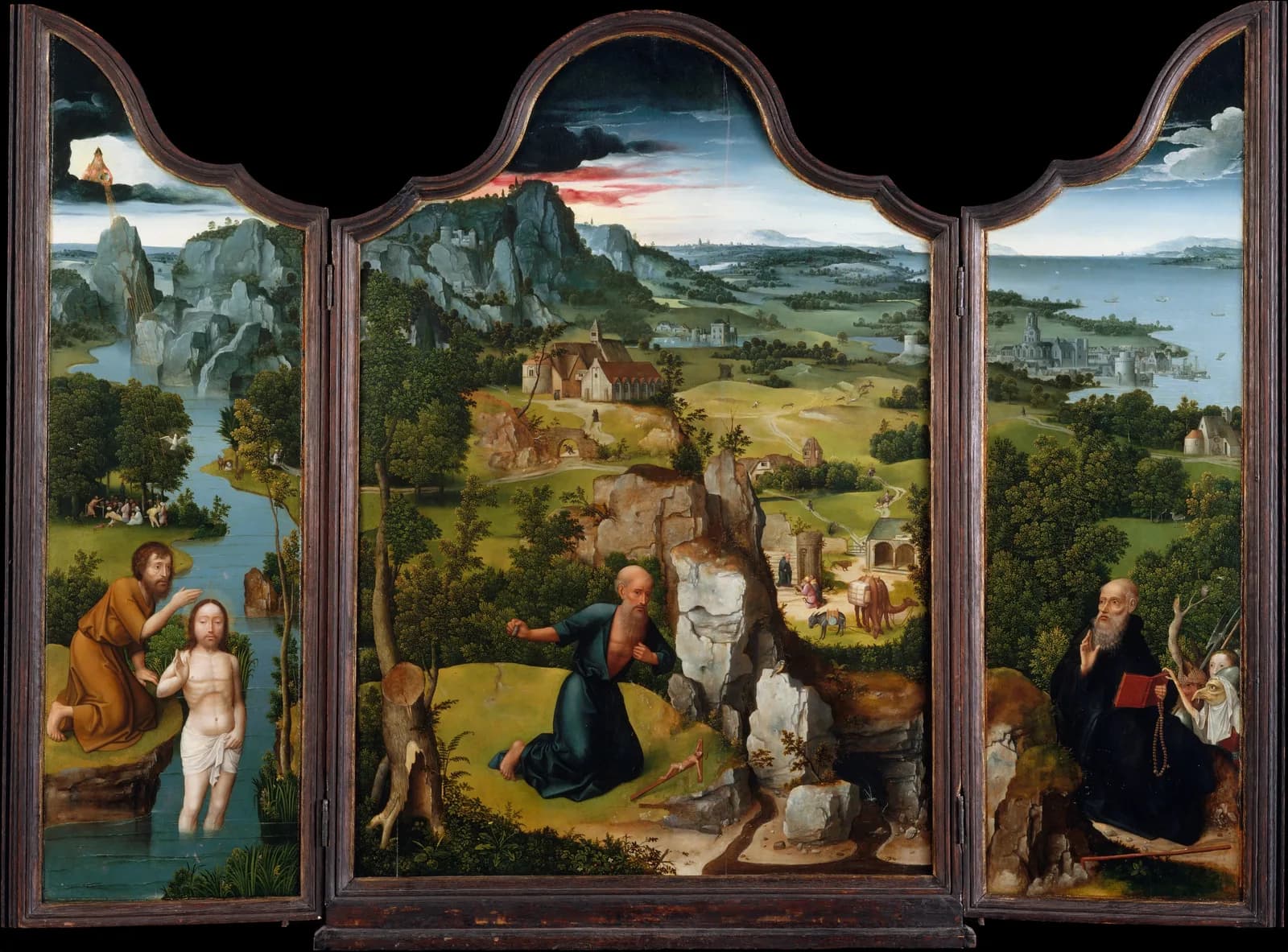
The emergence of Baptism in Christian practice is tied to John the Baptist, a prophetic preacher in the New Testament. John gained a following by baptizing individuals in the Jordan River as a sign of repentance and spiritual renewal. His baptism of Jesus marked the beginning of Jesus' public ministry in the Christian narrative. Early Christian communities continued to develop this rite, initially baptizing adult converts who underwent a period of instruction and preparation. The Didache, a first-century Christian text, offers one of the earliest recorded instructions on baptism, advocating for immersion in running water. As Christianity spread throughout the Roman Empire, the practice evolved to include infant baptism, facilitated by the construction of baptismal fonts in churches. The Council of Carthage in 418 AD affirmed this practice, reflecting its growing acceptance.
Today, Baptism remains a rite across most Christian denominations, though its form and theological meaning vary. Some traditions emphasize full immersion, while others practice pouring or sprinkling water. The rite symbolizes entry into the Christian community and the washing away of sins, maintaining a connection to its ancient roots. The practice of infant baptism, initiated in the early centuries of Christianity, persists in many denominations, while others reserve baptism for individuals old enough to profess their faith. Despite these differences, Baptism endures as a sacrament within Christianity.
Why Fighting Over Baptism Was a Big Deal
The fierce debates over baptism in the history of Christianity were not just about the physical act of water being poured, sprinkled, or dunked. At their core, these disputes were a battle over authority and identity. Different groups vied to define what baptism meant and how it should be practiced, which was a direct challenge to the legitimacy of religious leadership. This struggle was about who had the right to say what was a true expression of faith and who belonged to the Christian community. By determining the form and meaning of Baptism, these groups were not just discussing a ritual; they were drawing the boundaries of Christian identity itself.
During the Synod of Dort from 1618 to 1619, these tensions came to a head. This church council brought together Reformed Church leaders and theologians to resolve various theological disputes, including the practice of baptism. The Catholic Church, led by figures like Pope Innocent III, argued that baptism was a sacrament necessary for salvation and should be controlled by the Church to maintain its authority. On the other side, the Anabaptists, represented by leaders such as Menno Simons, insisted that baptism should be a personal decision made by adult believers, promoting individual faith and voluntary church membership. Meanwhile, Reformers like Martin Luther took a middle path, seeing Baptism as a sign of faith but not necessarily tied to salvation. Each faction had much at stake: the Catholic Church sought to preserve its power, the Anabaptists aimed to empower individual believers, and the Reformers tried to balance tradition with reform. In the end, the Synod reinforced traditional views, yet divisions persisted, particularly with the Anabaptists, who refused to concede.
The conflict over baptism was never truly settled because it tapped into deeper questions that have always been part of Christianity. These debates touch on who has religious authority, how personal belief should be expressed, and what the nature of the Church should be. These are not static questions; they evolve as Christian traditions develop and adapt over time. Even today, different denominations interpret and practice Baptism in various ways, reflecting the ongoing negotiation over these fundamental issues. As a concrete fact, the Anabaptists' insistence on adult baptism laid the foundation for many modern Protestant denominations, showing how unresolved debates can have lasting impacts.
Continue reading with a Scholar plan
Upgrade to ScholarCommon questions
- What is baptism and why is it important in Christianity?
- Baptism is a Christian sacrament of initiation and purification, symbolizing the washing away of sins and entry into the Christian community. It is important because it represents spiritual renewal and is seen as a public declaration of faith in Jesus Christ.
- How is infant baptism different from believer's baptism?
- Infant baptism involves baptizing young children or infants, often based on the faith of the parents and the community, and is common in denominations like Catholicism. Believer's baptism, practiced by groups like Baptists, is reserved for individuals who are old enough to profess their faith and make a personal decision to follow Christ.
- What are the steps involved in a Catholic baptism ceremony?
- In a Catholic baptism, the ceremony typically includes the sign of the cross, readings from Scripture, anointing with oil, the blessing of water, the actual baptism by pouring water over the head, and the presentation of a white garment and a candle.
- Why do some Christian denominations reject infant baptism?
- Some denominations, like Baptists and Anabaptists, reject infant baptism because they believe baptism should be a conscious decision made by individuals who can profess their faith, emphasizing personal belief and commitment.
- What does baptism symbolize in the Christian faith?
- Baptism symbolizes the washing away of sins, spiritual rebirth, and entry into the Christian community. It also represents the believer's identification with the death, burial, and resurrection of Jesus Christ.
- How did baptism practices evolve in early Christianity?
- Early Christian baptism practices evolved from Jewish purification rituals and were initially focused on adult converts. Over time, practices like infant baptism emerged, and the method of baptism varied, including immersion, pouring, or sprinkling.
- What is the significance of John the Baptist in baptism history?
- John the Baptist is significant because he baptized individuals in the Jordan River as a sign of repentance and spiritual renewal, and his baptism of Jesus marked the beginning of Jesus' public ministry. His practices laid the foundation for the Christian rite of baptism.
- Is baptism necessary for salvation according to the Bible?
- The necessity of baptism for salvation is debated among Christian denominations. Some, like the Catholic Church, view it as essential, while others, like some Protestant groups, see it as an important but not strictly necessary act of obedience and faith.
- What are the traditional gifts given during a baptism ceremony?
- Traditional gifts given during a baptism ceremony often include religious items such as a Bible, a cross or crucifix, a rosary, or a personalized baptismal candle. These gifts are meant to commemorate the occasion and support the spiritual growth of the baptized individual.
- How do different Christian denominations view baptism?
- Different denominations view baptism in various ways: Catholics and Orthodox Christians see it as a sacrament necessary for salvation, while many Protestant groups view it as an important symbol of faith. Practices and beliefs about the age and method of baptism also vary widely.
- What is the role of godparents in a baptism?
- Godparents, in a baptism, are chosen to support the spiritual upbringing of the baptized individual, often pledging to help guide them in their faith journey. They are typically present at the ceremony and may play a role in the child's religious education.
- Why do some Christians get baptized more than once?
- Some Christians get baptized more than once if they convert to a denomination that requires believer's baptism or if they feel their initial baptism was not a true expression of their faith. This is common in denominations that emphasize personal faith decisions.
- What is the difference between baptism by immersion and sprinkling?
- Baptism by immersion involves fully submerging the individual in water, symbolizing death and resurrection with Christ. Sprinkling, or affusion, involves pouring or sprinkling water over the head, and is often used in traditions where full immersion is not practical.
- How does baptism relate to the concept of original sin?
- In many Christian traditions, baptism is believed to cleanse the individual from original sin, the sin inherited from Adam and Eve. This belief is particularly strong in Catholicism and Orthodox Christianity, which see baptism as a means of spiritual purification.
- What are the biblical references that support baptism practices?
- Biblical references supporting baptism include Matthew 28:19, where Jesus commands his disciples to baptize in the name of the Father, Son, and Holy Spirit, and Acts 2:38, where Peter calls for repentance and baptism in Jesus' name for the forgiveness of sins.