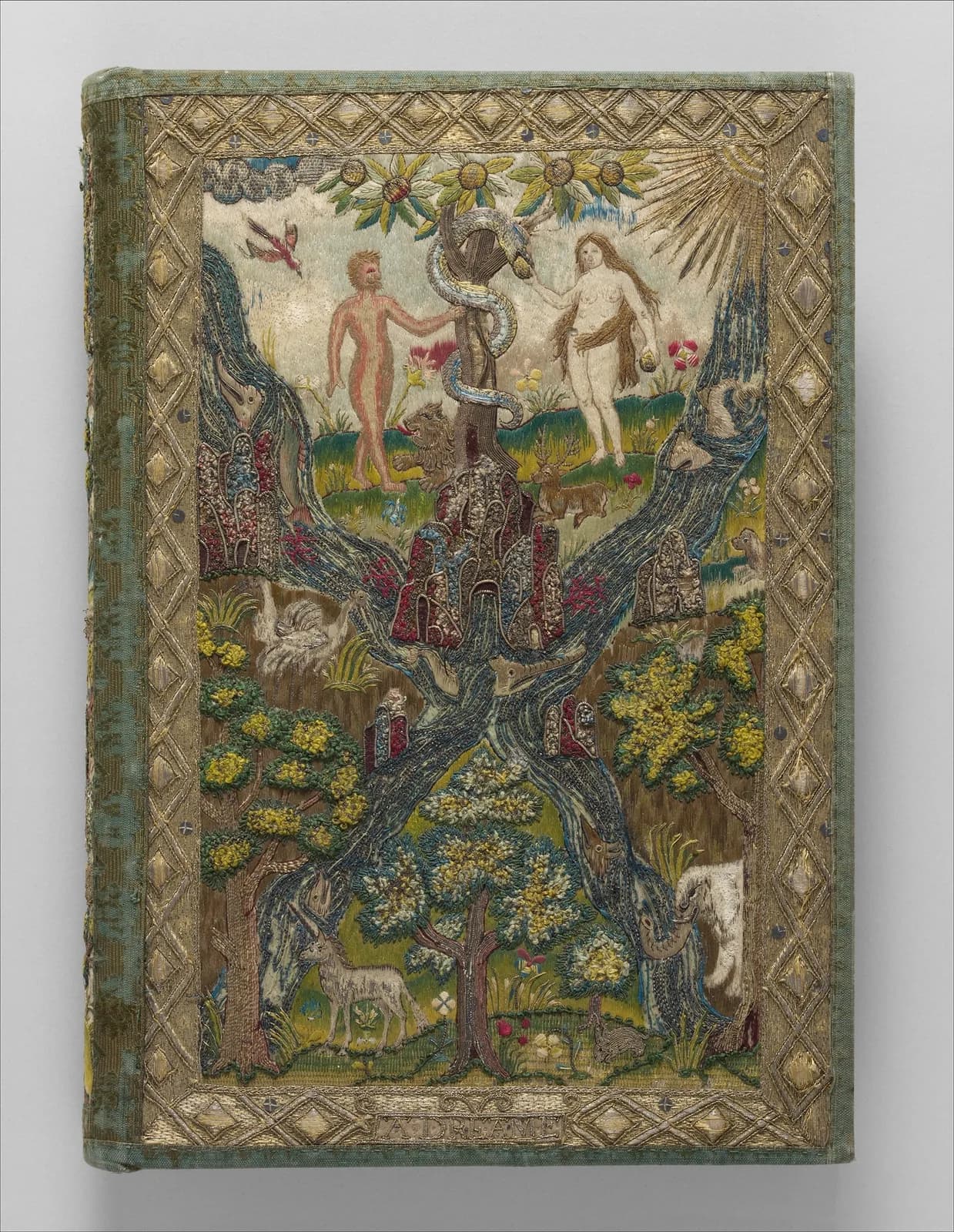
The Book of Common Prayer
Liturgical forms · Updated August 15, 2026
Overview
The Book of Common Prayer was once banned in Scotland, an event that ignited riots and led to the creation of a national covenant opposing its use. This episode reveals the deep religious and cultural tensions in 17th-century Britain, where attempts to impose uniformity in worship practices often met with fierce resistance. The Book of Common Prayer, central to the Anglican Church's worship since its first publication in 1549, became a symbol of English ecclesiastical authority, which many Scots were unwilling to accept.
Trouble began in 1637 when King Charles I, with the support of Archbishop William Laud, sought to enforce the use of The Book of Common Prayer in Scotland, hoping to bring Scottish religious practices in line with those of England. On July 23 of that year, the new liturgy appeared at St. Giles' Cathedral in Edinburgh. Outrage followed immediately; a woman named Jenny Geddes famously threw a stool at the minister, sparking the St. Giles' Cathedral riot. Conflict quickly spread beyond Edinburgh, leading to widespread unrest. In 1638, the Scots responded by drafting the National Covenant, a document rejecting the religious reforms and asserting their rights to religious self-determination. This defiance set the stage for the Bishops' Wars, a series of conflicts that were part of the larger Wars of the Three Kingdoms.
Today, The Book of Common Prayer remains a vital part of the Anglican tradition, though its role and form have evolved. Revisions have occurred multiple times to reflect changes in language and theological understanding, with versions published in 1552, 1662, and 1928. In the United States, the Episcopal Church adopted its own version in 1789, highlighting the text's adaptability and enduring importance. While its introduction was once a source of division, the Book of Common Prayer is now a unifying element across diverse Anglican communities worldwide.
The Book of Common Prayer was once banned in Scotland, leading to riots and a national covenant against it.
Why Fighting Over The Book of Common Prayer Was a Big Deal
The clash over the Book of Common Prayer was a battle over who held religious authority in England and what it meant to be English. The book, introduced in the mid-16th century, was a declaration of the Church of England's dominion over religious life. Its introduction was a move to solidify a moderate Protestant identity, distancing the church from its Catholic past. Yet, this effort to enforce a single form of worship exposed and exacerbated existing tensions between Catholic and Protestant influences. The debate was not just about which prayers to say but about who had the power to decide them, reflecting broader cultural and national issues.
The Prayer Book Rebellion of 1549 highlighted these tensions. In Devon and Cornwall, local Catholic communities rose up against the English government's imposition of the Book of Common Prayer. On one side, Thomas Cranmer and other Anglicans argued for its use to unify and stabilize England under a Protestant identity. They saw this standardization as essential for political and religious cohesion. On the opposing side, figures like John Pym and the Puritans viewed the book as a step backward, too reminiscent of Catholicism. They pushed for a worship style rooted more directly in scripture and aligned with Calvinist principles. Meanwhile, Catholics, represented by figures like Mary I, resisted Protestant reforms altogether, wanting to preserve traditional rites. The rebellion was crushed by government forces, but it demonstrated the impossibility of pleasing all factions.
Despite attempts to enforce religious uniformity, the conflict over The Book of Common Prayer never resolved. It represented an ongoing struggle between competing religious and political ideologies that persisted across centuries. Each faction's vision for the Church of England left a lasting impact, with periodic flare-ups of religious discord reflecting the evolving tensions within English society. Even today, The Book of Common Prayer's revisions and adaptations demonstrate the continuing negotiation of religious identity within the Anglican tradition. These historical disputes show that the question of how to worship was, and still is, intertwined with questions about who decides the direction of a nation's soul.
Continue reading with a Scholar plan
Upgrade to ScholarCommon questions
- What is the Book of Common Prayer?
- The Book of Common Prayer is a collection of liturgical texts used in Anglican worship. It was first published in 1549 and serves as a guide for services, prayers, and religious ceremonies within the Church of England.
- How does the Book of Common Prayer influence modern liturgy?
- The Book of Common Prayer has influenced modern liturgy by providing a model for structured worship and a balance between tradition and contemporary needs. Its language and format have been adapted by various Christian denominations worldwide.
- What role did Thomas Cranmer play in the creation of the Book of Common Prayer?
- Thomas Cranmer played a crucial role as the primary compiler and editor of the first Book of Common Prayer. He aimed to create a unified liturgical text that reflected Protestant theology while maintaining elements of traditional worship.