Matthew 26:6-13 · Matthew · Updated April 25, 2026
Anointing at Bethany
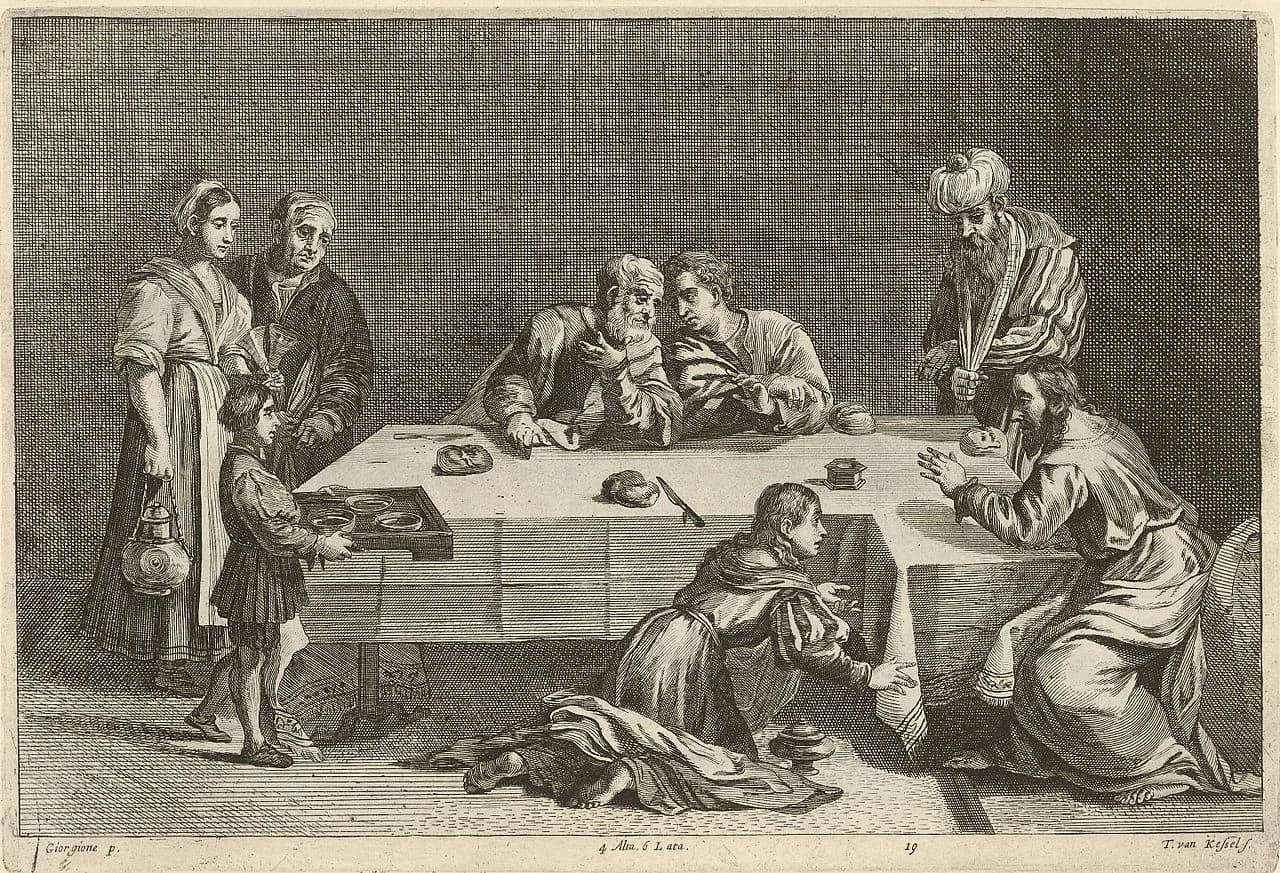
While Jesus is in Bethany at the house of Simon the leper, a woman pours very precious ointment on his head. The disciples express indignation over the perceived waste, but Jesus defends her actions as preparation for his burial.
Summary
The Anointing at Bethany is an event in the Gospel of Matthew before Jesus's crucifixion. The scene takes place in Bethany, at the home of Simon the leper (Matthew 26:6). Jesus is present in the house, and a woman arrives with an alabaster jar filled with expensive ointment. Jesus is reclining at the table, a common practice during meals in that era.
As the passage unfolds, the woman pours the precious ointment on Jesus's head (Matthew 26:7). This act draws a strong reaction from the disciples, who express their indignation, questioning the waste of such a valuable item (Matthew 26:8). They argue that the ointment could have been sold for a large amount and the money given to the poor (Matthew 26:9). Jesus, aware of their concerns, addresses the disciples, defending the woman's actions as a good deed done for him (Matthew 26:10).
The passage concludes with Jesus explaining that the poor will always be present, but he will not always be with them (Matthew 26:11). He interprets the woman's act as preparation for his burial (Matthew 26:12). Jesus declares that wherever the gospel is preached, this woman's deed will be remembered as a memorial to her (Matthew 26:13). This statement establishes the lasting importance of her actions within the narrative of the gospel. The passage in Matthew 26:6-13 primarily establishes the importance of the woman's act of anointing Jesus with precious ointment. This action is meaningful because it serves as preparation for Jesus's impending burial, marking a moment in the Gospel narrative. Jesus's declaration that this woman's deed will be remembered wherever the gospel is preached emphasizes the enduring importance of her actions. Her act transcends mere generosity; it is filled with prophetic significance and devotion, highlighting the unique moment of Jesus's presence and the approaching culmination of his earthly mission.
Chiastic structure
ⓘMatthew 26:7
“There came unto him a woman having an alabaster box of very precious ointment, and poured it on his head”
Matthew 26:12
“For in that she hath poured this ointment on my body, she did it for my burial.”
Matthew 26:13
“Wheresoever this gospel shall be preached in the whole world, there shall also this, that this woman hath done, be told for a memorial of her.”
Both A and A' focus on the woman's act and its significance, with A describing the act and A' emphasizing its lasting memorial.
Interpretation and theological stakes
Continue reading with a Scholar plan
Upgrade to Scholar