Luke 24:50-53 · Luke · Updated April 25, 2026
Ascension
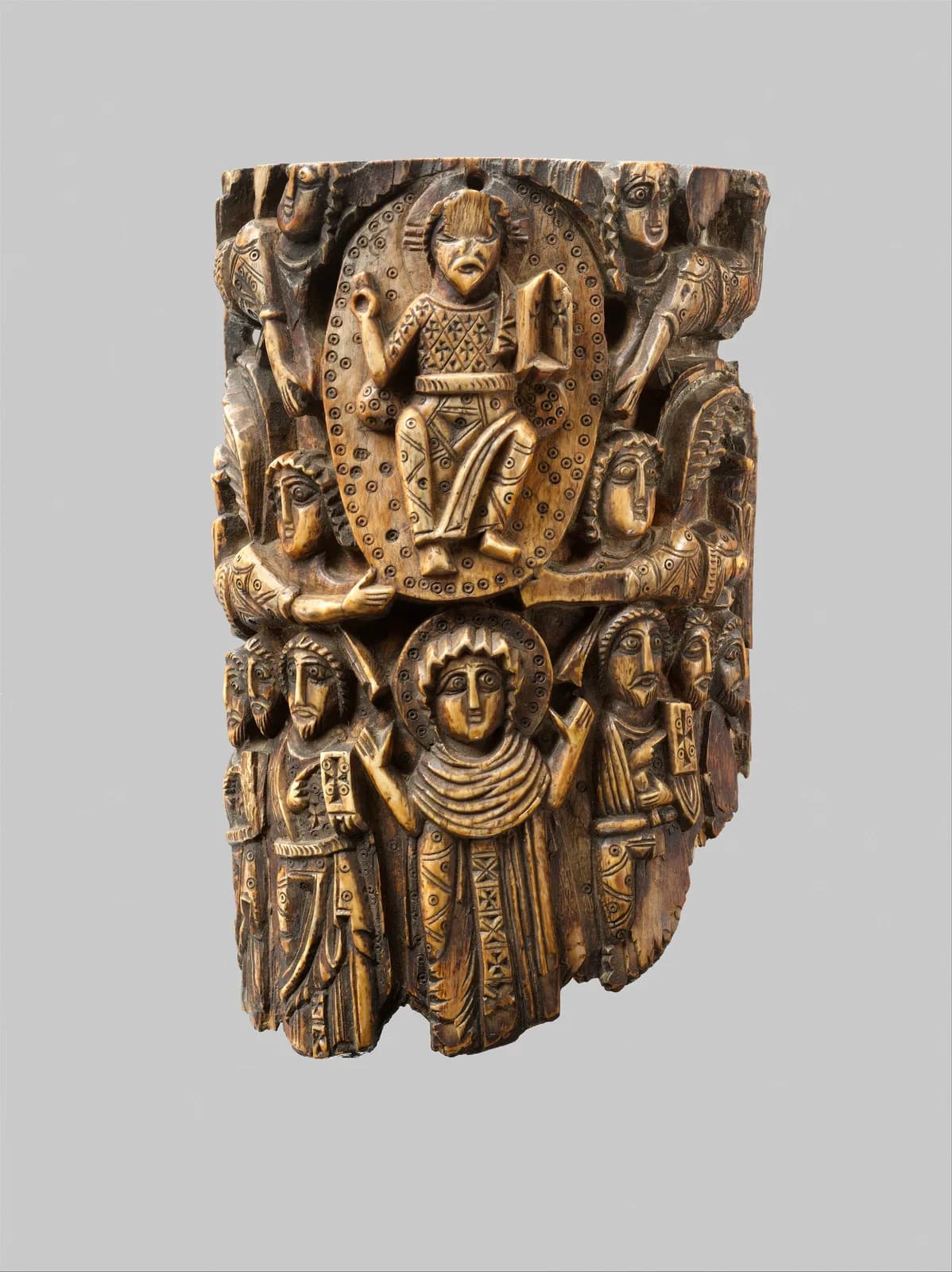
Jesus leads his disciples to Bethany, blesses them, and ascends into heaven. The disciples worship him and return to Jerusalem with joy, continually praising God in the temple.
Summary
Luke 24:50-53 describes the Ascension of Jesus, marking the conclusion of Jesus' earthly ministry. Before this scene, Jesus resurrected and appeared to his disciples multiple times, offering teachings and assurances. Near Bethany, a village close to Jerusalem, Jesus gathers his disciples for a final moment together.
Jesus leads his disciples out to Bethany (verse 50), lifts his hands, and blesses them. While blessing them, Jesus parts from the disciples and ascends into Heaven (verse 51). This event marks a physical departure, as Jesus is carried up, leaving the disciples behind. The disciples respond to this event by worshipping Jesus (verse 52).
The passage concludes with the disciples returning to Jerusalem filled with great joy (verse 52). They continue to express their devotion by regularly being in the temple, praising and blessing God (verse 53). The text presents this as a time of joyful worship and continuity of faith, emphasizing the disciples' response to Jesus' Ascension as one of joy and praise. Luke 24:50-53 establishes the Ascension as a moment in the Christian narrative. The main conclusion of this event is that Jesus' earthly ministry ends with his ascension into Heaven, signifying both a physical departure and the continuation of his divine mission from a heavenly realm. The text emphasizes the impact on the disciples, as they respond with worship and joy, highlighting a shift from earthly guidance by Jesus to a spiritual one. The Ascension acts as a bridge between Jesus' resurrection and the ongoing life of the early church, emphasizing the continuity of faith and the disciples' role in spreading Jesus’ teachings.
Chiastic structure
ⓘLuke 24:50
“he lifted up his hands, and blessed them”
Luke 24:51
“he was parted from them, and carried up into heaven”
Luke 24:53
“were continually in the temple, praising and blessing God”
A and A' mirror each other through the theme of blessing and worship. In A, Jesus blesses the disciples, and in A', the disciples are in the temple praising and blessing God.
Interpretation and theological stakes
Continue reading with a Scholar plan
Upgrade to Scholar