Philippians 2:5-11 · Philippians · Updated April 25, 2026
Christ Hymn (Philippians)
The passage describes the humility and exaltation of Christ Jesus. Jesus, though in the form of God, took on the form of a servant and became obedient to death on the cross. As a result, God exalted him and gave him a name above every name, so that every knee should bow and every tongue confess that Jesus Christ is Lord.
Summary
Philippians 2:5-11, known as the Christ Hymn, is a passage from a letter by the Apostle Paul to the Christian community in Philippi. It outlines the humility and exaltation of Christ, serving as a model for believers. Readers are urged to adopt the mindset of Christ Jesus (2:5). Christ has the form of God but chooses not to cling to equality with God (2:6).
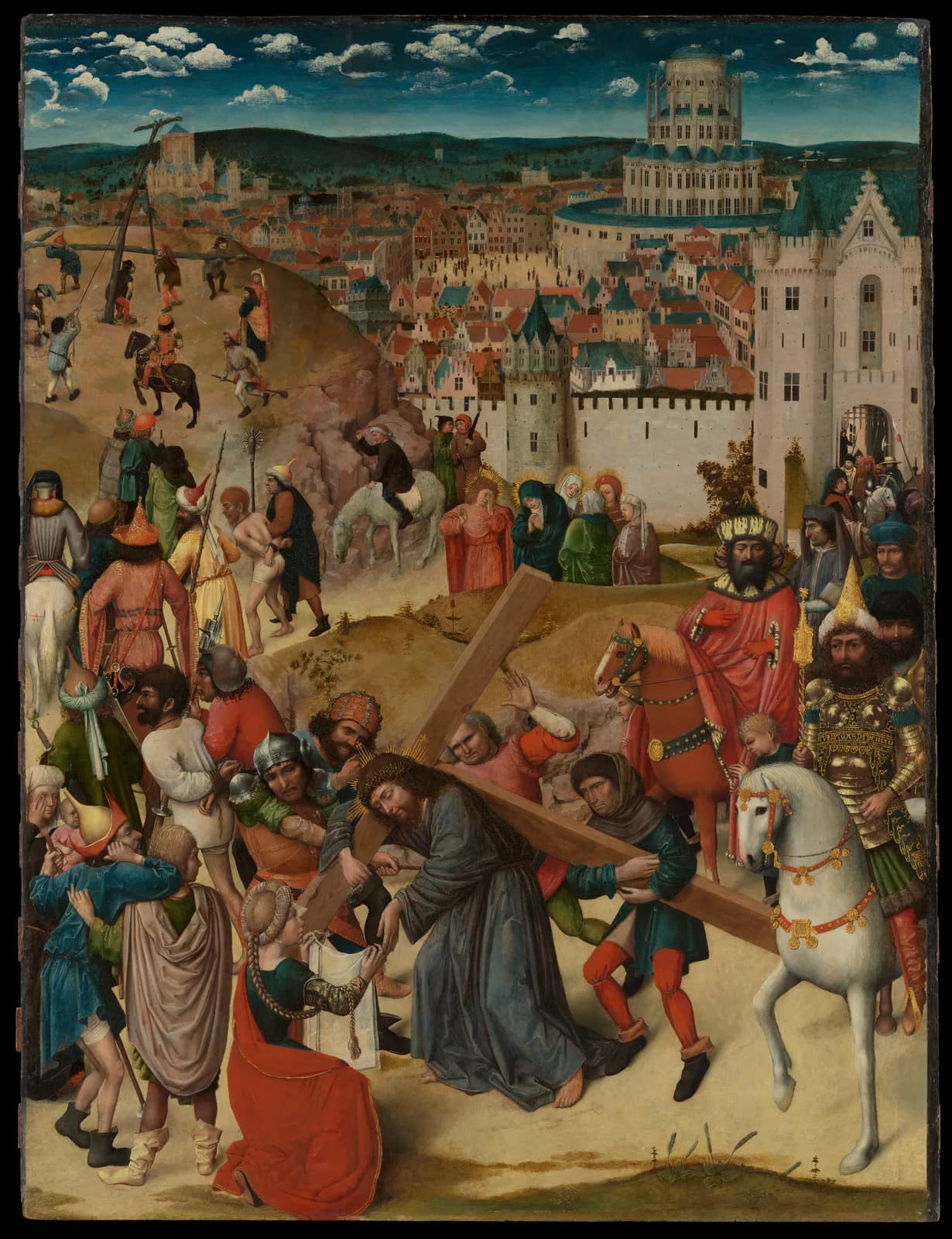
The passage describes actions taken by Christ. He empties himself, taking the role of a servant and becoming human (2:7). As a man, he humbles himself further by being obedient to the point of death on a cross (2:8). This sequence shows a downward movement from divine status to human suffering and death.
In response to Christ's humility and obedience, God exalts him to the highest place (2:9). God bestows on him a name above every name, ensuring that at the name of Jesus, every knee will bow in Heaven, on earth, and under the earth, and every tongue will confess that Jesus Christ is Lord (2:10-11). These events bring glory to God the Father (2:11). The Christ Hymn establishes a theological claim about the nature and actions of Christ. The passage outlines a dramatic movement from divine status to human humility, culminating in exaltation. It emphasizes that Christ, despite having the form of God, chooses a path of self-emptying and obedience, which leads to his ultimate glorification by God. This sequence not only shows the humility and sacrifice of Christ but also the resultant divine recognition and authority bestowed upon him. The passage concludes by linking Christ's exaltation to the glory of God the Father, suggesting that his actions have cosmic significance, inviting universal acknowledgment of his lordship.
Chiastic structure
ⓘPhilippians 2:7-8
“But made himself of no reputation, and took upon him the form of a servant... he humbled himself...”
Philippians 2:9
“Wherefore God also hath highly exalted him, and given him a name which is above every name:”
Philippians 2:10-11
“That at the name of Jesus every knee should bow... and every tongue should confess...”
The theme of humility in A is mirrored by the theme of exaltation in A'. Both elements emphasize the transformation of Christ's status.
Interpretation and theological stakes
Continue reading with a Scholar plan
Upgrade to Scholar