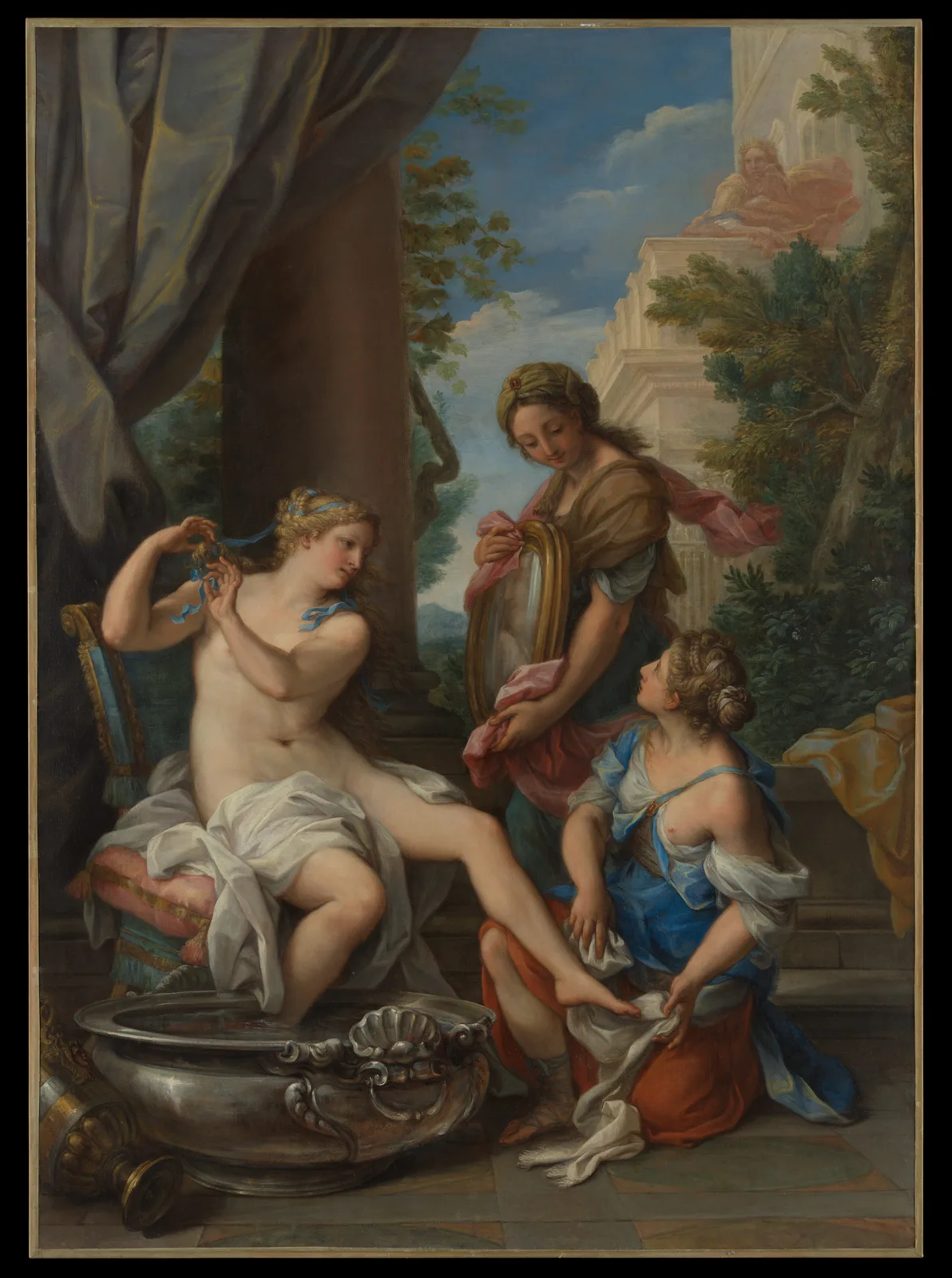
2 Samuel 11:1-27 · 2 Samuel · Updated April 25, 2026
David & Bathsheba
King David remains in Jerusalem while his army is at war. He sees Bathsheba bathing, sends for her, and she becomes pregnant. To cover up the affair, David arranges for her husband Uriah to be killed in battle, then marries Bathsheba, but his actions displease the LORD.
Summary
2 Samuel 11:1-27 is a key narrative in the life of King David, illustrating a moment of moral failure with consequences. During a time when kings typically lead their armies into battle, David remains in Jerusalem while his commander Joab and the Israelite army are besieging the Ammonite city of Rabbah (11:1). One evening, David walks on the roof of his palace and sees Bathsheba, the wife of Uriah the Hittite, bathing. Captivated by her beauty, David sends messengers to bring her to him, and he sleeps with her (11:2-4).
Bathsheba becomes pregnant and informs David of her condition (11:5). To conceal the affair, David calls Uriah back from the battlefield, hoping he will go home and sleep with his wife, thus providing a cover for the pregnancy (11:6-8). However, Uriah, out of loyalty to his fellow soldiers and the ark of God, refuses to enjoy the comforts of home while others are in battle, and he sleeps at the palace entrance instead (11:9-11). After further attempts to persuade Uriah fail, David resorts to a more drastic plan. He sends Uriah back to the front lines with a letter instructing Joab to place him in a dangerous position in battle, ensuring his death (11:14-15). Joab follows these orders, and Uriah is killed in combat (11:16-17).
Following Uriah's death, Bathsheba mourns for her husband (11:26). After the mourning period, David brings Bathsheba to his house, and she becomes his wife, bearing him a son (11:27). The passage concludes by stating that the actions David took displeased the LORD, establishing the gravity of his sin and setting the stage for the events that follow. The passage in 2 Samuel 11:1-27 primarily establishes a narrative of moral decline in King David's life, highlighting the severe consequences of his actions. David's decision to remain in Jerusalem during the battle marks the beginning of his transgression, as it leads to his encounter with Bathsheba (11:1-2). The subsequent adultery and the orchestrated death of Uriah reveal a deliberate sequence of unethical decisions. These events culminate in the text's explicit statement that David's actions displeased the LORD (11:27). The passage highlights the weight of David's sin, setting the stage for the inevitable divine judgment and personal turmoil that follow.
Chiastic structure
ⓘ2 Samuel 11:2-4
“David arose from off his bed, and walked upon the roof... he saw a woman washing herself... David sent messengers, and took her; and she came in unto him, and he lay with her”
2 Samuel 11:14-15
“David wrote a letter to Joab... Set ye Uriah in the forefront of the hottest battle, and retire ye from him, that he may be smitten, and die.”
2 Samuel 11:26-27
“When the wife of Uriah heard that Uriah her husband was dead, she mourned... David sent and fetched her to his house, and she became his wife... But the thing that David had done displeased the LORD.”
Both A and A' involve David's actions concerning Bathsheba and Uriah, highlighting his initial sin and its eventual consequences.
Interpretation and theological stakes
Continue reading with a Scholar plan
Upgrade to Scholar