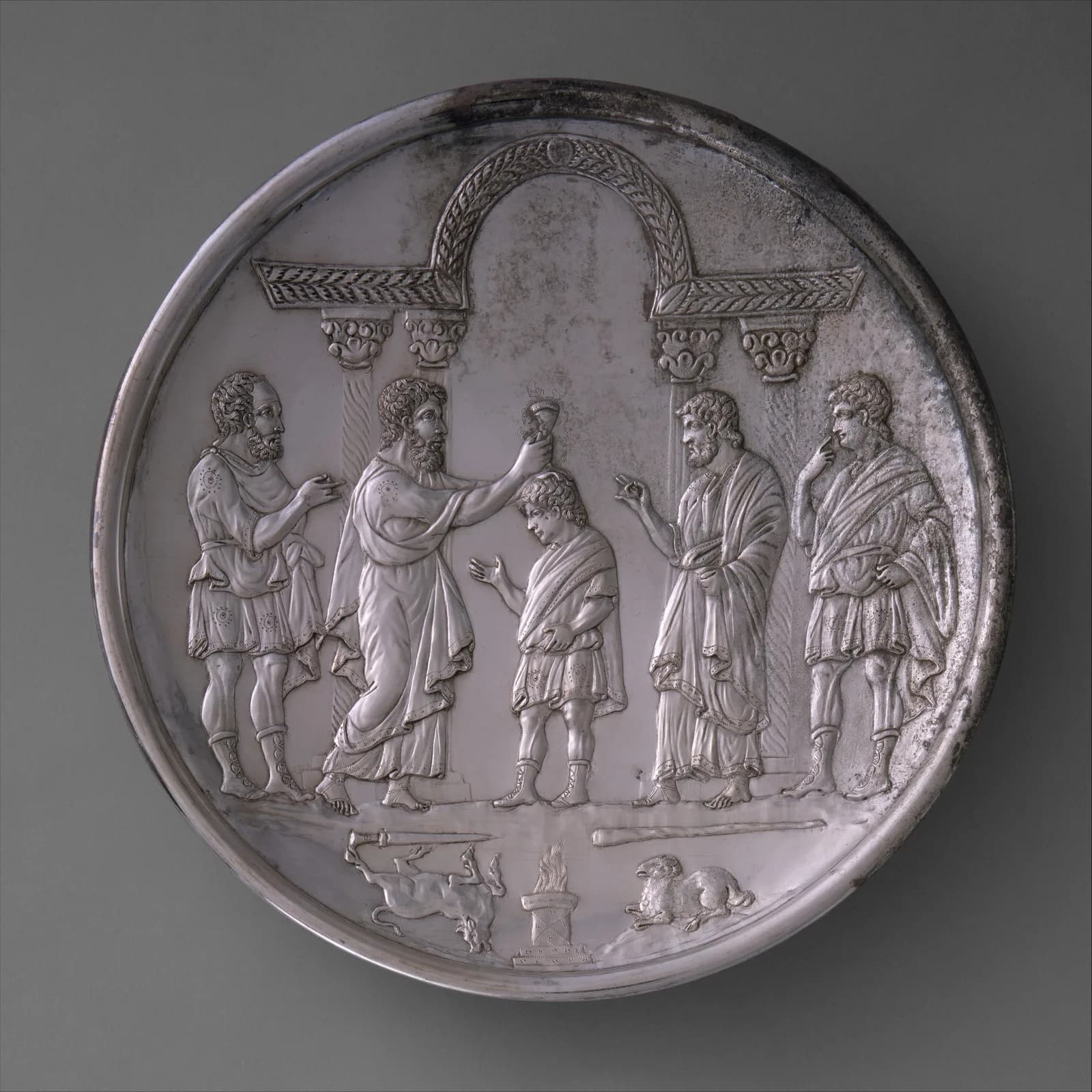
1 Samuel 17:1-58 · 1 Samuel · Updated April 25, 2026
David & Goliath
David, a young shepherd, confronts and defeats Goliath, the Philistine champion, with a sling and a stone. This victory leads to the Israelites routing the Philistines, and David gaining recognition from King Saul.
Summary
The passage from 1 Samuel 17:1-58 recounts the story of David and Goliath, a moment in the history of Israel during the reign of King Saul. Philistines and Israelites gather for battle in the Valley of Elah, with the Philistines on one hill and the Israelites on another (17:3). Goliath, a giant Philistine warrior from Gath, challenges the Israelites to send out a champion to fight him one-on-one, offering to enslave the losers (17:4-10). Saul and his army are terrified. David, the youngest son of Jesse, goes to deliver food to his brothers at the battlefront (17:17-18).
David arrives at the camp and hears Goliath's challenge. Unlike the others, he is not afraid and questions why this Philistine defies the armies of the living God (17:26). David volunteers to fight Goliath, despite Saul's doubts about his youth and inexperience. David recounts his past victories over a lion and a bear, trusting that God will deliver him from Goliath as well (17:37). Saul agrees and offers David his armor, but David declines, choosing instead to face Goliath with a sling and five smooth stones (17:40). As Goliath approaches, David declares that he comes in the name of the Lord (17:45). David runs toward Goliath, slings a stone that strikes the giant in the forehead, and Goliath falls face down to the ground (17:49-50).
David cuts off Goliath's head with the giant's own sword, causing the Philistines to flee in panic (17:51). Israelites pursue them, gaining a victory. David brings Goliath's head to Jerusalem and keeps the armor for himself (17:54). Saul, curious about David's lineage, inquires about his family, and David identifies himself as the son of Jesse from Bethlehem (17:58). The passage concludes with David established as a hero in Israel, demonstrating the power of faith and courage. The primary conclusion of the story of David and Goliath in 1 Samuel 17 is that true strength comes from faith in God. The passage emphasizes that David's victory over Goliath was not due to physical might or military prowess but because he trusted in God's power. David himself states this clearly when he declares to Goliath that he comes "in the name of the LORD of hosts" (17:45). This moment shows that David's confidence and courage stem from his belief that God will deliver him, not from his own abilities. The outcome of the battle, with David defeating Goliath using only a sling and a stone (17:50), reinforces the idea that God's favor is decisive in the face of insurmountable odds.
Chiastic structure
ⓘ1 Samuel 17:26
“for who is this uncircumcised Philistine, that he should defy the armies of the living God?”
1 Samuel 17:47
“for the battle is the LORD's, and he will give you into our hands.”
1 Samuel 17:50
“So David prevailed over the Philistine with a sling and with a stone, and smote the Philistine, and slew him; but there was no sword in the hand of David.”
The correspondence between A and A' is the challenge and defiance against the Philistines, highlighting David's faith and God's deliverance.
Interpretation and theological stakes
Continue reading with a Scholar plan
Upgrade to Scholar