2 Kings 2:1-14 · 2 Kings · Updated April 25, 2026
Elijah's Ascent
Elijah is taken up into heaven by a whirlwind while accompanied by Elisha. Before his ascent, Elijah performs a miracle by parting the Jordan River, and Elisha requests a double portion of Elijah's spirit. After Elijah's departure, Elisha takes up Elijah's mantle and performs the same miracle at the Jordan River.
Summary
2 Kings 2:1-14 narrates the dramatic ascent of the prophet Elijah into Heaven, marking a moment in biblical history. Key characters are Elijah, a prophet of the LORD, and his apprentice Elisha. As the story begins, the LORD is about to take Elijah up into Heaven by a whirlwind. Elijah and Elisha start their journey from Gilgal, moving towards Bethel, then Jericho, and finally the Jordan River (2:1). At each location, Elijah tells Elisha to stay behind, but Elisha insists on accompanying him, declaring his loyalty (2:2-6). The sons of the prophets at Bethel and Jericho inform Elisha that the LORD will take Elijah away that day, and Elisha acknowledges this, asking them to keep silent (2:3, 5).
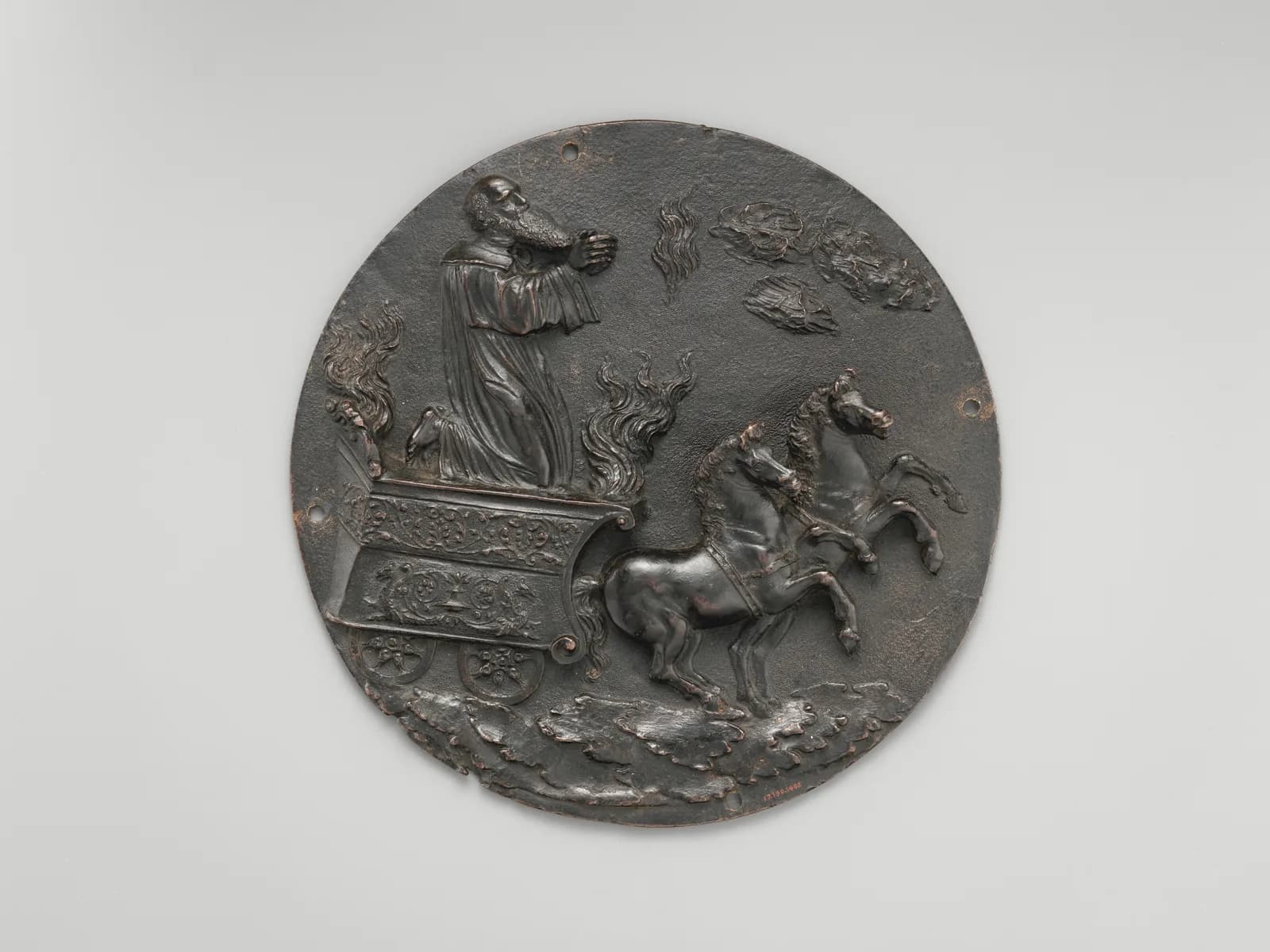
Upon reaching the Jordan River, Elijah performs a miracle by striking the water with his mantle, causing the river to part so they can cross on dry ground (2:8). Once they cross, Elijah asks Elisha what he can do for him before being taken away. Elisha requests a double portion of Elijah’s spirit. Elijah responds that this is a difficult request, but if Elisha sees him being taken, it will be granted (2:9-10). As they continue walking, a chariot of fire and horses of fire appear, separating the two, and Elijah ascends to heaven in a whirlwind (2:11). Elisha witnesses this and cries out, tearing his clothes in grief (2:12).
Elisha picks up Elijah's fallen mantle and returns to the Jordan River. He strikes the water with the mantle, asking, "Where is the LORD God of Elijah?" The waters part once again, allowing Elisha to cross over (2:13-14). This event establishes Elisha as Elijah's successor, empowered with the same spirit that was upon Elijah. The passage in 2 Kings 2:1-14 primarily establishes the transfer of prophetic authority from Elijah to Elisha. Elijah's Ascent to heaven signifies the end of his earthly ministry, while Elisha's actions and successes immediately following this event demonstrate his role as Elijah's rightful successor. The miracle of parting the Jordan River both before and after Elijah's Ascent serves as a tangible sign of the spiritual continuity between the two prophets. This transition matters because it shows that God's work continues through appointed individuals, and Elisha is now the chosen vessel for that work.
Chiastic structure
ⓘ2 Kings 2:8
“And Elijah took his mantle, and wrapped it together, and smote the waters, and they were divided hither and thither, so that they two went over on dry ground.”
2 Kings 2:9-10
“And Elisha said, I pray thee, let a double portion of thy spirit be upon me.”
2 Kings 2:14
“And he took the mantle of Elijah that fell from him, and smote the waters, and said, Where is the LORD God of Elijah? and when he also had smitten the waters, they parted hither and thither: and Elisha went over.”
Both A and A' involve the crossing of the Jordan River, symbolizing transition and the continuation of prophetic ministry.
Interpretation and theological stakes
Continue reading with a Scholar plan
Upgrade to Scholar