Revelation 6:1-8 · Revelation · Updated April 25, 2026
Four Horsemen
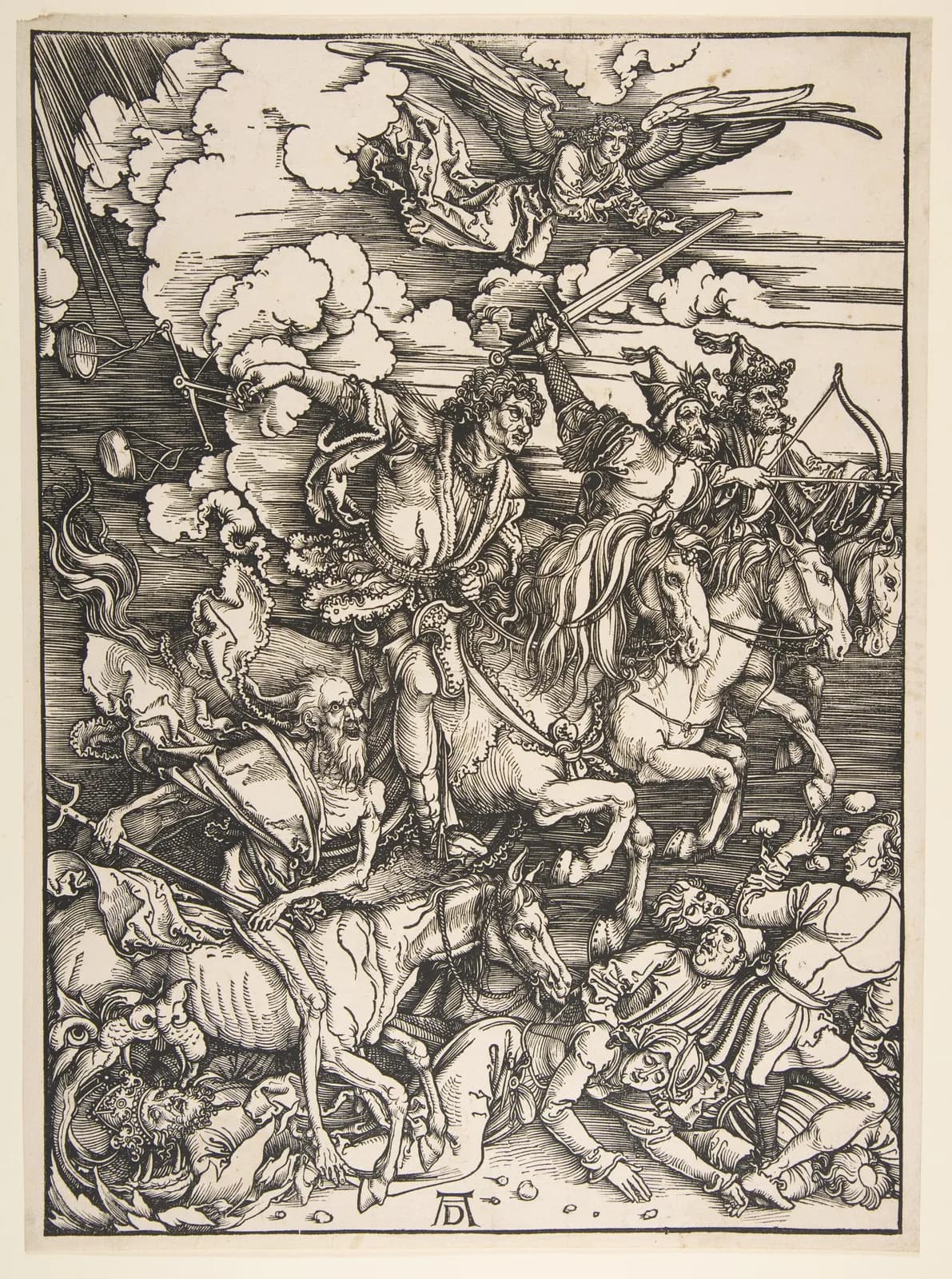
In Revelation 6:1-8, the Lamb opens the first four seals of a scroll, revealing the Four Horsemen. Each horseman is summoned by one of the four beasts and represents conquest, war, famine, and death, respectively.
Summary
Revelation 6:1-8 is part of a vision experienced by John on the island of Patmos. It describes the opening of the first four seals of a scroll by the Lamb, a key figure in Revelation. Each seal's opening unleashes a horseman, each with a distinct purpose. John witnesses these events as part of a revelation of future occurrences. The passage begins with the Lamb opening the first seal, accompanied by the sound of thunder, and one of the four beasts invites John to observe what follows (6:1).
When the first seal is opened, a white horse appears with a rider carrying a bow and wearing a crown, who goes forth to conquer (6:2). The second seal reveals a red horse, whose rider has the power to remove peace from the earth, causing people to kill each other, and he carries a large sword (6:4). The third seal brings forth a black horse, with a rider holding a pair of scales, and a voice speaks of the cost of wheat and barley, instructing not to harm the oil and wine (6:5-6). The fourth seal reveals a pale horse ridden by Death, with Hell following. They have authority over a quarter of the earth to kill by sword, famine, plague, and wild beasts (6:8).
The passage concludes with the four horsemen unleashed upon the world, each bringing a specific form of destruction. The final state of affairs is one of impending chaos and calamity, as the horsemen have the power to affect a large portion of the earth's population. The text presents these events as part of a divine plan, with each horseman fulfilling a role in the unfolding vision of the future. The primary conclusion of Revelation 6:1-8 is the initiation of a divine plan through the opening of the seals by the Lamb, heralding a series of catastrophic events. The passage directly ties the horsemen to the unfolding of future calamities, each horseman representing different aspects of worldly destruction: conquest, war, famine, and death. These events are portrayed as inevitable and authorized, indicating the sovereign orchestration of events that are to impact the earth. The text emphasizes the severity and scope of these afflictions, which are part of a larger vision of divine judgment and a prelude to further revelations.
Chiastic structure
ⓘRevelation 6:2
“And I saw, and behold a white horse: and he that sat on him had a bow; and a crown was given unto him: and he went forth conquering, and to conquer.”
Revelation 6:5-6
“And I beheld, and lo a black horse; and he that sat on him had a pair of balances in his hand. And I heard a voice in the midst of the four beasts say, A measure of wheat for a penny, and three measures of barley for a penny; and thou hurt not the oil and the wine.”
Revelation 6:8
“And I looked, and behold a pale horse: and his name that sat on him was Death, and Hell followed with him.”
The first and fourth horsemen mirror each other through the themes of conquest and death, both representing forms of judgment and the consequences of human conflict.
Interpretation and theological stakes
Continue reading with a Scholar plan
Upgrade to Scholar