Matthew 26:36-46 · Matthew · Updated April 25, 2026
Gethsemane
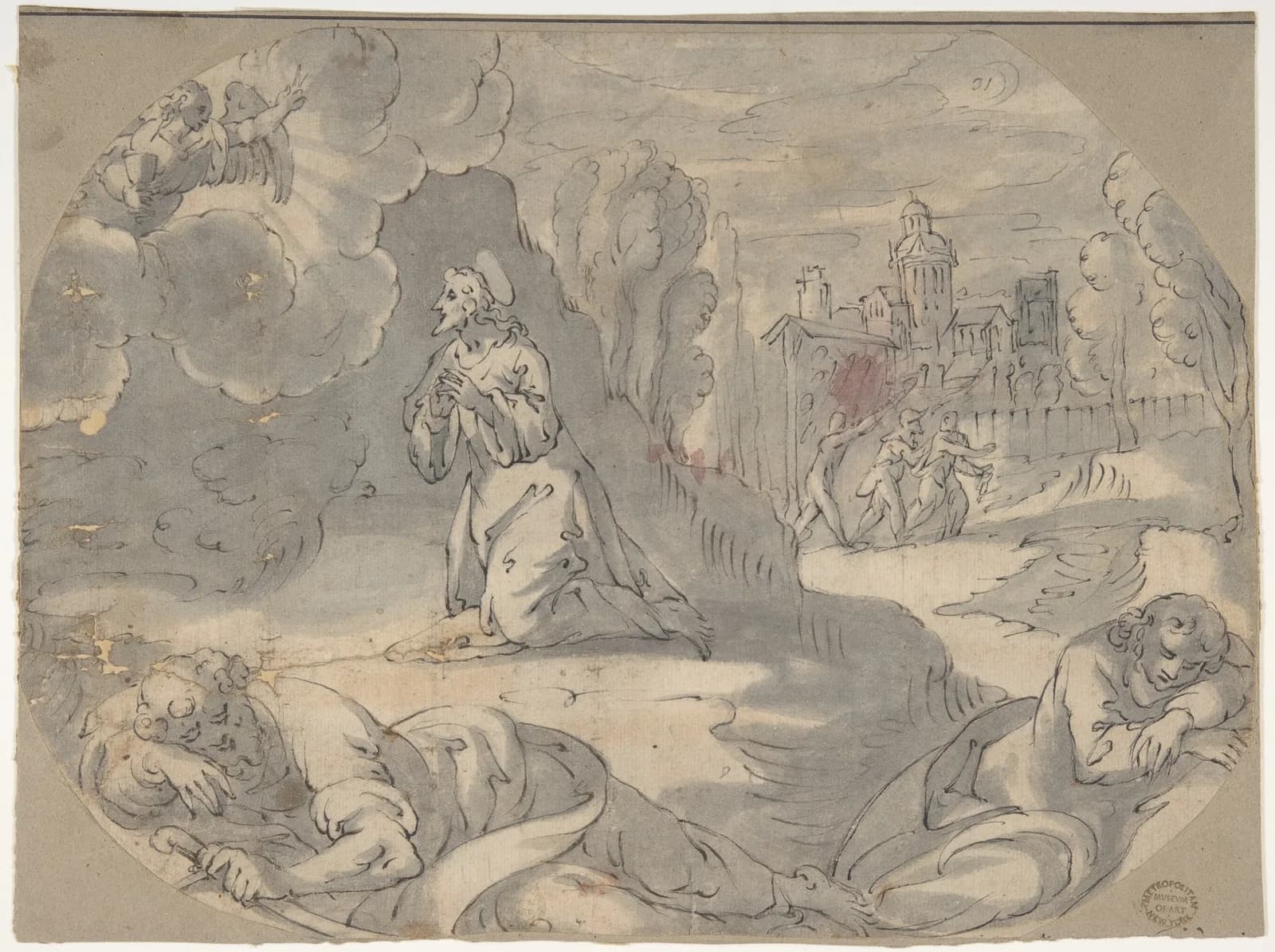
Jesus goes to Gethsemane with his disciples and asks them to stay awake while he prays. He prays three times, expressing his sorrow and asking for the cup to pass from him, but ultimately submits to God's will. The disciples fall asleep each time, and Jesus eventually tells them to rest as his betrayer approaches.
Summary
The passage from Matthew 26:36-46 recounts a moment in the New Testament where Jesus prays in the Garden of Gethsemane shortly before his arrest. Jesus arrives at Gethsemane with his disciples and instructs them to sit while he goes to pray (verse 36). Peter, James, and John accompany him, and Jesus begins to feel sorrowful and troubled (verse 37). This scene sets the stage for a moment of deep emotional struggle for Jesus as he prepares for what is to come.
Jesus moves a little further from the three disciples and prays, asking if it is possible for the impending suffering to be taken away, but submits to God's will (verse 38). He returns to find Peter and the others asleep and questions Peter, asking if they could not stay awake with him for just one hour (verse 40). Jesus encourages them to watch and pray to avoid temptation, acknowledging that while their spirit is willing, their flesh is weak (verse 41). Jesus prays a second time with the same request and finds the disciples asleep again when he returns (verses 42-43). He prays a third time, repeating his previous words, and upon returning, he acknowledges that the time has come for him to be betrayed (verses 44-45).
The passage concludes with Jesus telling his disciples to rest, as the moment of his betrayal is at hand (verse 45). He instructs them to rise and go, noting that his betrayer is approaching (verse 46). The passage presents the conclusion that the time for Jesus' arrest has arrived, marking the beginning of the events leading to his crucifixion. The passage from Matthew 26:36-46 centers on Jesus' emotional and spiritual turmoil as he anticipates his impending crucifixion. The text emphasizes Jesus' struggle between his human desire to avoid suffering and his commitment to fulfilling God's will. This moment in Gethsemane is crucial because it marks the transition from Jesus' ministry to his sacrificial death. The narrative shows his isolation and the disciples' inability to comprehend or support him fully. Their repeated failure to stay awake symbolizes human frailty, contrasting with Jesus' resolve to embrace his destiny, even amidst distress.
Chiastic structure
ⓘMatthew 26:36-38
“Sit ye here, while I go and pray yonder... began to be sorrowful and very heavy.”
Matthew 26:39, 41
“O my Father, if it be possible, let this cup pass from me: nevertheless not as I will, but as thou wilt... thy will be done.”
Matthew 26:45-46
“Sleep on now, and take your rest... behold, he is at hand that doth betray me.”
Both A and A' involve Jesus instructing the disciples and acknowledging the impending betrayal, highlighting the theme of vigilance and the inevitability of his fate.
Interpretation and theological stakes
Continue reading with a Scholar plan
Upgrade to Scholar